





[Yamaguchi] Recommended Sightseeing Spots in Nagato, Hagi, and Mine! From Classic Destinations to Hidden Gems

The northwestern area of Yamaguchi Prefecture is packed with recommended sightseeing spots, including breathtaking scenery that has caught the attention of international media and World Heritage castle towns. The routes connecting these locations are also popular as refreshing scenic drives. From being moved by the beauty of nature to finding healing at mystical power spots and encountering the traces of the patriots of the Bakumatsu period, there is so much to enjoy. Here, we introduce the spots you definitely shouldn't miss.
Must-visit "classic" sightseeing spots in Nagato, Hagi, and Mine
- 1Akiyoshidai
- 2Akiyoshido Cave
- 3Beppu Benten Pond
- 4Motonosumi Shrine
- 5Omi Island
- 6Hagi Castle Town
- 7Shoin Shrine
- 8Tsunoshima Bridge
"Hidden gems" known only to those in the know
Must-visit "classic" sightseeing spots in Nagato, Hagi, and Mine
1Akiyoshidai
Enjoy a grand panoramic view of nature! One of Japan's largest karst plateaus
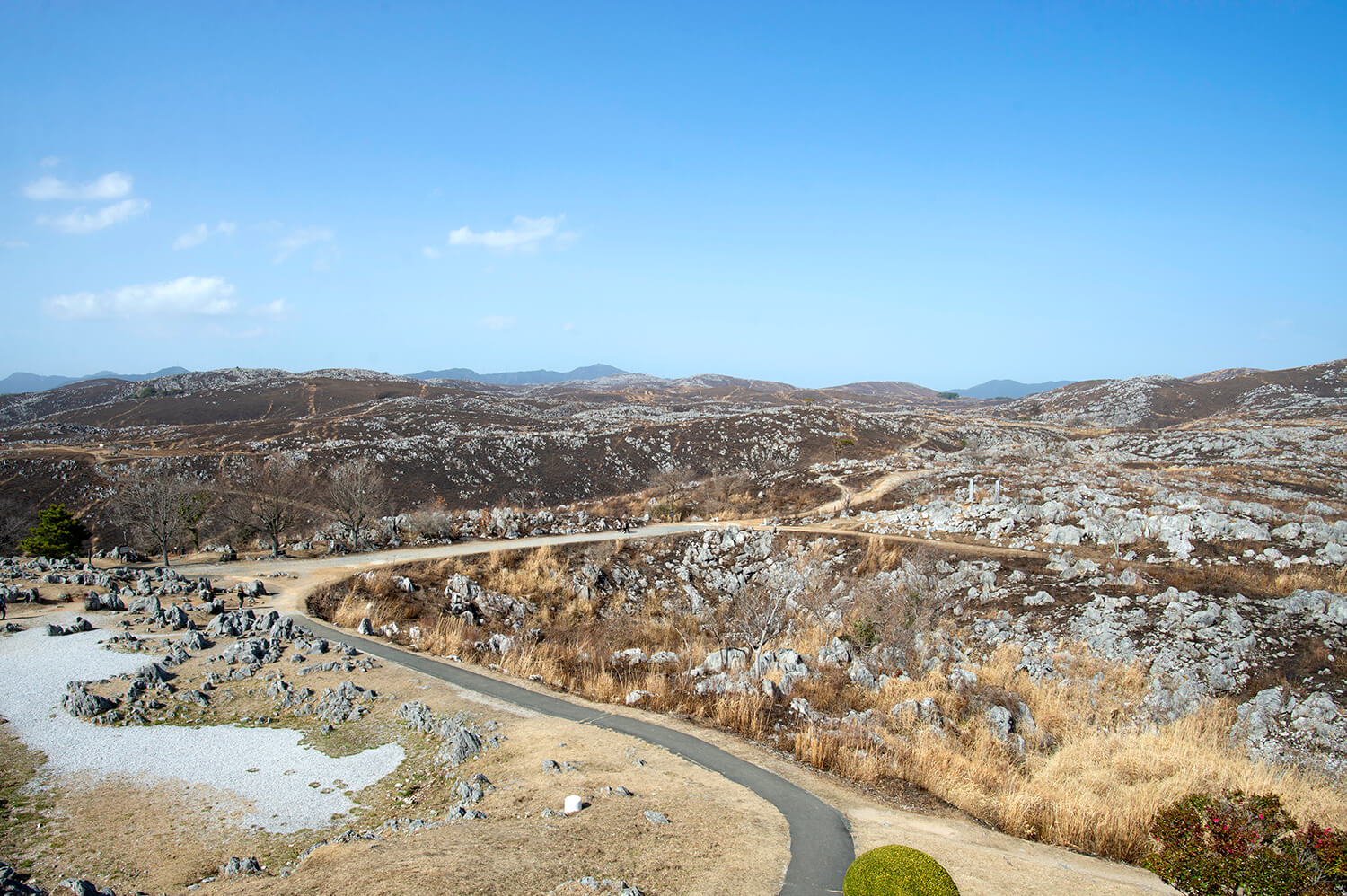
Akiyoshidai in Mine City is one of Yamaguchi Prefecture's most iconic tourist spots. It is famous for the sight of white limestone rocks exposed across the vast grasslands, looking like a "flock of sheep."
The limestone layers that form this "karst plateau" were originally coral reefs in the ocean near the equator about 350 million years ago. They were transported to this location by the movement of oceanic and continental plates, and reached their current form through millions of years of erosion by rain and groundwater. The grand panorama from the observation deck, which offers a view of the magnificent scenery, is a must-see.
A drive is not enough! Experience the great nature of Akiyoshidai with your whole body

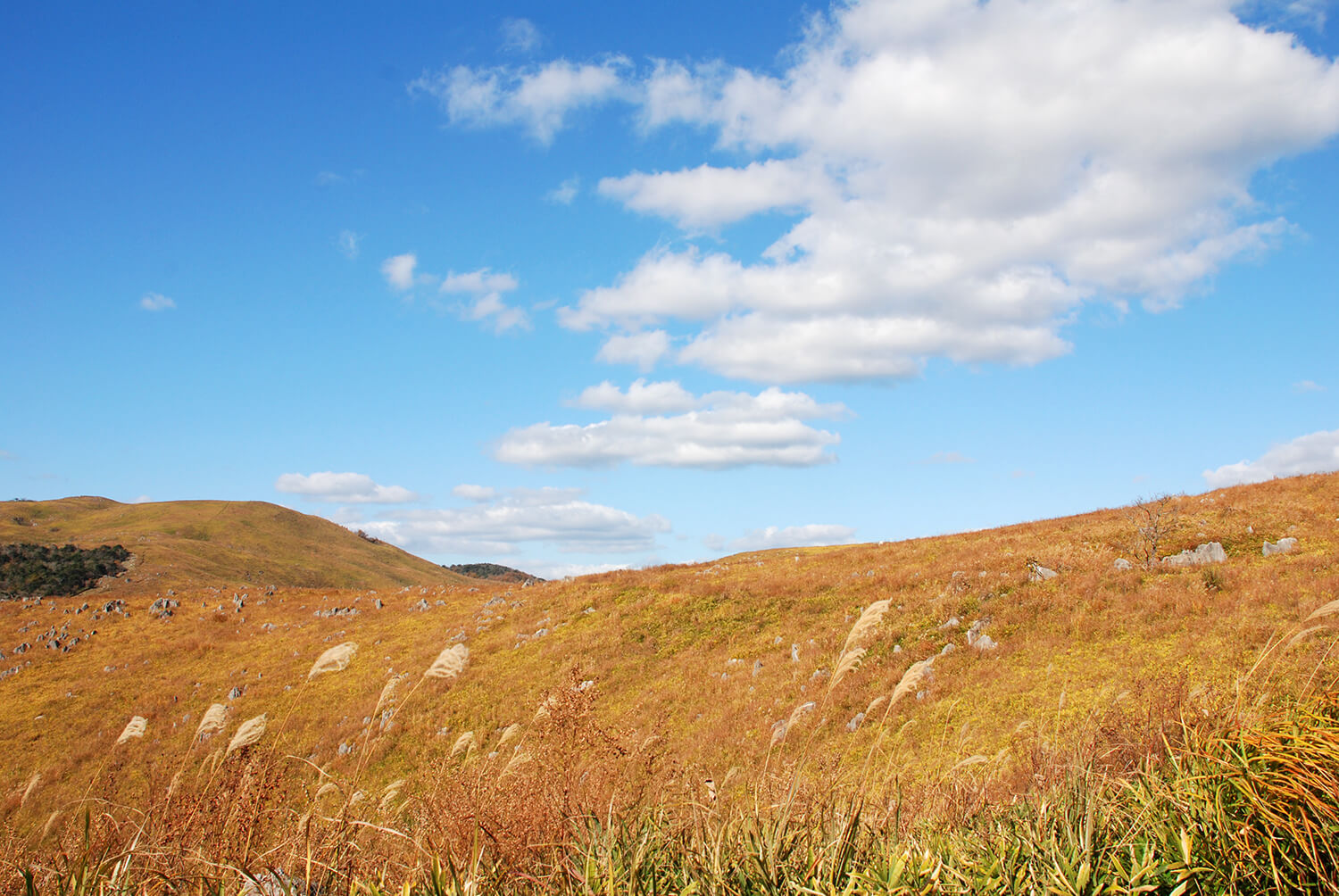
A drive along the "Karst Road" that cuts through Akiyoshidai offers an exceptionally exhilarating experience. Walking and cycling, which allow you to fully immerse yourself in nature, are also recommended. Maps of the walking trails maintained within the plateau are available at the "Mine Akiyoshidai Geopark Center Karstar," a tourist facility located next to the observation deck.
There are various courses for the walking trails, including easy, flat routes and more rugged, undulating ones. The maps also include highlights and estimated travel times, allowing you to challenge yourself to a full-scale trekking experience.

Local
Supporter
Don't miss the "Summer Orange Soft Serve Ice Cream" at "Daikanbo Akiyoshidai Store," a souvenir shop and restaurant located right near the observation deck. It is a specialty loved by many Yamaguchi residents in addition to tourists, and the refreshing taste of summer orange juice is irresistible.
- Akiyoshidai
-
 Akiyoshidai-san, Akiyoshi-cho, Mine City, Yamaguchi Prefecture MAP
 Approx. 45 minutes by car from JR Shin-Yamaguchi Station
 9:00–17:00 (Mine Akiyoshidai Geopark Center Karstar)
 Closed during the New Year holidays (Mine Akiyoshidai Geopark Center Karstar)
 0837-62-0115 (Mine City Tourism Association)
 Free
2Akiyoshido Cave
You are sure to be moved by the mystical scenery. A limestone cave sculpted by nature over millions of years.

Beneath the limestone layers that make up Akiyoshidai, there are over 450 limestone caves of various sizes formed by the erosion of rainwater and groundwater. Among them, the largest, Akiyoshido Cave, boasts a total length of over 11 km, making it the second largest in Japan.
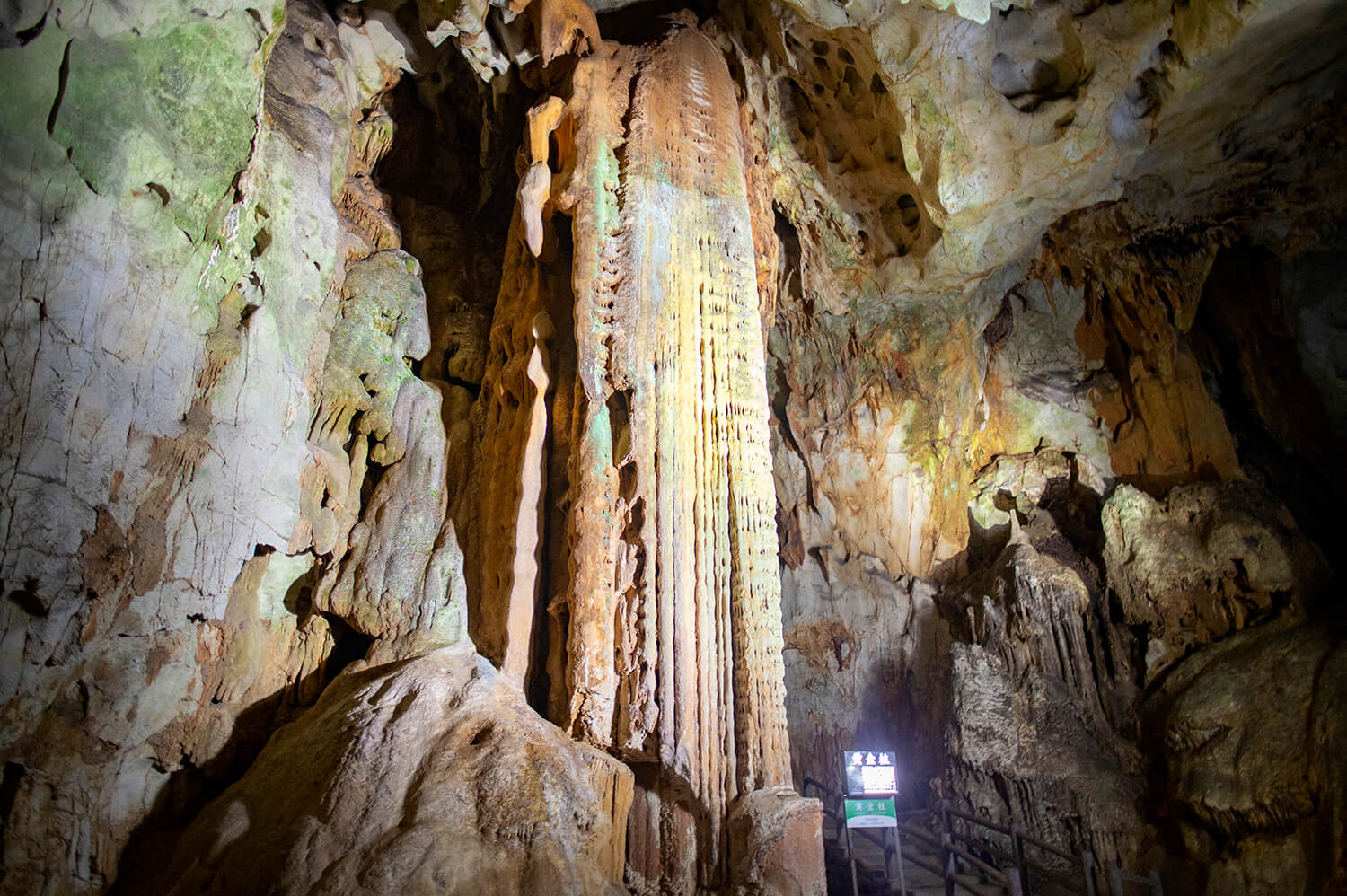
A 1 km section of this cave, with a height difference of about 40 meters, is open to the public as a sightseeing course, where stalactites shaped into mysterious forms along the underground water veins appear one after another. The sight of them emerging in the lighting is both artistic and mystical. The temperature inside the cave remains constant at 17°C throughout the year, allowing for comfortable sightseeing regardless of the season.
There are highlights one after another inside the cave. Pay attention to the names of the stalactites as well.
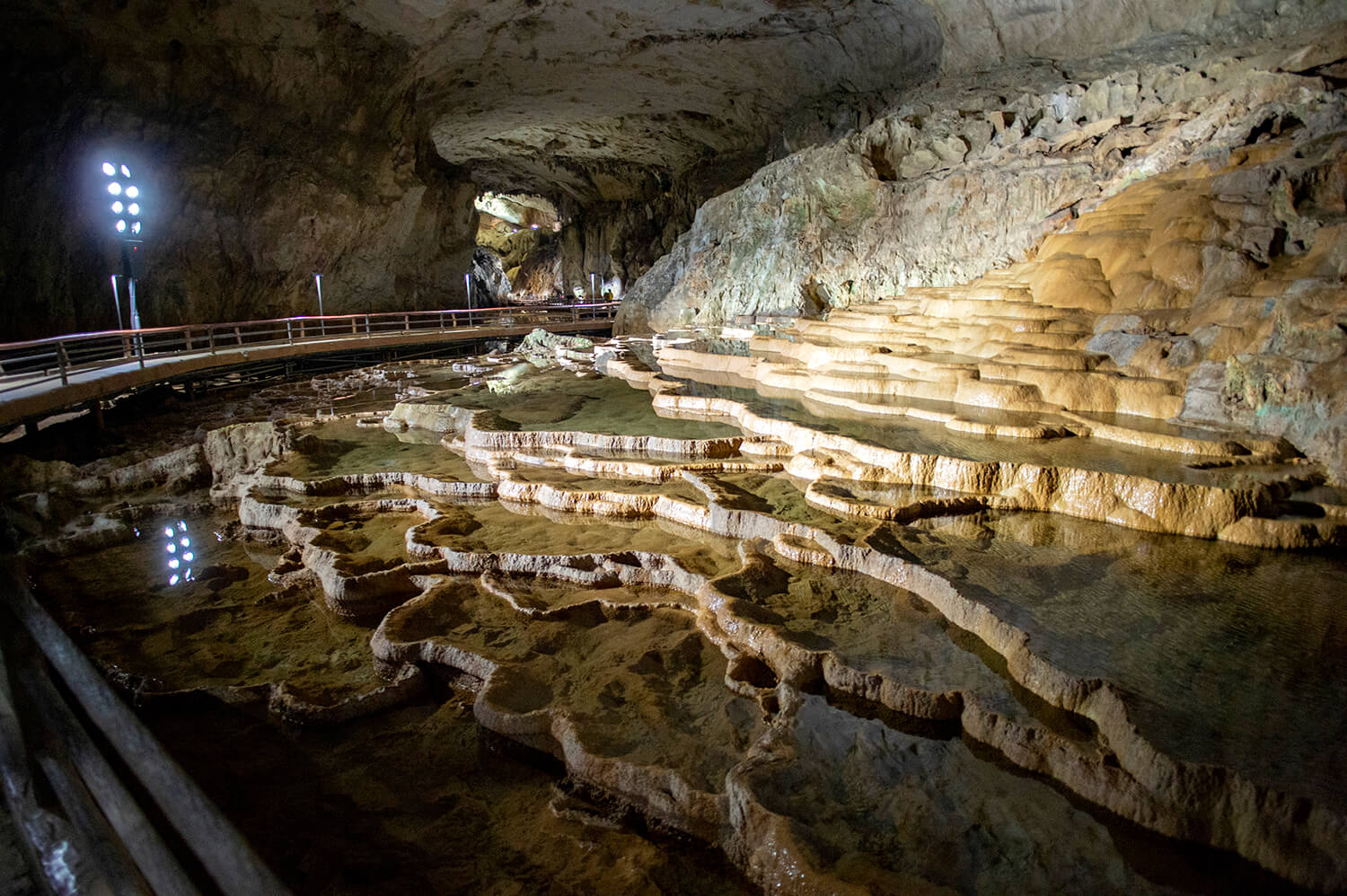
Located about 300 meters from the entrance, the "Hyakumaizara" (Hundred Plates) is one of the most popular spots in the cave. The repeated flow of water, deposition of lime components, and drying have created a shape resembling terraced rice fields with overlapping pools of various sizes. There are actually over 500 plates, and the sight that unfolds before your eyes is nothing short of spectacular.
Other spots also have intriguing names such as "Senjojiki" (Thousand Tatami Mats), "Ogonbashira" (Golden Pillar), "Kasazukushi" (Collection of Umbrellas), and "Samidare-goten" (Early Summer Rain Palace), based on the shapes and continuous appearance of the stalactites. Seeing them in person, you will surely be impressed by the aptness of these names and the beauty of nature's artistry.
Local
Supporter
The Akiyoshidai plateau above ground and the Akiyoshido Cave underground were formed in the same limestone layer and are certified as one of the "Japanese Geoparks" as "Mine Akiyoshidai." It is a spot that should be visited as a set, as you can experience the grandeur and mystery of nature's workings in a synergistic way.
- Akiyoshido Cave
-
- 3506-2 Akiyoshi, Shuho-cho, Mine-shi, Yamaguchi Prefecture MAP
- Approx. 5 minutes from Akiyoshidai IC on the Ogori-Hagi Road
 Take a bus from JR Shin-Yamaguchi Station and get off at "Akiyoshido," right there
- 9:00–16:30 *Subject to change depending on the season
- Open every day
 Adults 1,600 yen, Junior high students 1,300 yen, Elementary students 850 yen *Subject to change depending on the season
- 0837-62-0115 (Mine City Tourism Association)
- Paid
3Beppu Benten Pond
A mystical pond where emerald green, clear water springs forth.
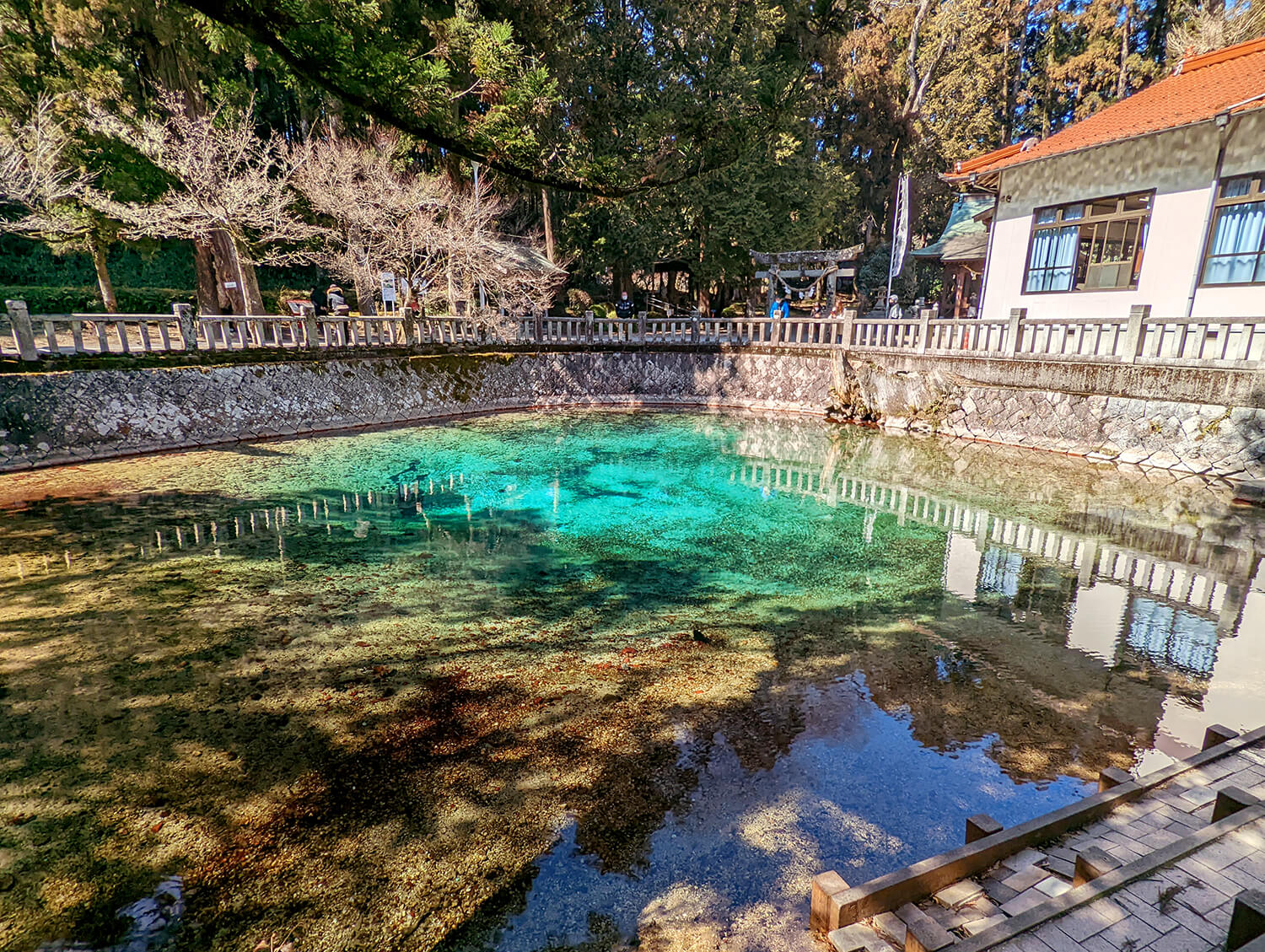
Beppu Itsukushima Shrine sits at the western foot of the Akiyoshidai karst plateau. The "Beppu Benten Pond" located within the shrine grounds is fed by 168 liters of water per second gushing from the bottom of the pond, which is 4 meters deep at its deepest point. The clarity of the water and the beauty of its emerald green surface are impressive, and combined with its mystical atmosphere, it is popular as a photogenic spot.
The delicious spring water is said to bring blessings of wealth and longevity. It is popular as one of the prefecture's leading power spots.
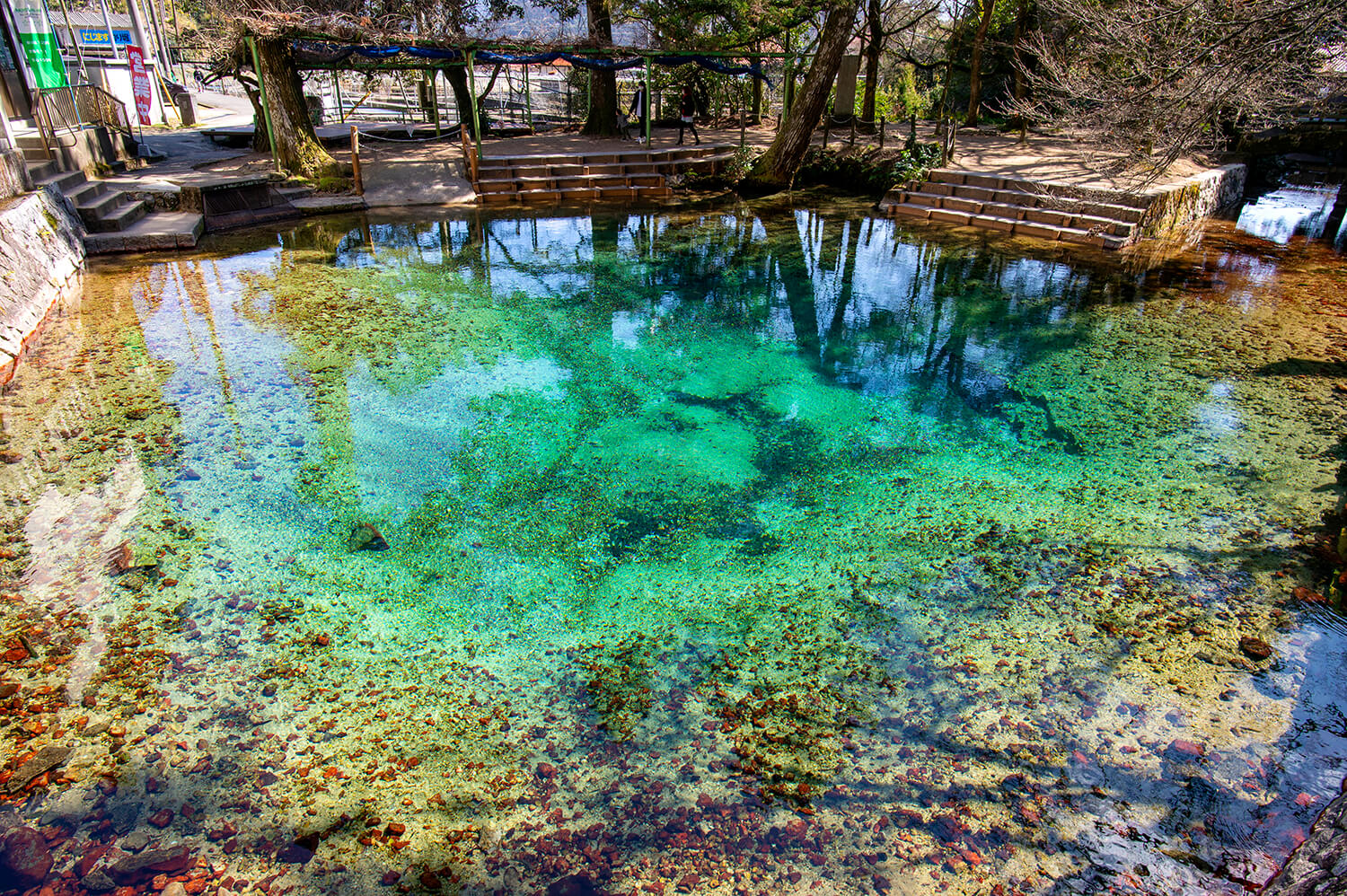
The spring water in the pond is rich in minerals, especially calcium, and is delicious, leading to its selection as one of the "100 Exquisite Waters" by the Ministry of the Environment. Furthermore, there is a local legend that drinking it brings wealth and extends one's life, making it a popular power spot in Yamaguchi Prefecture. People gather here hoping to receive the blessings of the miraculous spring water.
A water drawing area has been set up near the pond, and despite the many faucets lined up, it is so crowded on holidays that people often have to wait in line.
Local
Supporter
The water temperature remains almost constant at 14-15°C throughout the year, so the surrounding air is cool even in summer, making it recommended for cooling off. At the restaurant on the grounds, you can taste trout dishes farmed in the spring water.
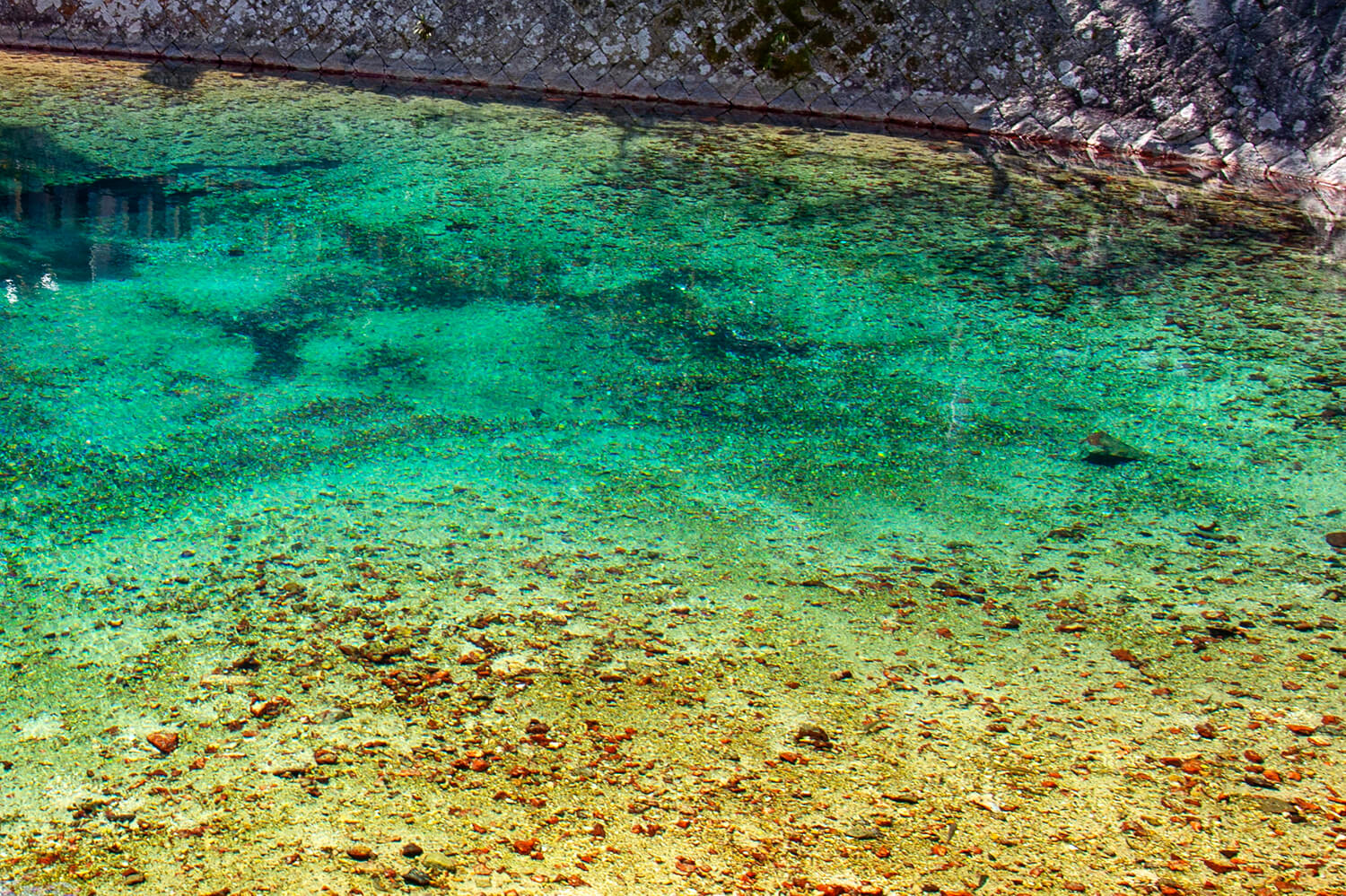
- Beppu Benten Pond
-
- 1591-2 Beppu, Shuho-cho, Mine City, Yamaguchi Prefecture MAP
- Approx. 25 minutes by car from the Mine IC on the Chugoku Expressway
- Free
- 0837-64-0203 (Mine City Trout Farm)
- Free
4Motonosumi Shrine
The superb view of torii gates stretching from the sea has even been featured in American media.

Motonosumi Shrine in Yuya, Nagato City, sits atop a cliff overlooking the Sea of Japan. The mystical sight of 123 torii gates stretching from the sea toward the main shrine was broadcast to the world by the American media outlet CNN as one of the "most beautiful places in Japan."
The rocky area beyond the torii gates is a spot known as "Ryugu no Shiofuki," famous for a natural phenomenon where waves crashing violently against the rocks spray up through gaps in the form of mist. This spray is more likely to appear when the sea is rough, especially in winter, and can shine beautifully in rainbow colors when hit by sunlight.
Your wishes will come true if you pass through! Try your hand at the stone for overcoming difficulties.
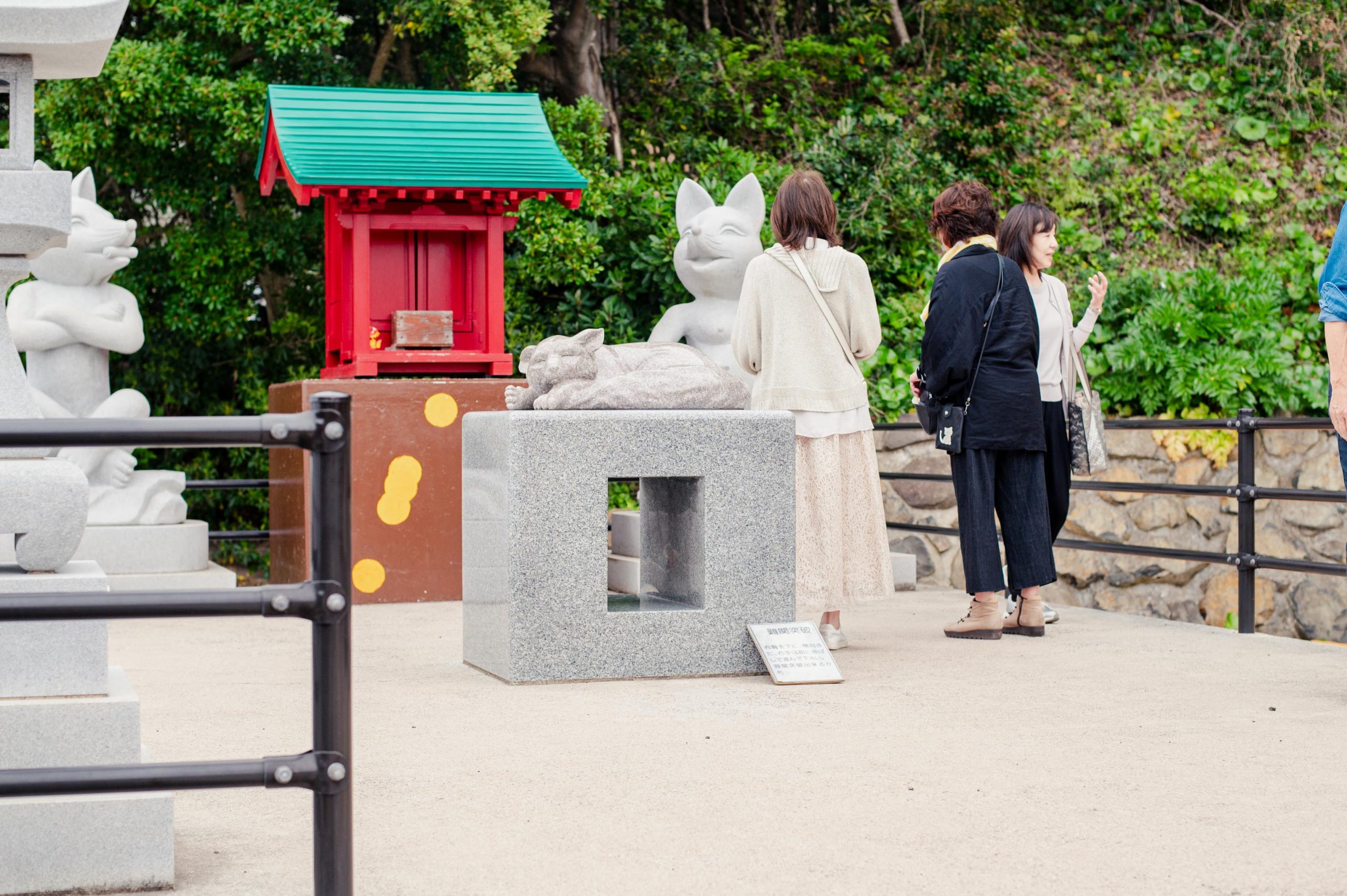
In addition to its mystical scenery, the shrine has gained attention for the offertory box installed on the large torii gate at the entrance. Surprisingly, it is placed in the center of the torii gate about 5 meters above the ground, and it is said that if you can successfully throw your offering into it, your wish will come true. Visitors who come to make a wish try their hand at it one after another, but since the offertory box is intentionally small, the difficulty level is quite high. Motonosumi Shrine offers a wide variety of blessings, including business prosperity, academic success, traffic safety, good relationships, and fertility. Put your wish into a coin and give it a try.
Local
Supporter
A parking lot has been set up next to the shrine, making it much easier to stop by than before. The "Motonosumi Shop" has been opened next to the parking lot, where you can purchase local seaweed and vegetables in addition to souvenirs.
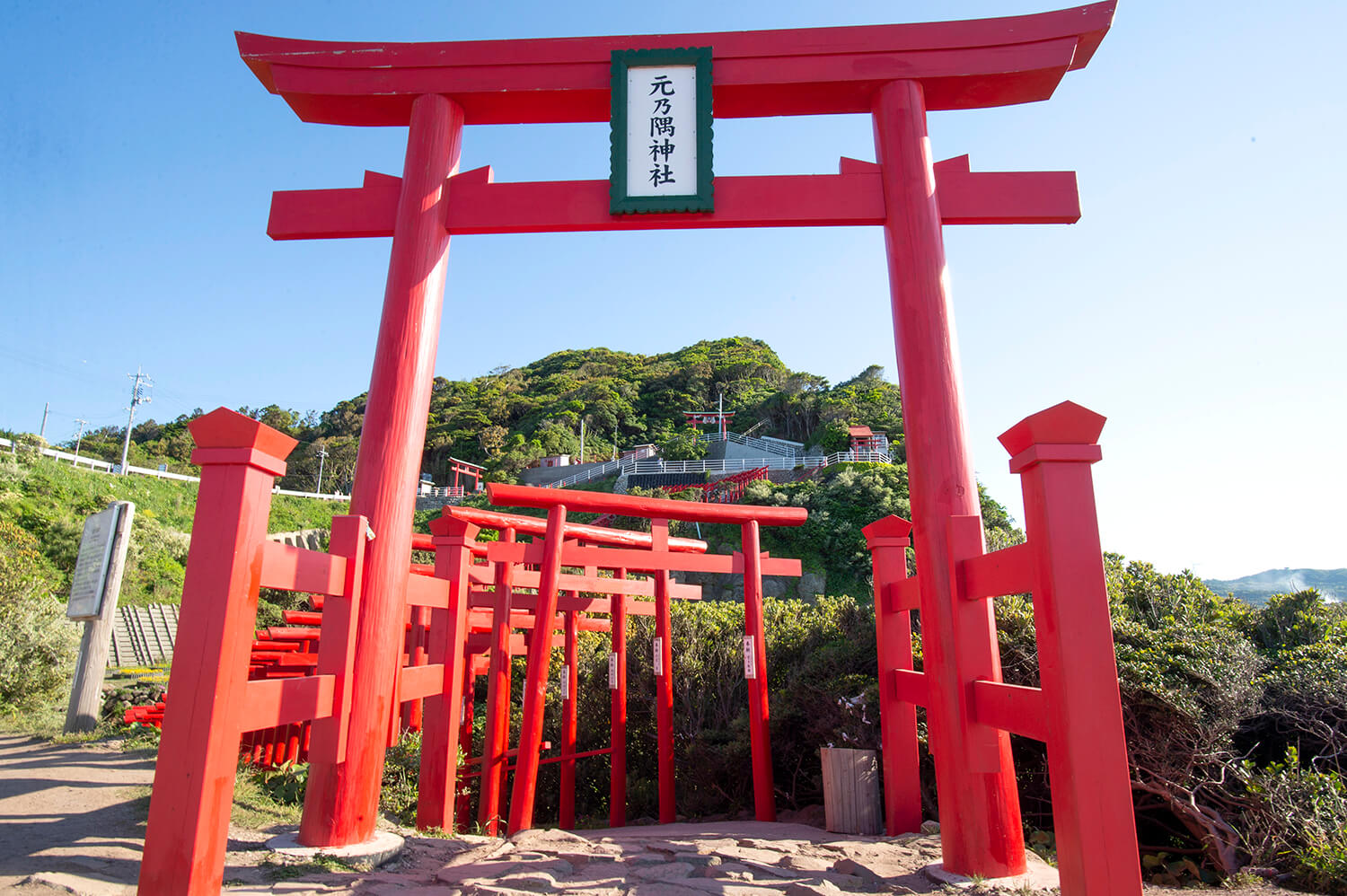
- Motonosumi Shrine
-
- 498 Yuya-tsuo, Nagato City, Yamaguchi Prefecture MAP
- Approx. 60 minutes by car from the Mine IC on the Chugoku Expressway
- 5:30–17:30
- Some areas will be closed to visitors during the following period.
・Saturdays, Sundays, and holidays from March to November 2026 - Free
- 0837-26-0708 (Roadside Station Senza Kitchen, Nagato City Tourist Information Center YUKUTE)
- Paid
 No entry at night
*Recommended car navigation setting for the shrine: TEL 0837-32-2003 (Shokujidokoro Shiokaze)
5Omijima Island
The 'Maritime Alps' where superb views like cliffs and strange rocks continue.
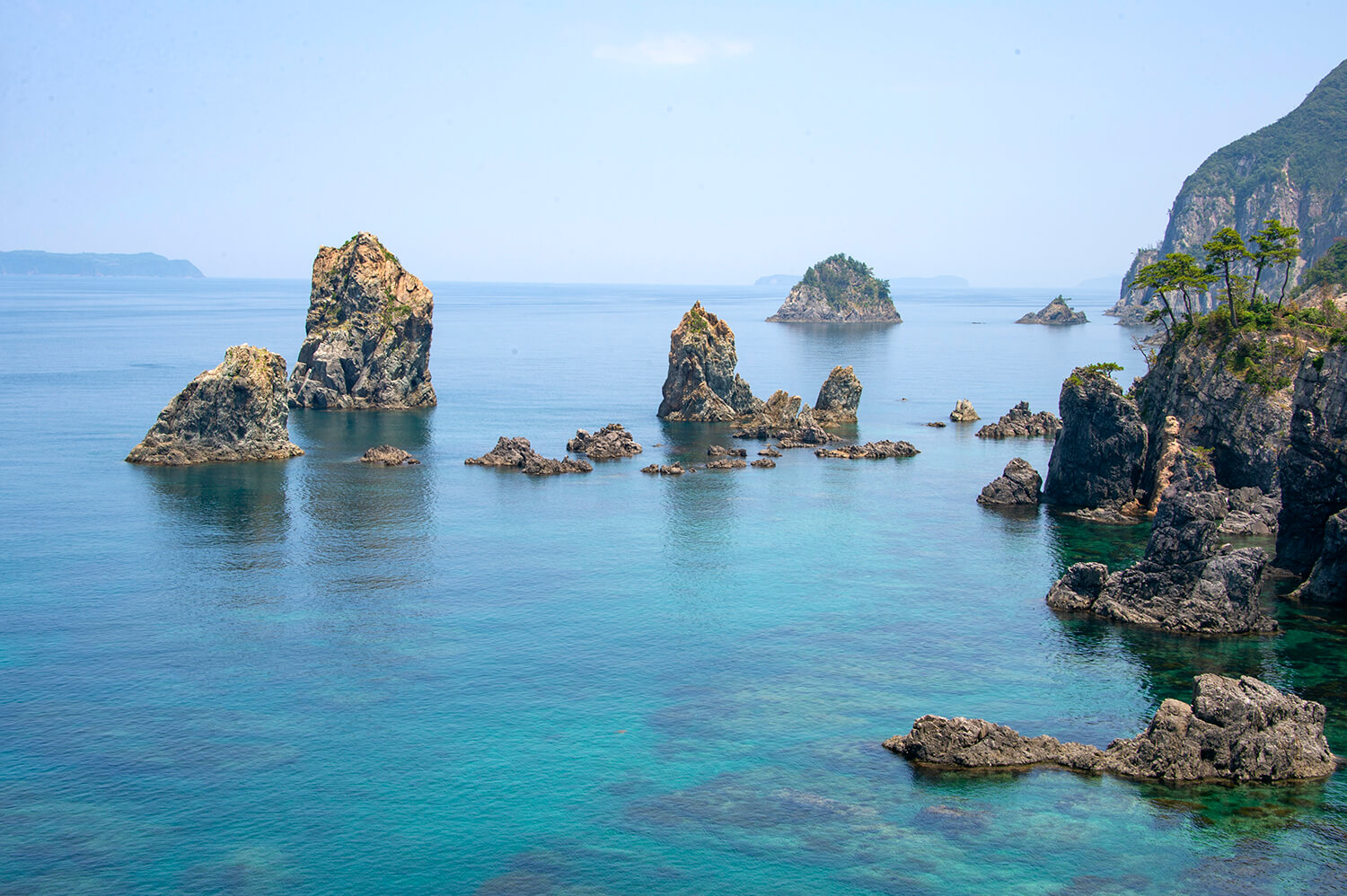
Aomi Island floats just a stone's throw from the city of Nagato. In stark contrast to the calm scenery on the city side, where quiet inlets and villages are scattered, the Sea of Japan side features rugged landscapes shaped by the waves, with continuous sheer cliffs and stone pillars protruding from the sea.
This superb view, also known as the "Alps of the Sea," can be enjoyed at leisure from the "Aomi Island Nature Research Trail," a walking path maintained along the cliffs. The total length is approximately 1,900 meters, offering views of the horizon of the Sea of Japan in the distance and numerous strange rock formations below, with information boards placed at highlights and photogenic spots.
A series of thrills and excitement. Tour the Maritime Alps by sightseeing boat.

You can enjoy the "Alps of the Sea" in all their impressive glory by taking a sightseeing boat with the "Omijima Sightseeing Boat" service. It is a series of thrills and excitement, with the boat passing right by strange rock formations and navigating through sea caves that are barely wider than the boat itself. Another great point is the guidance and commentary provided by the captain at each highlight.
The boarding area is next to the "Senzakitchen" roadside station in Senzaki, Nagato City. While the standard course goes around the island, the route may be changed or the service cancelled depending on weather and wave conditions. The company posts the daily operating status on their social media every morning, so it is best to check in advance for peace of mind.
Local
Supporter
There are two types of sightseeing boats: the small "Dolphin Boat," which allows you to pass through sea caves, and the medium-sized "Whale Boat," where you can feel the sea breeze on the deck. They operate year-round, but the summer cruise along the "Sea Alps" is simply exhilarating.
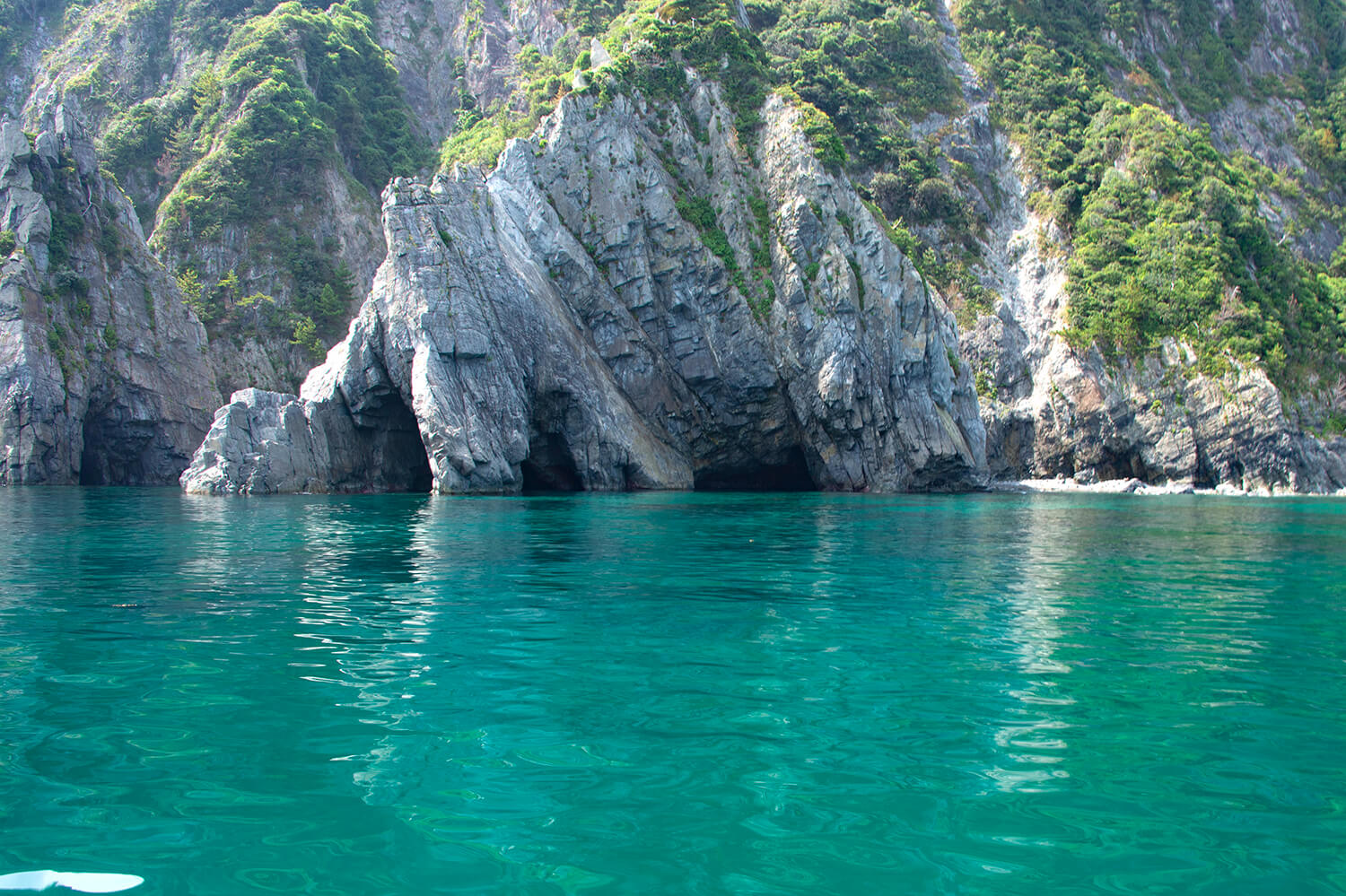
- Omi Island
-
- Shizugaura, Senzaki, Nagato City, Yamaguchi PrefectureMAP
- Approx. 50 minutes by car from the Mine IC on the Chugoku Expressway
- Omijima Sightseeing Boat: Take a bus from JR Nagato-shi Station and get off at "Senza Kitchen" (immediately accessible)
Omijima Nature Research Trail: Take a bus from JR Nagato-shi Station and get off at "Shizugaura" (immediately accessible) - Sightseeing boat (1-lap course): Adults 2,800 yen, elementary school students 1,400 yen
- 0837-26-0708 (Roadside Station Senza Kitchen, Nagato City Tourist Information Center YUKUTE)
0837-26-0834 (Omijima Sightseeing Boat) - The Omijima Nature Research Trail requires an admission fee; use the free parking at Senza Kitchen for the sightseeing boat
- https://www.omijimakankoukisen.jp/ (Omijima Sightseeing Boat)
6Hagi Castle Town
A World Heritage castle town where the atmosphere of the Edo period remains in many places.
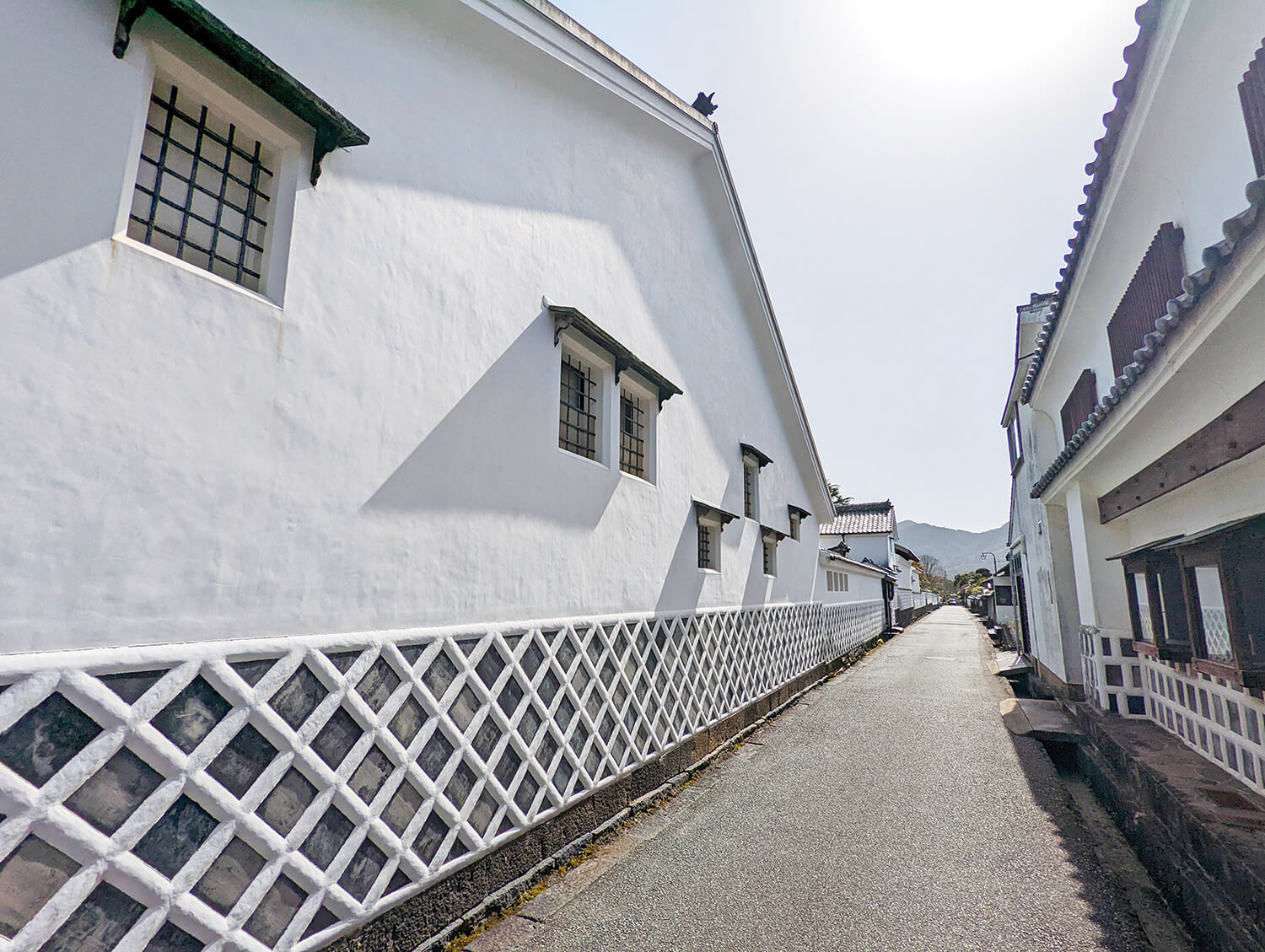
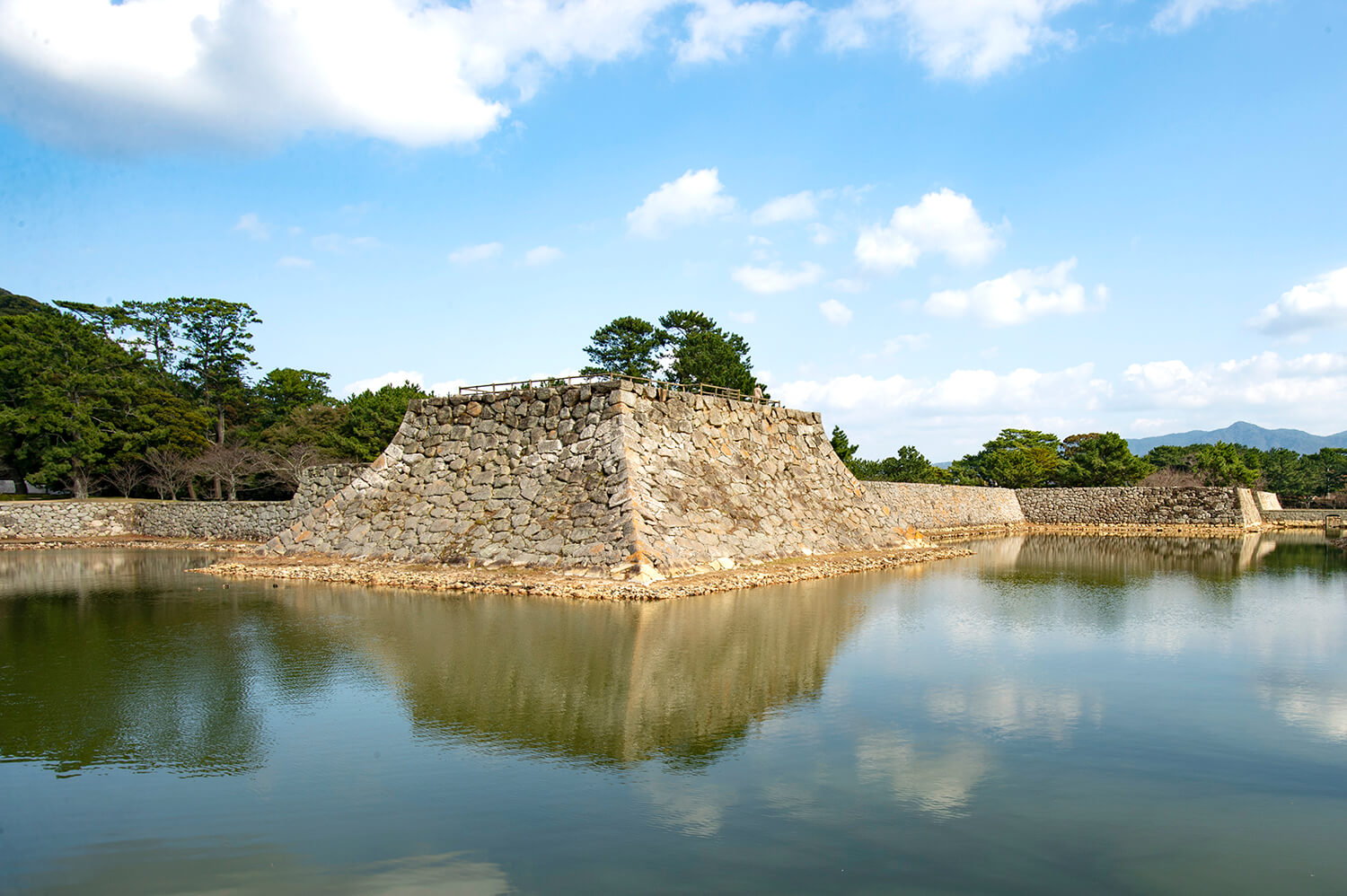
From the early Edo period to the end of the shogunate, Hagi City was the center of the Choshu Domain (present-day Yamaguchi Prefecture), which was ruled by the Mori clan. The layout of the castle town, which was developed along with the construction of Hagi Castle, still forms the city area today, and you can enjoy strolling around while looking at old maps and illustrations from that time.
Buildings and earthen walls from that era still exist in many places, and in 2015, the area was registered as one of the component assets of the World Heritage site "Sites of Japan’s Meiji Industrial Revolution." In addition to samurai residences and merchant houses, there are many spots where you can trace the footsteps of figures who were active during the end of the shogunate and the Meiji Restoration, such as the birthplaces of Shinsaku Takasugi and Kido Takayoshi (Katsura Kogoro).
Ways to enjoy the castle town beyond just visiting historical sites.

The charm of the Hagi castle town is not limited to history. Cafe hopping is another way to enjoy it, with unique shops such as those utilizing old townhouses or traditional folk houses, shops with Japanese gardens, and shops located in the back of samurai residences. Beyond cafes, there are plenty of hidden gems you should check out, such as the "Natsumikan (summer orange) soft-serve ice cream" at the Hagi Museum.
New shops have been appearing one after another, such as "Hagi Pudding-tei" and "Hagi Castle Town Beer MURATA" in 2021, and the specialty shop for home-roasted coffee and baked goods "Nero Bake" in 2022, all of which are already attracting attention.
Local
Supporter
Hagi City was the first-ever national grand prize winner of the "Kimono-Friendly City Award." The entire town is photogenic, making it a perfect backdrop for wearing a kimono. We also recommend using the kimono rental shops (reservation required) within the castle town. Many shops offer special benefits exclusively for those wearing kimonos.
- Hagi Castle Town
-
- Gofukumachi, Horiuchi, etc., Hagi City, Yamaguchi PrefectureMAP
- Approx. 60 minutes by car from JR Shin-Yamaguchi Station
- Take a bus from JR Shin-Yamaguchi Station, get off at "Hagi Meirin Center," and walk for about 5 minutes
- 0838-25-1750 (Hagi City Tourism Association)
- Paid
7Shoin Shrine
Shoin Shrine, which enshrines Yoshida Shoin, the charismatic leader of the shishi of the Bakumatsu period
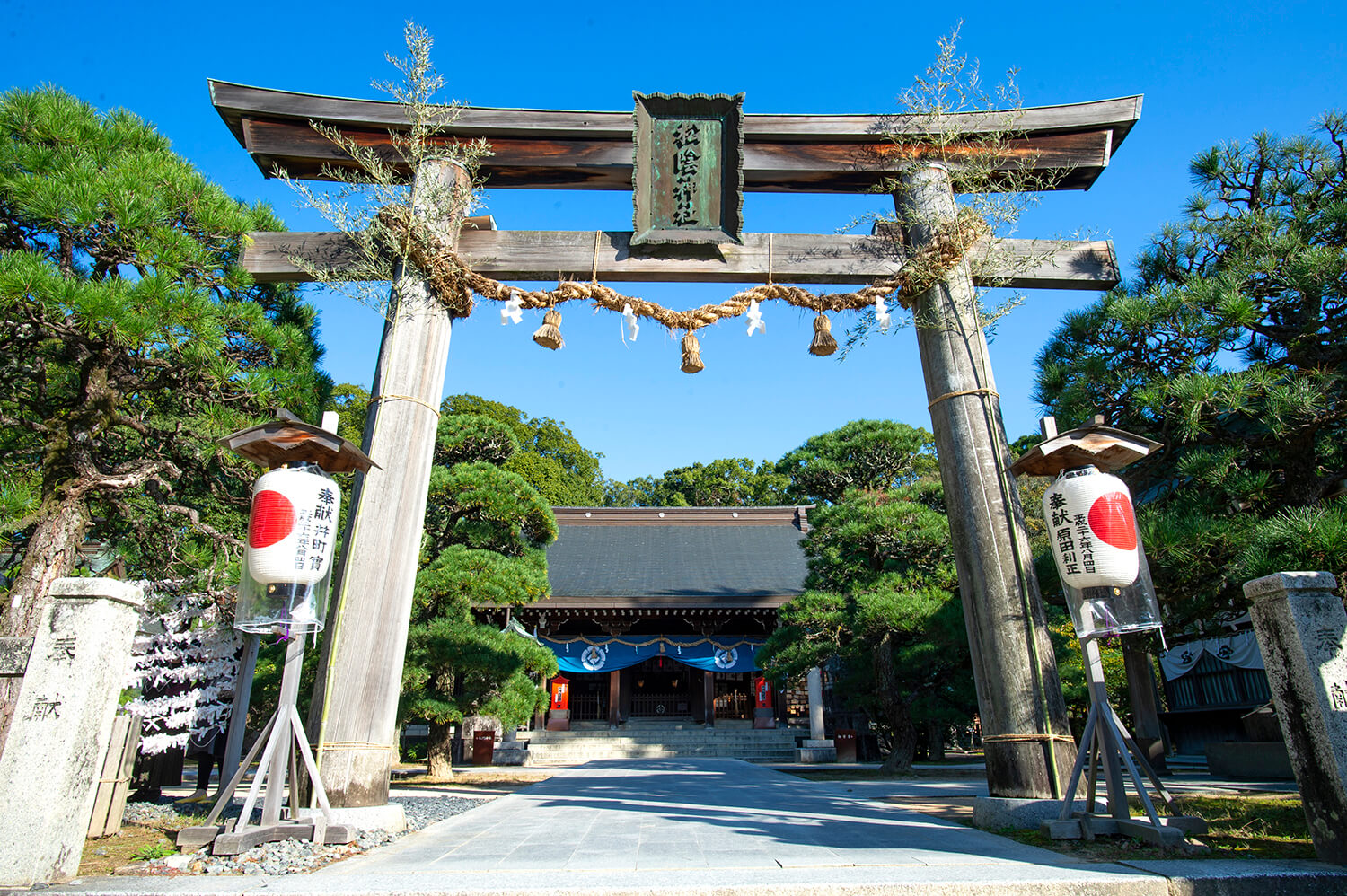
Shoin Yoshida was a mentor who taught figures such as Shinsaku Takasugi, Hirobumi Ito, and Aritomo Yamagata at the "Shoka Sonjuku" academy, serving as the driving force behind the Meiji Restoration. He was a thinker of the late Edo period who became a charismatic figure to them.
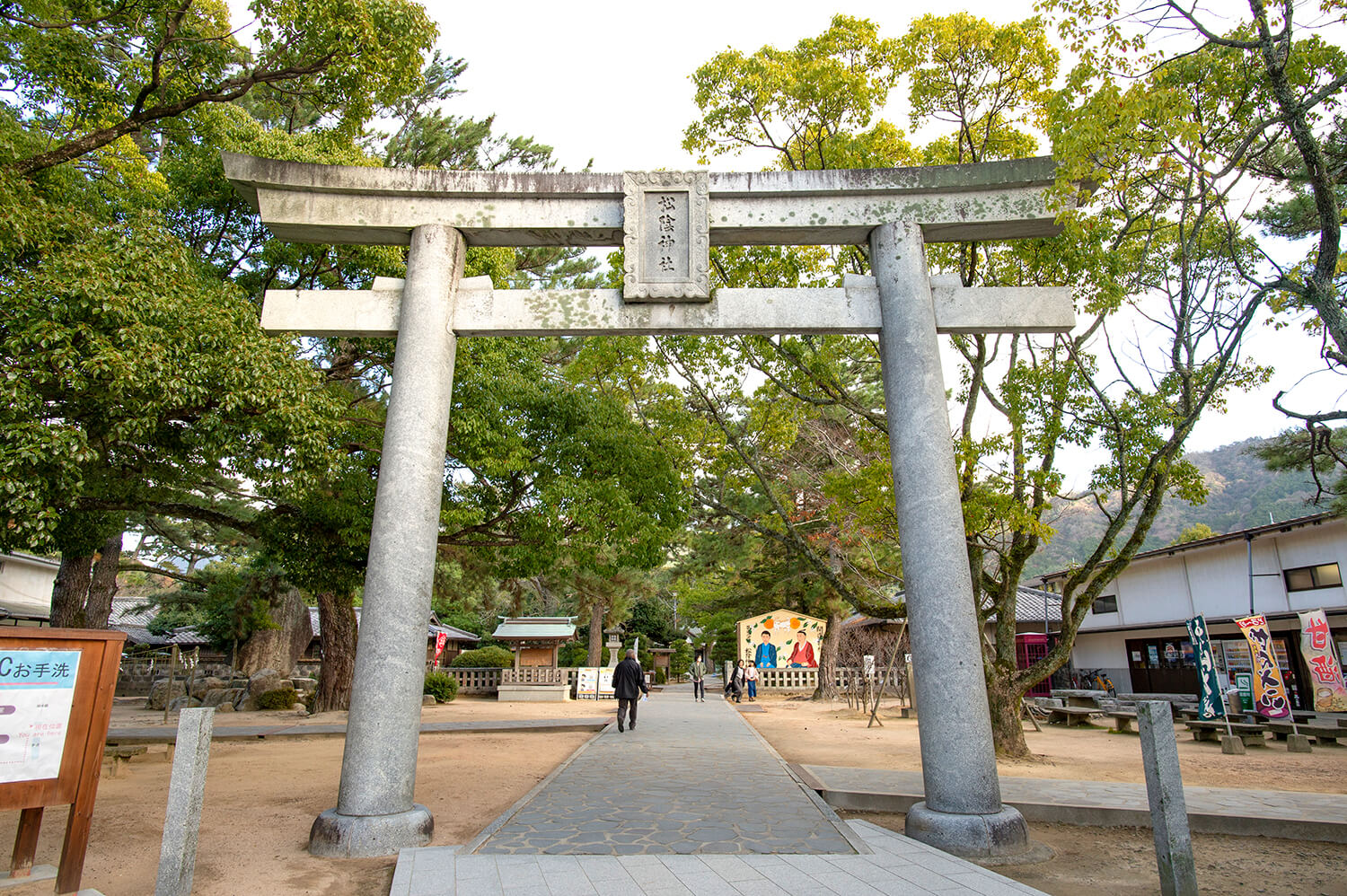
Shoin Shrine was founded in 1907 to enshrine Shoin, who met his end at the execution grounds during the Ansei Purge (1858). Today, it is not only a representative tourist spot in Hagi but also known as a deity of learning, with many students visiting to pray for success in their entrance exams. Original amulets such as the "Kokorozashi-mamori" (Ambition Amulet) and "Shisei-mamori" (Sincerity Amulet), which feature characters and portraits written by Shoin, are also popular.
Shoka Sonjuku, where you can feel the spirit of Shoin and the shishi of the Bakumatsu period firsthand

The "Shoka Sonjuku," a private school presided over by Shoin Yoshida, still exists in its original form within the shrine grounds, along with the family home where Shoin was once confined (the Former Residence of Shoin Yoshida). In 2015, it was registered as one of the component assets of the World Heritage site "Sites of Japan’s Meiji Industrial Revolution." Although you cannot enter the building, you can see the space where his students learned from and talked with Shoin. Because it was a gathering place for people with passionate ambitions, the site, including the shrine, is also reputed to be a power spot.
The "Shomon Shrine," which enshrines his students, is located next to the main hall, making it a truly sacred place for fans of late Edo period history.
Local
Supporter
At first glance, Shoka Sonjuku Academy looks like a small building, but when you consider that the famous figures who were involved in the Meiji Restoration gathered here, you can immerse yourself in an atmosphere that makes you feel a surge of great power. It is a spot where you can feel the presence of these great historical figures.
- Shoin Shrine
-
- 1537 Chinto, Hagi City, Yamaguchi Prefecture MAP
- Approx. 20 minutes on foot from JR Higashi-Hagi Station
- Free *The historical museum and Shiseikan within the temple grounds require an admission fee
- 0838-22-4643
- Free *Large buses require a fee
- Shoka Sonjuku Academy is locked at night
8Tsunoshima Bridge
A scenic spot that attracts attention from all over the country as a place you must visit at least once

Located in Hohoku-cho, Shimonoseki City, at the northwestern tip of Yamaguchi Prefecture, is the "Tsunoshima Bridge." Completed in 2000, it connects the mainland to Tsunoshima Island, which floats about 1.5 km offshore. With its beautiful scenery woven by the 1,780-meter-long bridge and the sea, it allows visitors to enjoy an exhilarating drive over the ocean, and it quickly became one of Yamaguchi Prefecture's most popular spots.
Amagase Park on the mainland side and the nearby hills are excellent viewing spots. If the conditions of calm seas and clear weather are met, the transparency of the water around the bridge becomes even more striking, allowing you to witness scenery even more beautiful than what is seen in tourist brochures.
Beyond the scenic bridge lies an even more spectacular view. Sunset views are also recommended
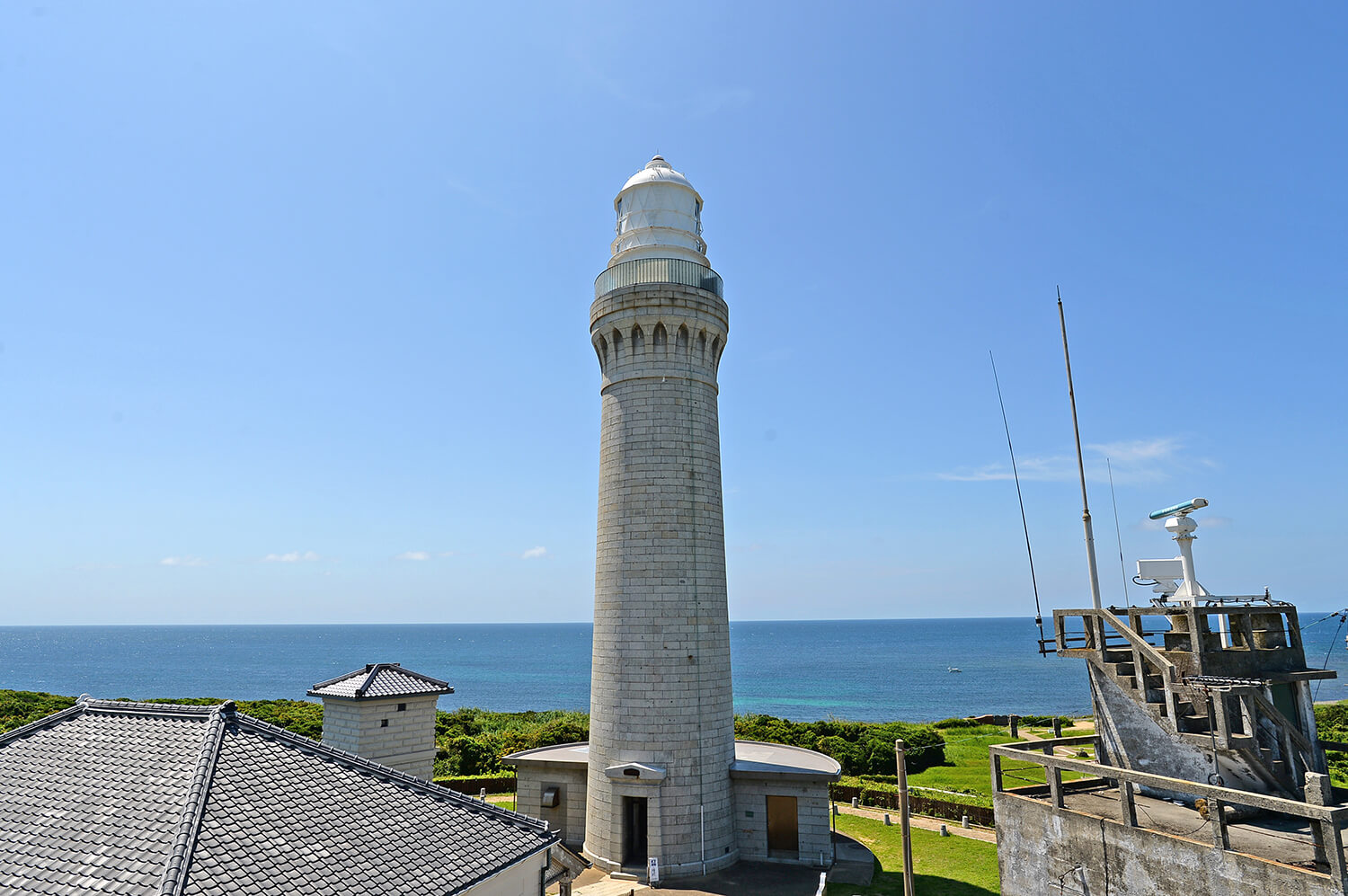
Once you cross over to Tsunoshima and drive for about 5 minutes, you will reach the end of the island where the "Tsunoshima Lighthouse" and "Yumesakinami Park" are located. Completed in 1875 (Meiji 8), the Tsunoshima Lighthouse is one of only five first-class lighthouses in Japan and was designated as a National Important Cultural Property in 2020. Its Western-style design, built with white granite, blends beautifully with the horizon stretching out before you and the blue and green of the cape, offering a superb view with a different atmosphere from the Tsunoshima Bridge. It is possible to climb to the top of the lighthouse (for a fee), and from the balcony, you can overlook the entire island and far out into the Sea of Japan. The sunset from the park is also a must-see.
Local
Supporter
The area around Tsunoshima has some of the clearest water in Yamaguchi Prefecture, with nothing but beautiful beaches, such as those at the foot of the bridge. In summer, many beachgoers visit, and a classic way to enjoy the trip is to stop by hot springs like Nagato Yumoto on the way home.
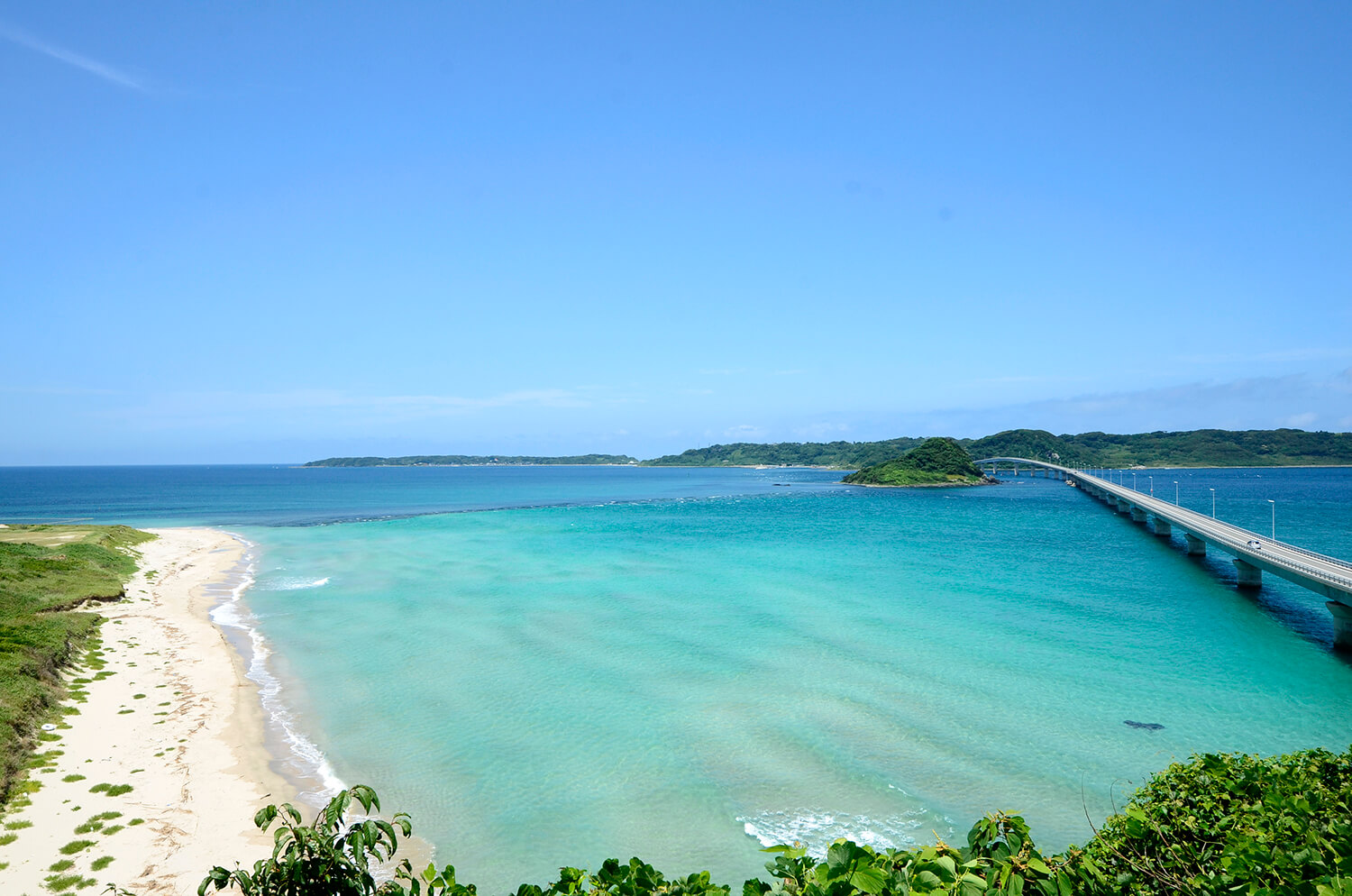
- Tsunoshima Bridge
-
- Kanda, Hohoku-cho, Shimonoseki City, Yamaguchi Prefecture to Tsunoshima MAP
- Approx. 60 minutes by car from the Mine IC on the Chugoku Expressway
- Free
- 083-786-0234 (Hohoku Town Tourism Association Tourist Information Center)
- Free
- Admission to Tsunoshima Lighthouse requires a donation of 300 yen for junior high school students and older (9:00–17:00, *until 16:30 from October to February)
"Hidden gems" known only to those in the know
9Mt. Kasayama
The summit of the small volcano Kasayama is a scenic spot with a panoramic view

Located north of the Hagi city area, "Mt. Kasayama" is a small volcano with an elevation of 112m. You can drive up near the summit and see up close the crater, which is about 30m in diameter and 30m deep, bearing traces of an eruption from about 10,000 years ago. The view from the observation deck is also spectacular, offering a panoramic view not only of the nearby islands and the Hagi city area, but also of the horizon of the Sea of Japan and "Mishima," a remote island floating about 45km off the coast of Hagi, if conditions are right.
There is also a cafe downstairs where you can enjoy tea while taking in the magnificent view. At the northern foot of Mt. Kasayama, a camellia grove spreads out, with about 25,000 wild Japanese camellias growing naturally. The flowers are usually in full bloom from mid-February to late March.
Enjoy nature and gourmet food! The area is packed with highlights

The area around Mt. Kasayama is full of sights and gourmet spots. "Myojin Pond" is a lagoon formed when Mt. Kasayama became connected to the mainland, and the Itsukushima Shrine is enshrined on its shore. It is connected to the sea through gaps in the rocks, and sea fish such as red sea bream, striped beakfish, and stingrays, which were dedicated to pray for a good catch, breed there, and the water level rises and falls with the tides of the open sea.
The "Wind Hole" behind the shrine is recommended in summer. You can enjoy the "natural air conditioning" where air at around 15°C flows out. The surrounding area is dotted with shops where you can taste seafood such as squid, sea urchin, and turban shells, as well as shops selling processed citrus products such as the local specialty, summer oranges. Don't miss out on Hagi's prized gourmet food.
Local
Supporter
Located at the end of the road leading to the Camellia Grove, the restaurant "Tsubaki no Yakata" is a hidden gem run by local fishery cooperative mothers. The set meals, which feature sashimi and simmered tilefish or blackthroat seaperch, are excellent in both volume and value.

- Mt. Kasayama
-
- Koshigahama, Chinto, Hagi City, Yamaguchi Prefecture MAP
- Approx. 15 minutes by car from JR Higashi-Hagi Station
- Take a bus from JR Higashi-Hagi Station, get off at "Koshigahama," and walk for about 5 minutes (to Myojin-ike Pond)
- 0838-25-1750 (Hagi City Tourism Association)
- Koshigahama Parking Lot, Kasayama Summit, and the Camellia Grove are free; Myojin-ike Pond requires an admission fee
- Traveling by taxi or rental car is recommended for visiting the Kasayama Summit and the Camellia Grove
10Tanada no Kadan
A spectacular view of the Sea of Japan spreads out along with seasonal flowers and herb fields
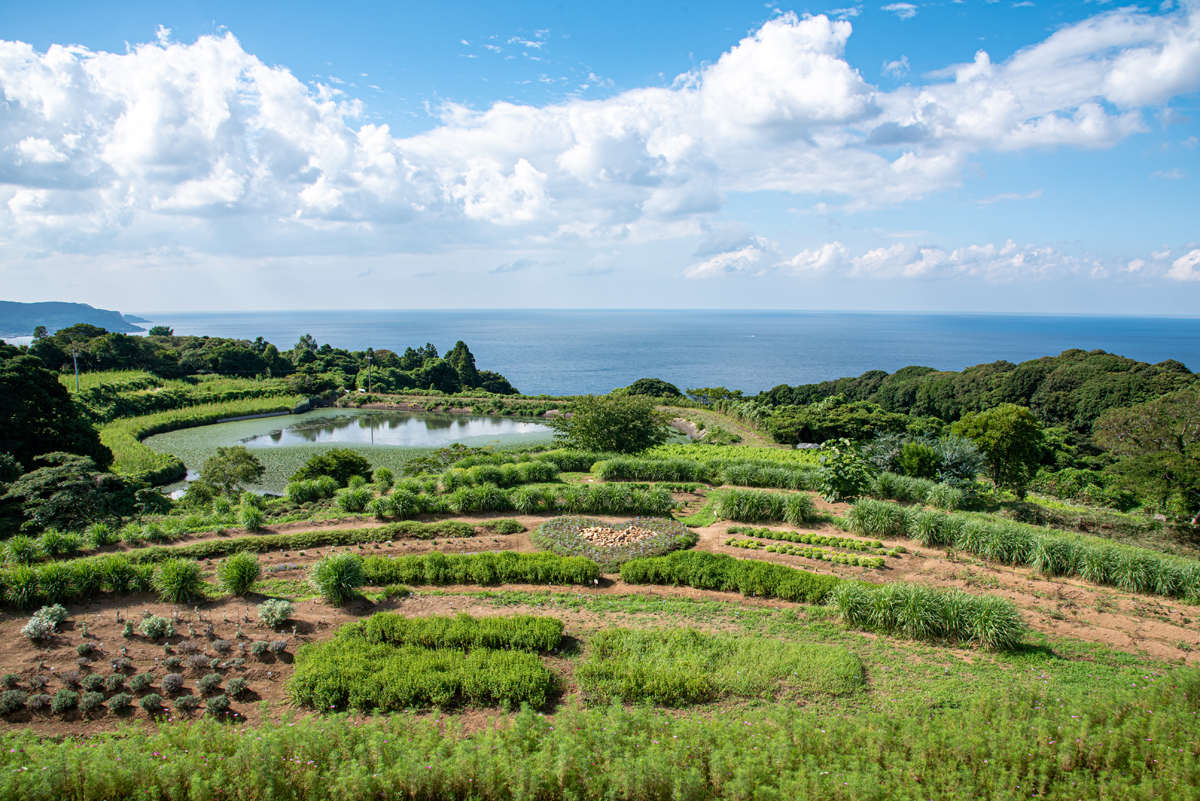
"Tanada no Kadan" in the western Yuya district is a project that has reclaimed abandoned rice terraces, transforming them into fields of flowers and herbs.
On a clear day, you can enjoy the scenery of the blue sky and the Sea of Japan stretching out beyond the flower fields, along with the seasonal blooms.
On weekend afternoons, the local community hosts "Dan Dan Kitchen," which offers a menu featuring herbs grown on-site combined with local agricultural products.
Chill out with hammocks and swings
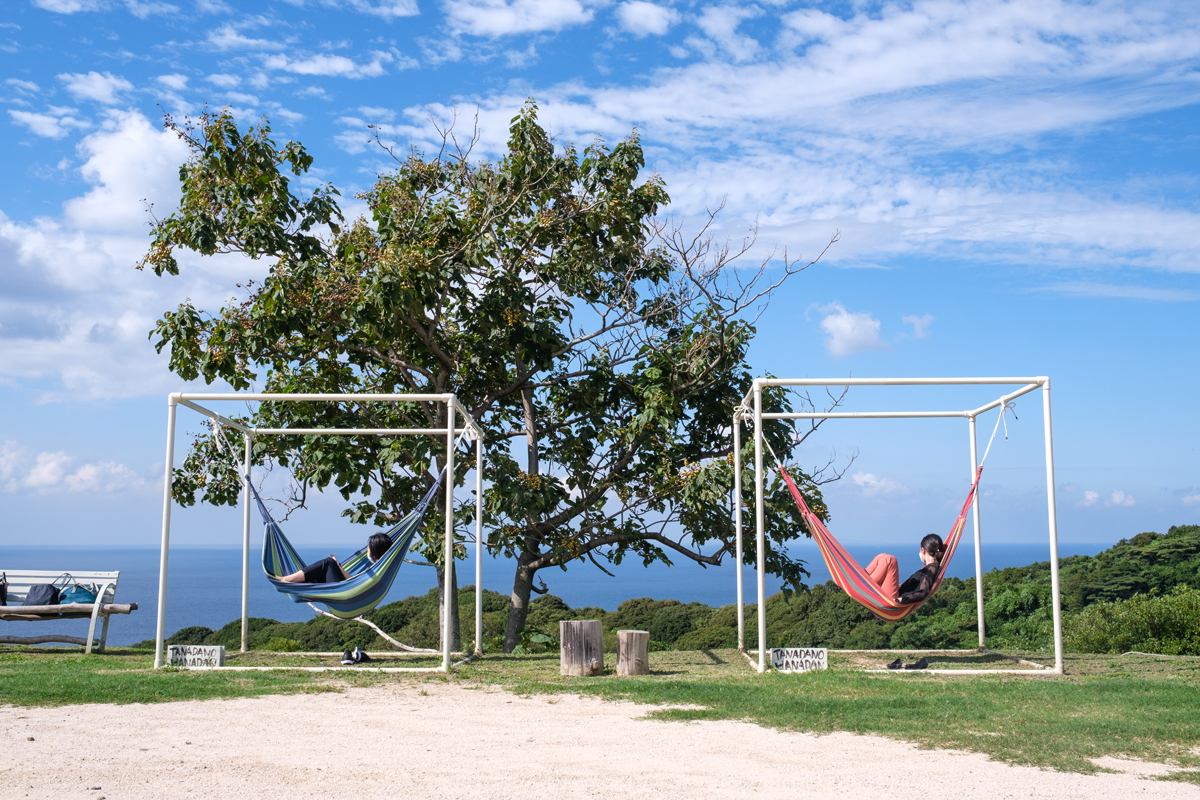
When you visit, be sure to enjoy the hammocks and swings that have been set up.
You can spend a relaxing and leisurely time that you can only experience here, swaying in the pleasant breeze.
Local
Supporter
The popular spot "Motonosumi Shrine" is about a 10-minute drive away. If you have the chance to visit in early summer, it is a must-see spot to combine with your visit to the shrine. If you have time before sunset, we also recommend stopping by "Senjojiki," which is also very close by.

- Higashi-ushirobata Rice Terraces
-
- 1766 Yuya-Kowata, Nagato City, Yamaguchi Prefecture MAP
- Approx. 60 minutes by car from the Mine IC on the Chugoku Expressway
- 0837-26-0708 (Nagato City Tourist Information Center YUKUTE)
- Free
11Unrin-ji Temple
A temple full of cats that will warm your heart when you visit

Unrin-ji Temple is nestled in a village in the Mutsumi region, located in the mountains of eastern Hagi. It is a branch temple of Tenju-in (now defunct), which appears in the "Cat Town Legend" of the Hagi castle town. The temple came to be known as the "Cat Temple" as the collection of cat-related figurines grew, thanks to the head priest's deep love for cats and donations from visitors.
The rows of cat figurines lined up in front of the main hall are a sight to behold! It has become so popular that it is now considered a "sacred place" for cat lovers, attracting many visitors not only from within Japan but from all over the world.
Buddha statues, fortune slips, amulets, and temple seals! The entire temple is just covered in cats

As you begin to climb the stairs to the main hall, cats appear one after another in your field of vision in various forms, such as signs, figurines, and placards for commemorative photos. In addition to "cat fortunes," all the amulets and other items available are original to Unrin-ji, designed by the head priest and his wife, and can only be obtained here. The adorable cat-themed goshuin (temple seal) is also a must-see.
Lined up densely above the entrance are "cat ema" (votive tablets), which are popular for their unique style where visitors draw a cat's face along with their wishes. If you stroll around the temple grounds, you might even meet the four cats that live there.
Local
Supporter
The wooden cat carvings lined up in the temple grounds are astonishingly exquisite, ranging from realistic ones that look alive to characters from picture books. They are all chainsaw art, and the creator, Takao Hayashi, is a world-famous artist who has even won world championships.
12Tainei-ji Temple
The temple that served as the stage for the opening of Nagato-Yumoto Onsen
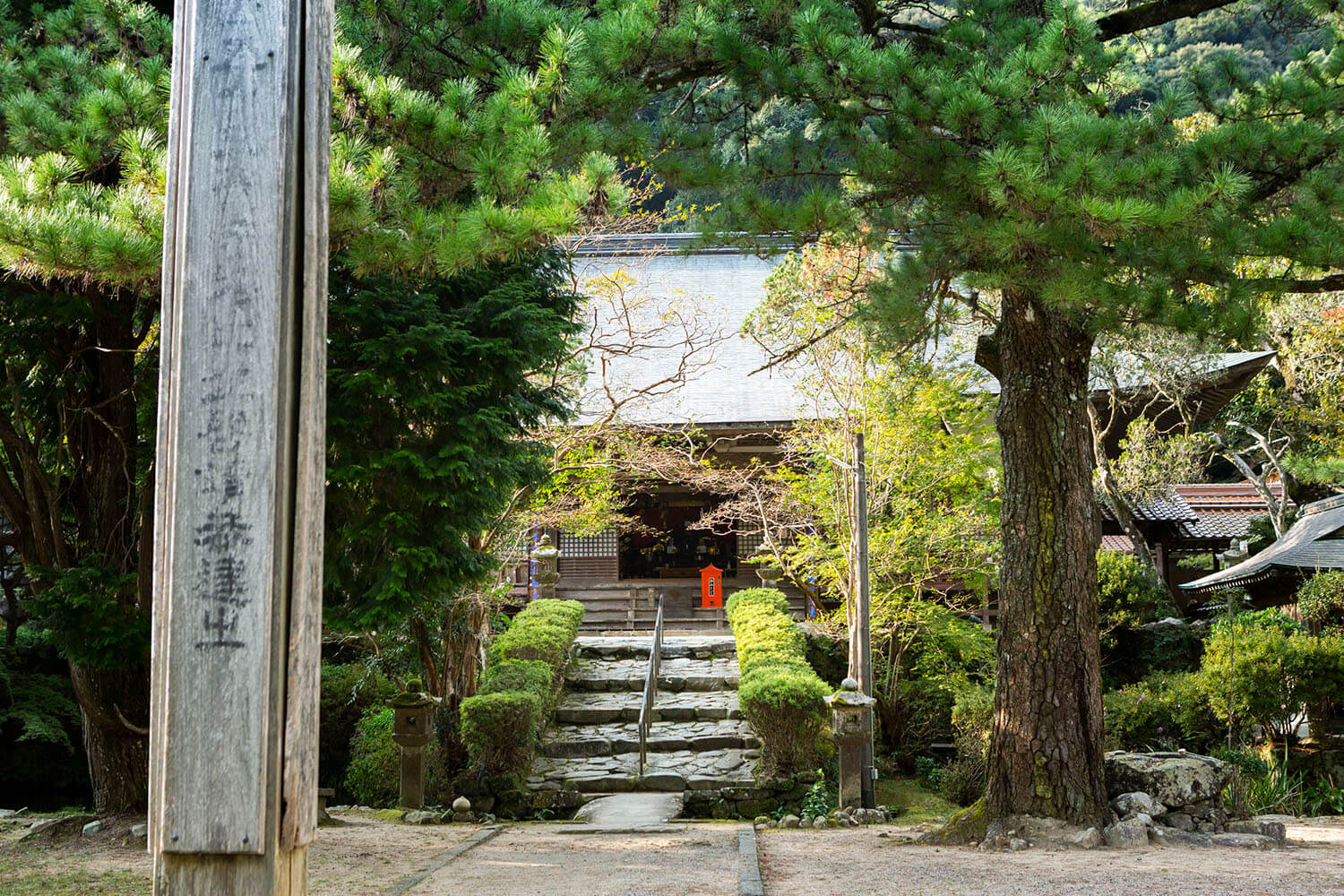
Founded in 1410 (Oei 17) by Washizu Hirotada, who was the deputy governor of Nagato Province, this famous Soto Zen temple was once known as the "Koya of the West" and reached the height of its prosperity.
"Tainei-ji Temple" is also known as the setting for the discovery of Nagato Yumoto Onsen. About 600 years ago, the temple's Zen master, Joan, received a divine revelation about a hot spring from an old man who identified himself as the deity Sumiyoshi Daimyojin. The hot spring discovered at that time is known as "On-to," the "divine hot spring," and a stone where Sumiyoshi Daimyojin is said to have sat in meditation still remains on the temple grounds.
While the temple is charming throughout the seasons with cherry blossoms, fresh greenery, and autumn leaves, the autumn foliage season, when the grounds are dyed in vibrant shades of maple and ginkgo, is a must-see.
Stroll through the temple grounds and visit historical highlights
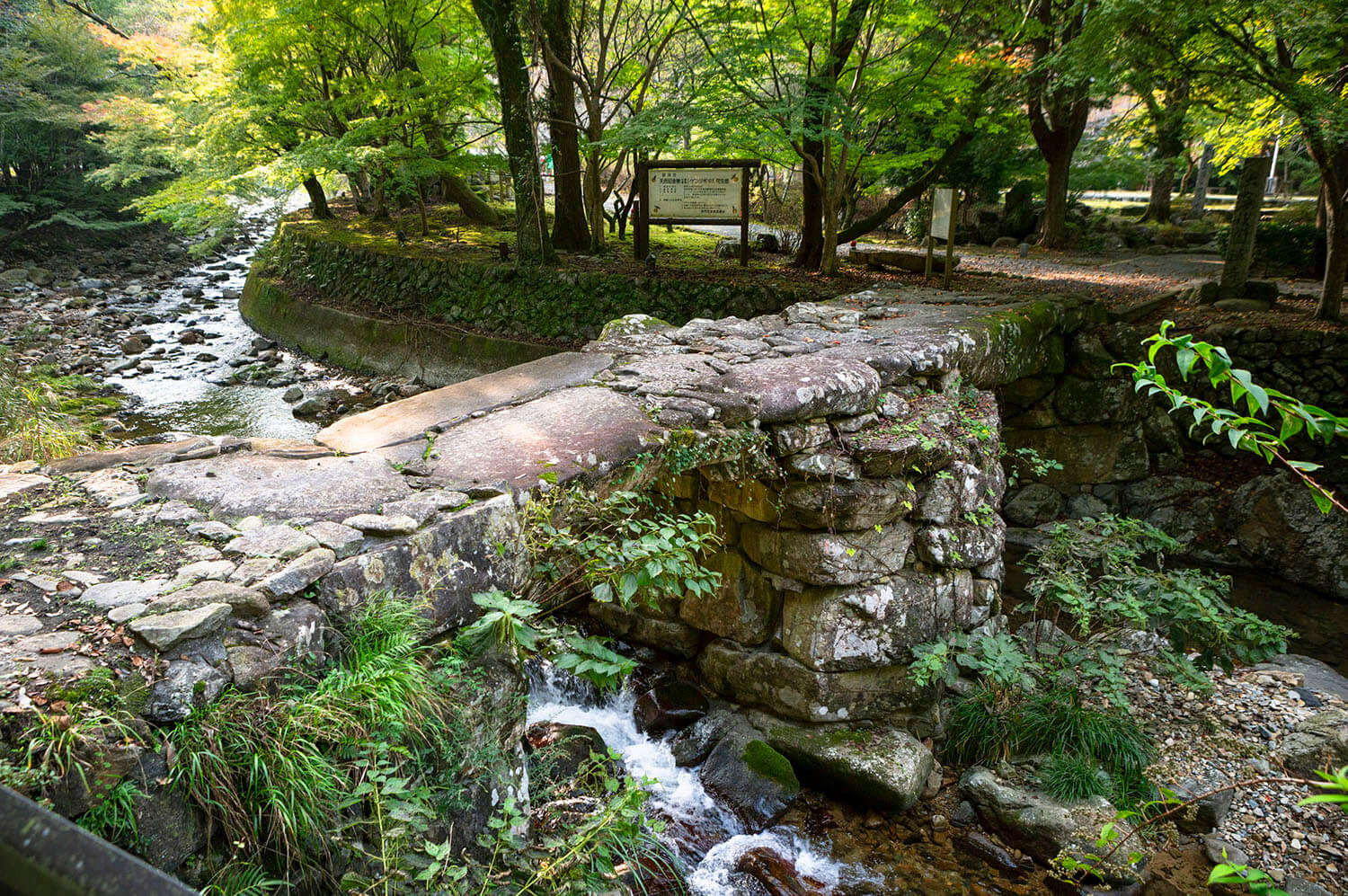
In addition to the main hall, the spacious temple grounds offer many other highlights. The Banjaku Bridge, which spans the Tainei-ji River, is one of the "Three Strange Bridges of Bocho," alongside the Kintai Bridge in Iwakuni City and the former Niji Bridge in Yamaguchi City. Dating back to the early Edo period, its structural beauty, created by combining natural stones of various sizes, is magnificent.
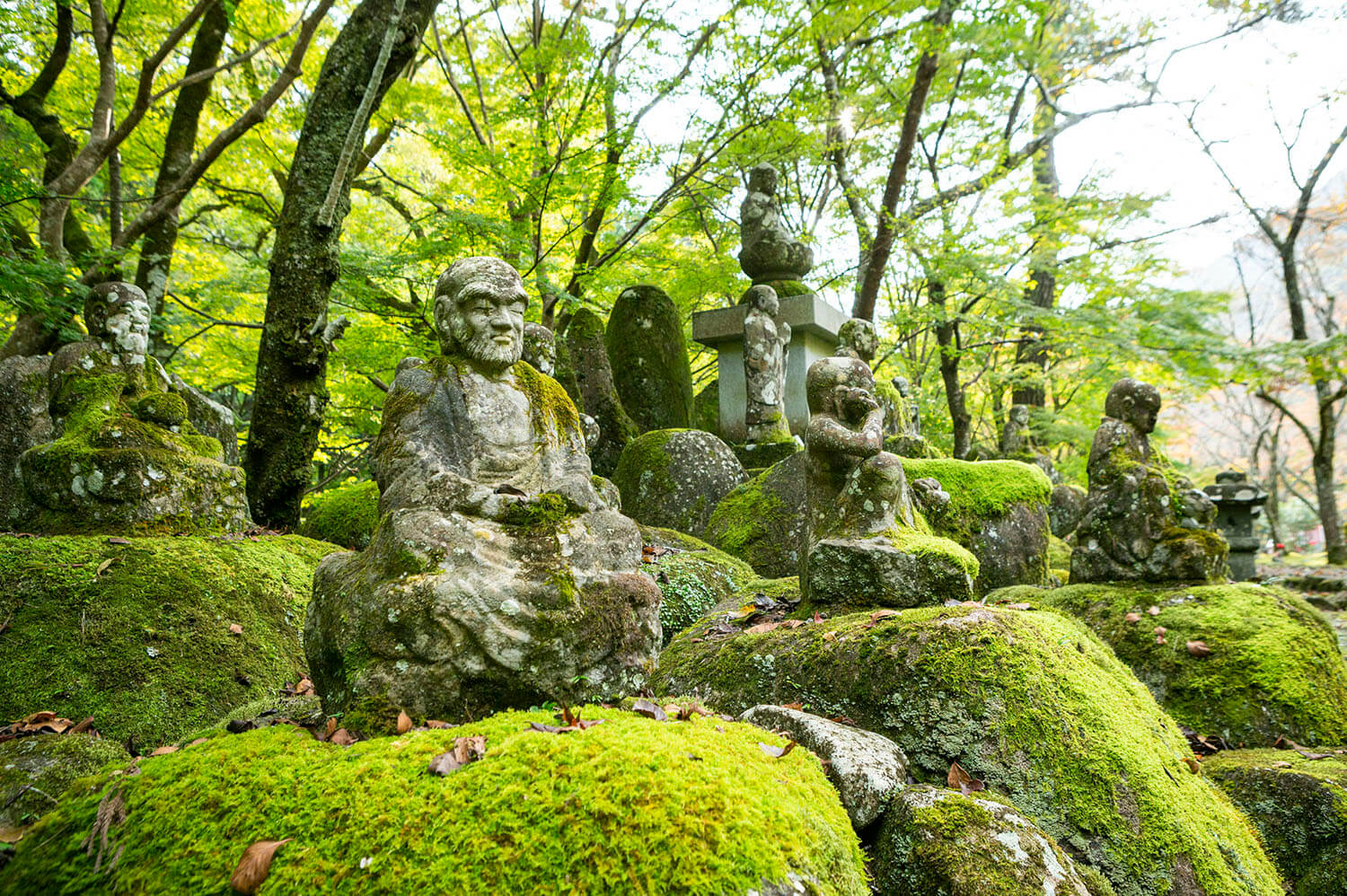
Lined up on the hill behind the main hall are the graves of Yoshitaka, the 31st head of the Ouchi clan who built a great culture in Yamaguchi Prefecture, his eldest son, and his retainers. There is also a pond where it is said that Yoshitaka, pursued by rebels, realized his end when he could no longer see his reflection in the water, as well as a rock where he is said to have hung his helmet. Other highlights include the Sixteen Arhat statues, a historical museum, and the Nagato Toyokawa Inari shrine.
Local
Supporter
Don't miss the light-up events held annually during the peak seasons for cherry blossoms and autumn leaves. Be sure to check the website or other sources for details such as dates before you head out.
- Tainei-ji Temple
-
- 1074-1 Monzen, Fukawa Yumoto, Nagato City, Yamaguchi Prefecture MAP
- Approx. 15-minute walk from JR Nagato-Yumoto Station
- 15-minute walk from Nagato Yumoto Onsen bus stop
- 0837-25-3469
- Free
13Fukutoku Inari Shrine
Moved by the magical sunset! A shrine with over a thousand years of history and diverse blessings.

Along with the classic "Motonosumi Shrine," I would like to recommend "Fukutoku Inari Shrine" for those searching with the keywords "superb view," "shrine," and "Yamaguchi Prefecture." Located about a 15-minute drive north from Kawatana Onsen in Toyoura-cho, Shimonoseki City, it sits on a hill overlooking the Hibiki-nada Sea. It has a history spanning well over 1,000 years and has gathered faith since ancient times for its diverse blessings.
There are plenty of highlights, including the view from the shrine grounds, the magnificent main hall and large torii gate, and the thousand torii gates that wind through the mountains. The superb view overlooking the horizon to the west has been celebrated in ancient poems, and its beauty reaches its climax at sunset.
A breathtaking view from the cliff that unfolds after passing through the crimson tunnel of a thousand torii gates.

The thousand torii gates, which are lined up in an orderly fashion from the shrine grounds into the mountains, offer an exciting experience that makes you feel as if you are being drawn into another world as you proceed deeper. There are two small Inari shrines in the forest along the way, and another at the end of the tunnel of torii gates where your view opens up in an instant with dazzling sunlight, making it feel like a small adventure to visit the gods.
The endpoint, which opens up on the mountainside, is on a cliff overlooking the JR San-in Main Line and the national highway below, along with the Hibiki-nada Sea, allowing you to enjoy a superb view of the entire area. Please note that vipers may appear in the summer, so be very careful where you step.
Local
Supporter
We recommend viewing the sunset so that it overlaps with the large torii gate. The reflection of the sun on the ocean surface looks as if a path of light is stretching toward the gate. If you can witness this divine scenery after offering your prayers, good fortune is sure to follow!?

- Fukutoku Inari Shrine
-
- 2960-1 Uga, Toyoura-cho, Shimonoseki City, Yamaguchi Prefecture MAP
- Approx. 45 minutes by car from JR Shimonoseki Station
- Take a bus from Kawatana Onsen and get off at "Fukutoku Inari-mae"
- 083-776-0125
- Free
- Goshuin are available from 10:00 to 15:00 (may not be available on the day before or the day of festivals, etc.)
MAP
- Must-visit "classic" sightseeing spots in Nagato, Hagi, and Mine
- "Hidden gems" known only to those in the know
- Nearby Hoshino Resorts facilities

Local supporter in charge of this article
- Naoka TakadaHealing mood maker
KAI Nagato
Nagato Yumoto Onsen, Yamaguchi Prefecture
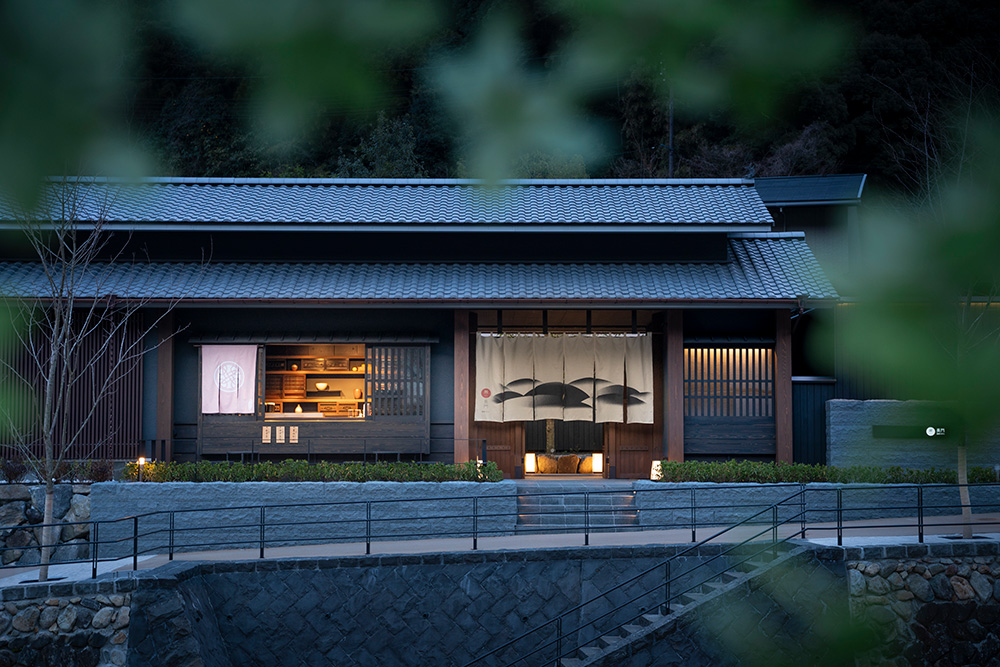
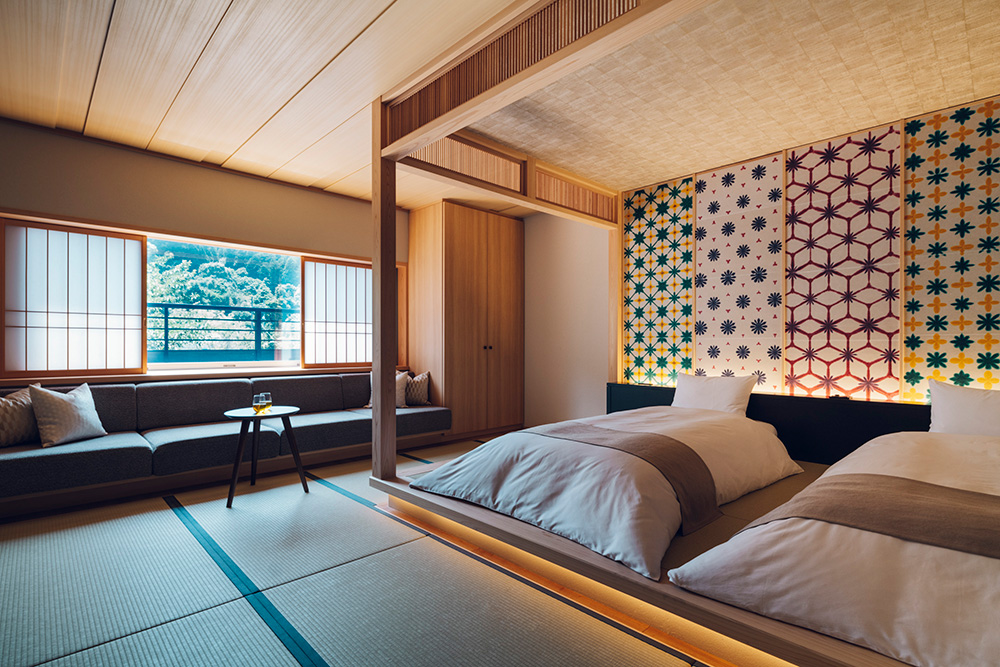
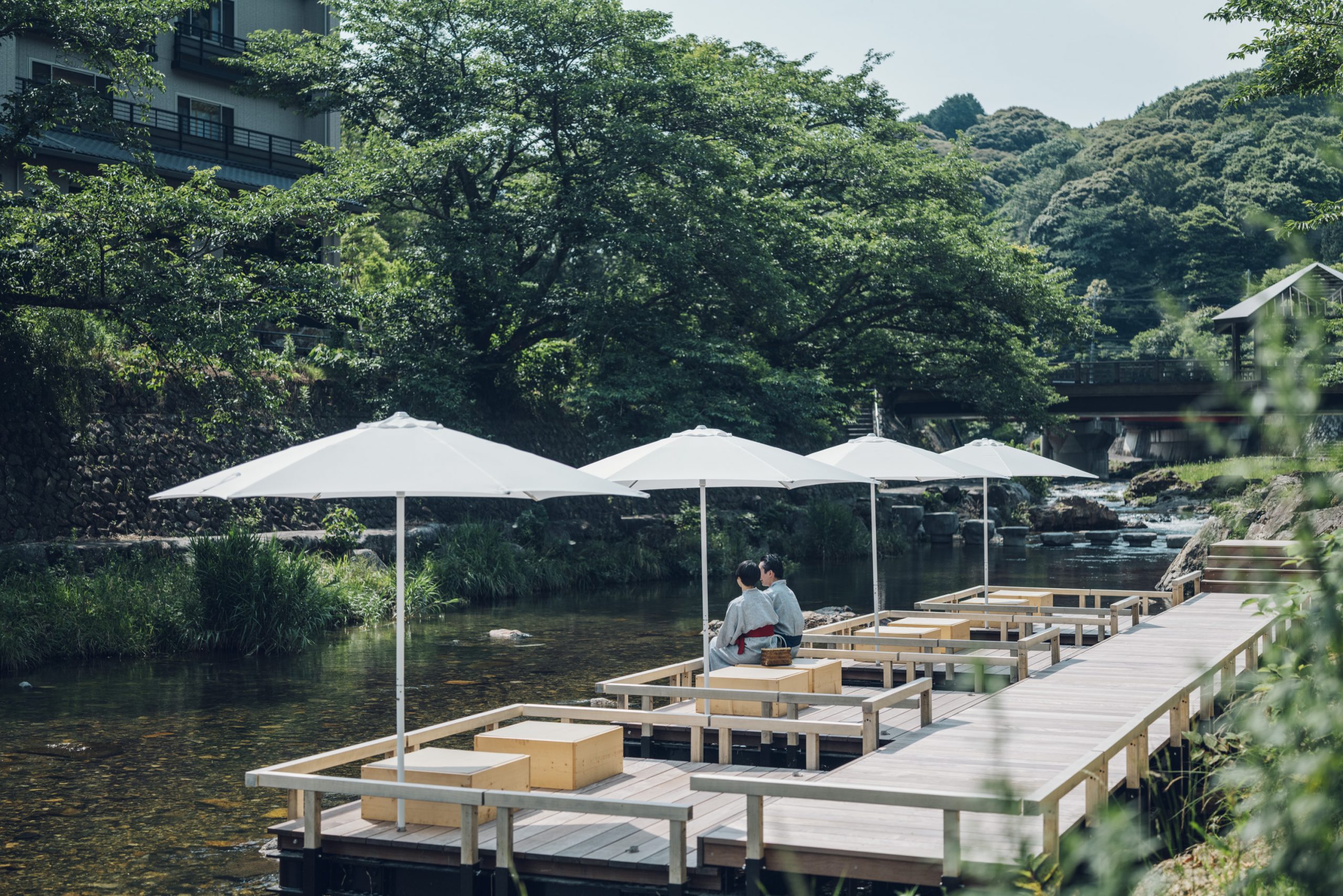
Located in Nagato Yumoto Onsen, a representative hot spring resort in Yamaguchi Prefecture, this inn features a design inspired by the "Ochaya-yashiki" (tea house villas) of the Edo period.

Access Approx. 15-minute walk from JR Nagato-Yumoto Onsen Station
- Accommodation rate example
- Per person per night From ¥32,000