





[2026 Edition] Recommended Autumn Foliage Spots in the Aizu Region (Aizuwakamatsu, Kitakata, Bandai, Inawashiro)
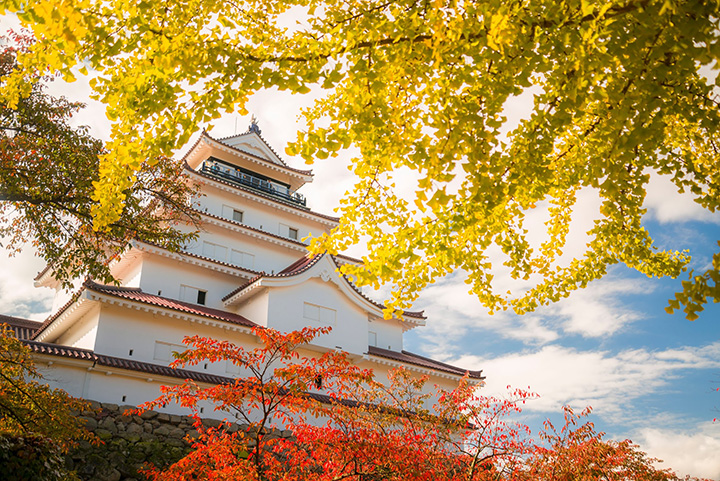
The Aizu region of Fukushima Prefecture is home to many spots that stir the traveler's heart, such as Aizuwakamatsu, the stage for history at the end of the Edo period, the highly transparent Lake Inawashiro, and the majestic Mt. Bandai, which has long been an object of mountain worship. With a large elevation difference between the basin and the mountains, it is an area where you can enjoy autumn foliage for a long time. The autumn colors, which begin to change around late September near Mt. Bandai and Lake Inawashiro, take about a month to descend to Aizuwakamatsu City, where Tsuruga Castle is located. Here, we introduce the most recommended autumn foliage spots in the Aizu region.
Aizuwakamatsu Area
Kitakata Area
Bandai Area
- 3Mt. Bandai Gold Line
- 4Bandaisan Enichiji Temple Museum (Historic Site of Enichiji Temple)
- 5Nakatsugawa Gorge
Inawashiro Area
Aizuwakamatsu Area
1Tsuruga Castle
The contrast between the white walls of the castle tower and the vibrant autumn leaves is beautiful
Among the autumn foliage spots in Aizuwakamatsu City, this is the first name that comes to mind. Contrary to its glamorous appearance with red roof tiles, it is an impregnable castle that withstood a month of fierce attacks by the government army during the Boshin War. While its white walls standing out against the blue sky are impressive, in autumn, it shows a graceful expression colored by the changing leaves of maple, cherry, and ginkgo trees.
Behind the "Rinkaku" tea house in the main enclosure, there is the largest maple tree in the castle, where you can enjoy a cup of tea while admiring the autumn leaves. Why not enjoy the autumn scenery unique to a famous castle that has carved out a long history?
[Start of coloring] Mid-October annually
[Best time to view] Late October to mid-November annually
[Types of autumn leaves] Maple, cherry, ginkgo, etc.
- Tsuruga Castle
-
 1-1 Ote-machi, Aizuwakamatsu City, Fukushima PrefectureMAP
 Approx. 20 minutes by Aizu Bus "Haikara-san" loop bus from JR Aizuwakamatsu Station, then approx. 2 minutes on foot from "Tsurugajo Iriguchi" stop
 8:30–17:00 (Last admission at 16:30)
 Open every day
 Castle tower admission: Adults 410 yen (520 yen for combined ticket with Rinkaku Tea House), Children 150 yen; Tea service 600 yen (includes a sweet)
 0242-27-4005 (Tsurugajo Castle Management Office)
 Paid
Kitakata Area
2Shingu Kumano Shrine
An 800-year-old giant ginkgo tree dyes the majestic ancient shrine in golden hues
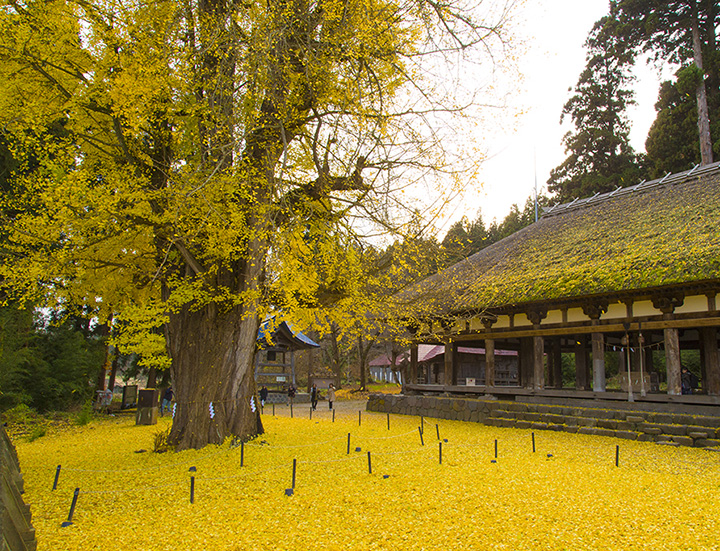
You can encounter photogenic autumn scenery at this ancient shrine in Kitakata City, which was founded by Minamoto no Yoriyoshi in 1055 (Tenki 3). In early November, the 800-year-old sacred giant ginkgo tree on the grounds turns golden, exuding an overwhelming presence. Near the sacred tree is the "Nagatoko," a worship hall built in the shinden-zukuri style with 44 cylindrical pillars, and the harmony between the majestic building and the giant ginkgo is breathtaking. The period around late November, when the ginkgo leaves begin to scatter, is also exceptional. You can see a spectacular, art-like landscape that looks as if a yellow carpet has been spread across the entire area.
[Start of coloring] Early November annually
[Best time to view] Mid-November to late November annually
[Types of autumn leaves] Ginkgo
- Shingu Kumano Shrine
-
- 2258 Shingu Kumano, Keitoku-machi, Kitakata City, Fukushima PrefectureMAP
 Approx. 10 minutes by car from JR Kitakata Station
- 8:30–17:00 (Open for viewing only on Saturdays, Sundays, and holidays from 9:00–16:00 between December and March)
- Adults 300 yen, high school students 200 yen, junior high school students and younger free
- 0241-23-0775
- Free
Bandai Area
3Bandaisan Gold Line
A 17.6km-long drive course to fully enjoy the autumn leaves
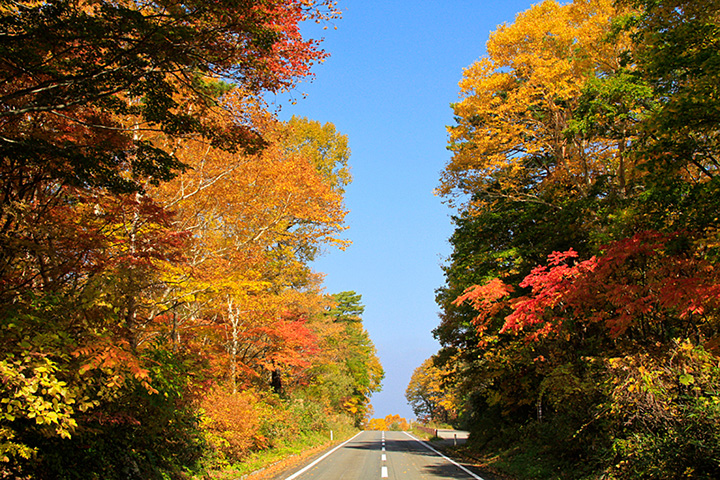
If you are traveling by car, we recommend the "Bandaisan Gold Line," a scenic drive that runs north-south along the western face of Mount Bandai, connecting Lake Hibara to Bandai Town. This 17.6 km road allows you to fully enjoy the magnificent nature of Aizu. Among the many scenic spots, such as Bokodai with its view of Lake Hibara, Maboroshi Falls, and Happodai, which bustles with hikers heading to Mount Bandai and Mount Nekoma, you should definitely visit "Sankodai" and "Koganedaira." From Sankodai, you can see the deep blue Lake Inawashiro floating in the midst of the colorful autumn leaves, while at Koganedaira, you can enjoy the contrast between the rugged crater wall of Mount Bandai and the autumn foliage.
Around early October, you can see a gradation of autumn colors from the summit of Mount Bandai to its foothills, and the beautiful autumn scenery will cleanse your soul.
[Start of coloring] Usually late September
[Best time to view] Usually mid-October to early November
[Types of autumn leaves] Beech, Oak, Japanese Maple, etc.
- Bandaisan Gold Line
-
- Aza-Umaaraiba, Oaza-Sarashina, Bandai-machi, Yama-gun, Fukushima Prefecture to Yunohirayama, Hibara, Kitashiobara-muraMAP
- Approx. 35 minutes by car from JR Kitakata Station, approx. 20 minutes by car from Bandai-Kawahigashi IC on the Ban-etsu Expressway
- Mid-April to mid-November *Road may be closed if frozen
- Free
- 0241-32-2349 (Urabandai Tourism Association)
- Free
4Bandaisan Enichiji Temple Museum (Historic Site of Enichiji Temple)
The bright red Japanese maples adorning the garden are a sight to behold
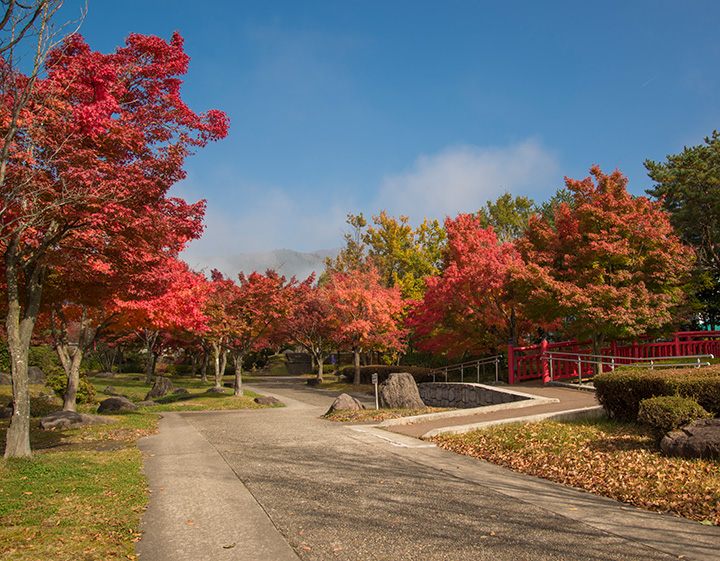
This museum preserves and exhibits cultural assets related to Enichiji Temple, the birthplace of Aizu Buddhism, which has a 1,200-year history. At its peak, it was a major Buddhist city where temple buildings stood in rows and many monks and warrior monks lived. Within the historic site adjacent to the museum, there are historic gates, mausoleums, and halls, as well as the restored vermilion-lacquered "Kondo" (Golden Hall). While the area has a rustic, village-temple atmosphere, the autumn leaves around the museum are particularly impressive. Bright red Japanese maples are planted along the waterways where ponds and streams flow, creating a beautiful scene that will touch your heart.
There is also a cafe in the rest facility within the historic site, where you can enjoy a delicious coffee after your stroll.
It is about a 20-minute walk from Bandaimachi Station, and there is also a roadside station nearby, so why not visit while you are sightseeing?
[Start of coloring] Usually mid-October
[Best time to view] Usually late October to mid-November
[Types of autumn leaves] Japanese Maple, Metasequoia, etc.
- Bandaisan Enichiji Temple Museum (Historic Site of Enichiji Temple)
-
- 38 Bandai-Teranishi, Bandai-machi, Yama-gun, Fukushima Prefecture MAP
- Approx. 20-minute walk from JR Bandaimachi Station
- April 10 to November 30, 9:00–17:00 (Last admission at 16:30)
- Open every day during the period
- Free *Fees for special exhibitions, etc., are set separately
- 0242-73-3000
- Free
5Nakatsugawa Gorge
This is art created by nature itself. The autumn foliage, resembling a brocade carpet, is magnificent
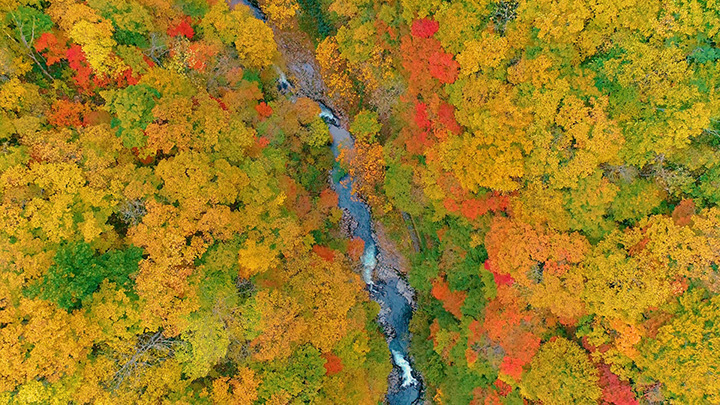
This is a must-visit autumn foliage spot in Urabandai, which boasts some of the most spectacular valley scenery in the Tohoku region. It is a 10km-long grand valley located at the headwaters of the Nakatsugawa River, which flows into Lake Akimoto—one of the three Urabandai lakes alongside Lake Hibara and Lake Onogawa. It is a secluded area featuring rapid streams, sheer cliffs reaching up to 100 meters in height, and dense primeval forests.
From around mid-October each year, the beech, maple, and larch trees begin to change color, creating a magnificent, expansive carpet of brocade. To enjoy the breathtaking autumn foliage at a leisurely pace, we recommend the "Akimoto-Nakatsugawa Valley Exploration Trail," which leads down to the valley from beside the Nakatsugawa Rest House, where parking is available. It takes about 15 minutes one way, and you can enjoy the autumn colors from various perspectives, whether on the bridge or down by the riverbank. Take a relaxing stroll and fully enjoy the superb view woven together by the green of the conifers and the red and yellow of the broad-leaved trees.
[Start of coloring] Early October each year
[Best time to view] Mid-October to early November each year
[Types of autumn foliage] Beech, maple, larch, etc.
- Nakatsugawa Gorge
-
- Hibara, Kitashiobara-mura, Yama-gun, Fukushima Prefecture MAP
- Approx. 28-minute drive from JR Inawashiro Station, approx. 26-minute drive from Inawashiro IC on the Ban-etsu Expressway
- 0241-32-2349 (Urabandai Tourism Association)
- Free
Inawashiro Area
6Hanitsu Shrine
The temple grounds are dyed in a solid red carpet
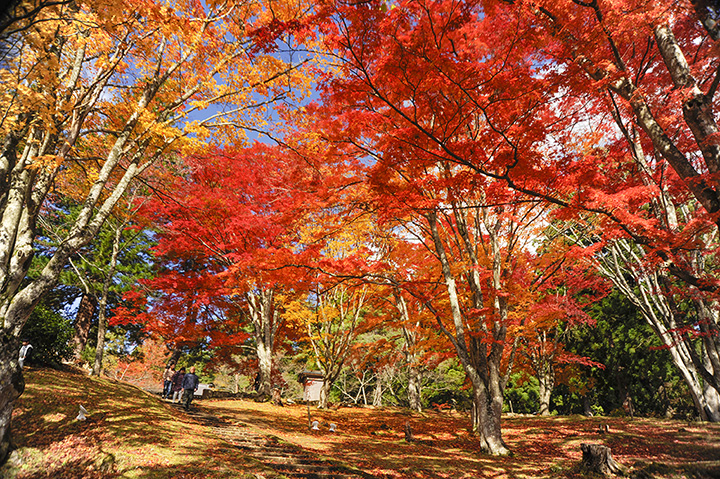
You can encounter a scene carpeted in bright red Japanese maple leaves at this shrine, which is associated with Lord Masayuki Hoshina, the first feudal lord who laid the foundation for Aizu. It is easily accessible by car, located about 10 minutes from the Inawashiro Bandai Kogen IC, making it a great stop during a drive, and it is a spot visited by many people in autumn specifically for the foliage.
From late October to early November, when the autumn colors are at their peak, the Japanese maples and ginkgo trees at the shrine entrance turn vibrant colors. The contrast between the iconic large white torii gate and the bright red Japanese maple leaves is so beautiful that it is truly captivating. When the Japanese maple leaves begin to fall, the shrine grounds are covered in a carpet of red, a sight that can only be described as spectacular.
[Start of coloring] Mid-October each year
[Best time to view] Late October to early November each year
[Types of autumn foliage] Japanese maple, ginkgo, etc.
- Hanitsu Shrine
-
- 3 Mineyama, Inawashiro-machi, Yama-gun, Fukushima Prefecture MAP
- Approx. 10 minutes by car from JR Inawashiro Station
- 9:00–17:00 (10:00–16:00 on weekdays and in winter)
*Regular visits are possible 24 hours a day, 365 days a year - Irregular holidays
- Free
- 0242-62-2160
- Free
7Tatsusawa Fudo Falls
A waterfall of autumn splendor. A famous waterfall surrounded by beech and maple trees
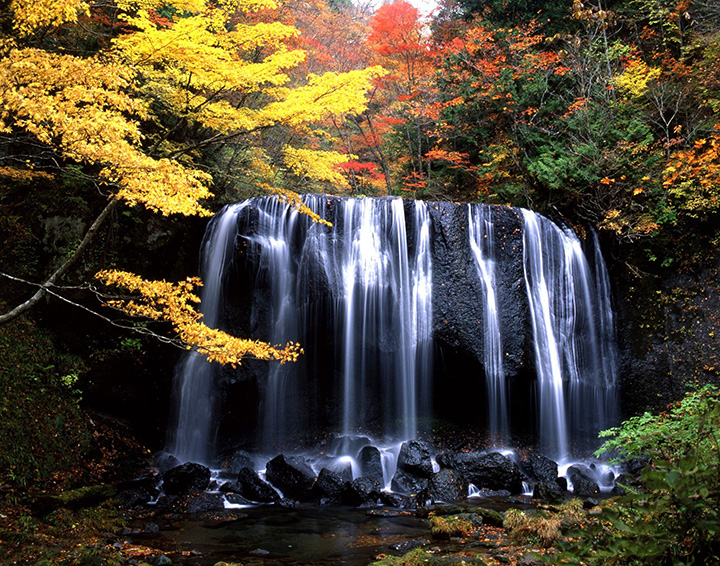
Along with spectacular waterfalls, you can enjoy vibrant autumn leaves at this famous waterfall on the Fudo River, which originates from the 1,667-meter-high Mt. Funamyojin in the Adatara mountain range. About a 15-minute drive from Nakanosawa Onsen, as you head deep into the mountains behind the hot spring town, you will see the waterfall that once flourished as a training ground for Shugendo practitioners.
In the midst of a primeval forest where beech and maple trees burn with color, the artistic beauty of the 10-meter-high, 16-meter-wide, heroic "Otaki" (male waterfall), where water cascades down black rock surfaces like a blind, standing side-by-side with the quiet flow of the "Metaki" (female waterfall) nearby, is truly breathtaking. Fudo Myoo is enshrined at the base of the waterfall, so be sure to pay your respects. The scenery, filled with negative ions, is something you will want to gaze at forever and is sure to heal your mind and body.
[Beginning to color] Early October annually
[Best time to view] Mid-October to late October annually
[Types of autumn leaves] Beech, maple, horse chestnut, etc.
- Tatsusawa Fudo Falls
-
- Tatsuzawa area, Inawashiro Town, Fukushima Prefecture MAP
- Approx. 28 minutes by car from JR Inawashiro Station
- 0242-62-2048 (Inawashiro Tourism Association)
- Free
MAP
- Aizuwakamatsu Area
- Kitakata Area
- Bandai Area
- Inawashiro Area
- Nearby Hoshino Resorts facilities

Local supporter in charge of this article

- "Bandaisan Onsen Hotel" Local Supporter TeamAt the foot of a famous peak, a village of fine sake and history
Bandaisan Onsen Hotel
Yama District, Fukushima Prefecture
A hotel at the foot of Mt. Aizu-Bandai, overlooking Lake Inawashiro. You can enjoy the rich nature and Aizu culture.


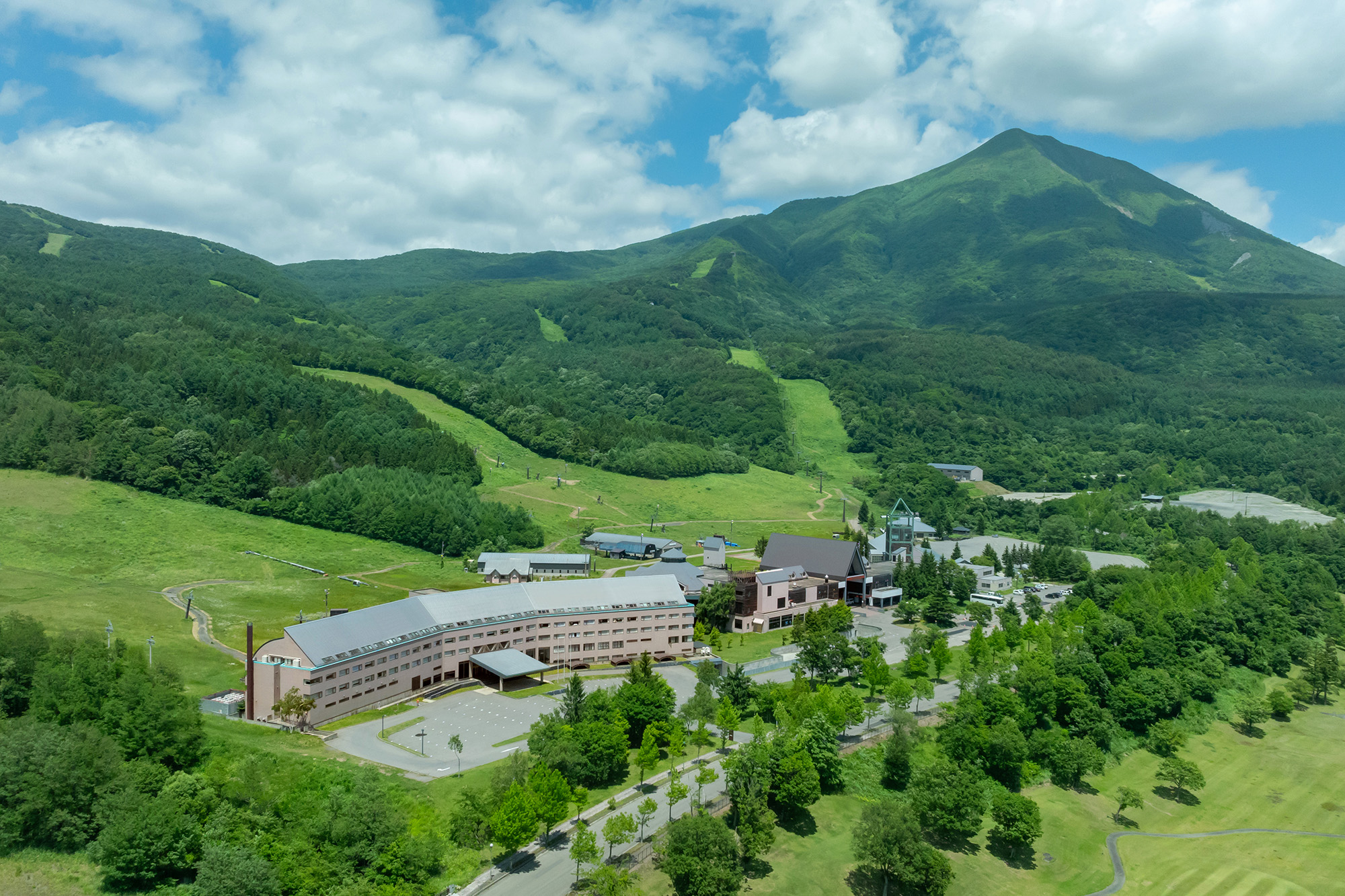
Access About 15 minutes by taxi from JR Bandaimachi Station
- Accommodation rate example
- Per person per night From ¥12,000