





2025 Edition] 10 Classic and Anaerobic Autumn Foliage Spots in the Arashiyama Area of Kyoto to Visit This Year
![2025 Edition] 10 Classic and Anaerobic Autumn Foliage Spots in the Arashiyama Area of Kyoto to Visit This Year](https://hoshinoresorts.com/guide/wp-content/uploads/2025/11/06_宝厳院_秋_書院から通常非公開-1024x683.jpg)
The Arashiyama area is home to many of Kyoto's top tourist attractions, including the Togetsu Bridge over the Oigawa River (Katsura River), Sagano with its bamboo groves, and the World Heritage Site Tenryuji Temple. The area attracts many tourists as the autumn foliage blends into the Japanese landscape everywhere in the deep autumn season. In this article, we carefully select 10 recommended autumn foliage viewing spots in the Arashiyama area, from classic to hidden gems. We will also introduce information on the best times to view the leaves and upcoming events.
1 Nomiya (Shrine)
The black wooden torii gate surrounded by autumn leaves is a must-see. Ancient shrine mentioned in the Tale of Genji

Located in the "Bamboo Grove Path", a famous sightseeing spot spreading in Sagano, this shrine has a long history and is mentioned in "The Tale of Genji - Saki no Maki" written by Murasaki Shikibu, a writer of the Heian period (794-1185).
The symbol of the shrine is the black torii gate in front of the main shrine. It is made of a black sawtooth oak with its bark still attached, and when autumn deepens, visitors can enjoy the sight of the Irohamomiji tree that stands at the side.
The moss garden to the right of the main shrine is called "Jutan Moss," and when the leaves fall, the contrast of green and red can be enjoyed.
As a shrine dedicated to the god of marriage, this shrine attracts a great deal of faith from people wishing for a good marriage. It is said that if one prays while touching the sacred stone "Okameishi," located near "Nomiya Daikokuten" on the shrine grounds, his or her wish will be fulfilled within a year.
The first changing of the colors] Usually in mid-November
[Best time to visit] Usually from late November to early December
Kinds of autumn leaves: Iroha-momiji (Japanese maple) and maple (Acer palmatum)

Local Guide
Supporters
If you look closely at the carpet moss (moss garden), you will see that it is arranged to resemble the Oigawa River (Katsura River) and the Watarigatsu Bridge. You can also enjoy a miniature version of Arashiyama.
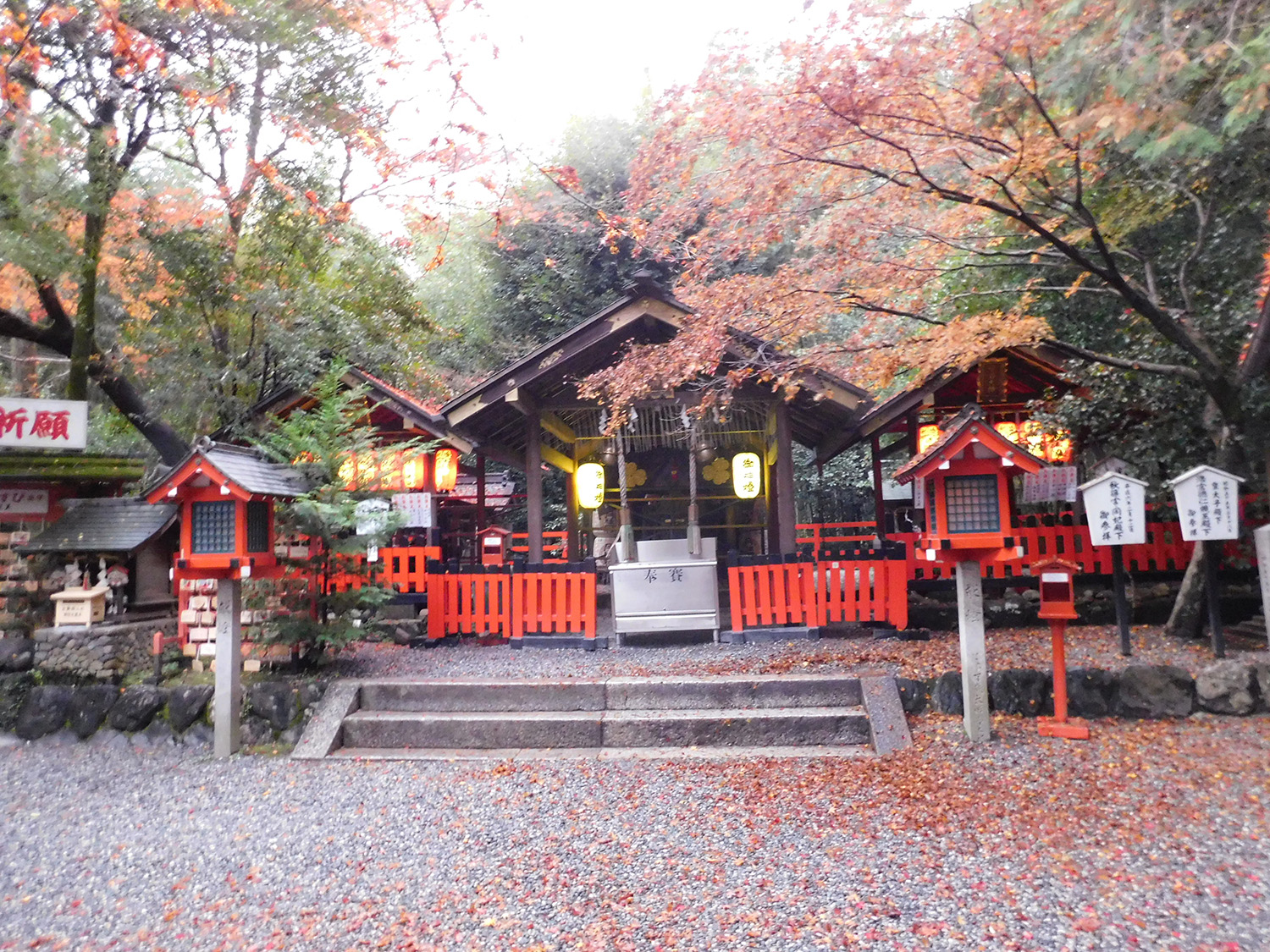
- Nomiya Shrine
-
 Saganomiyacho 1, Ukyo-ku, Kyoto MAP
 10 min. walk from Arashiyama Station of Keifuku Electric Railway
 Free to visit
2Jojakkoji Temple
The contrast between the architectural beauty of "apology and sabi" and the colors of nishiki-autumn is magnificent.
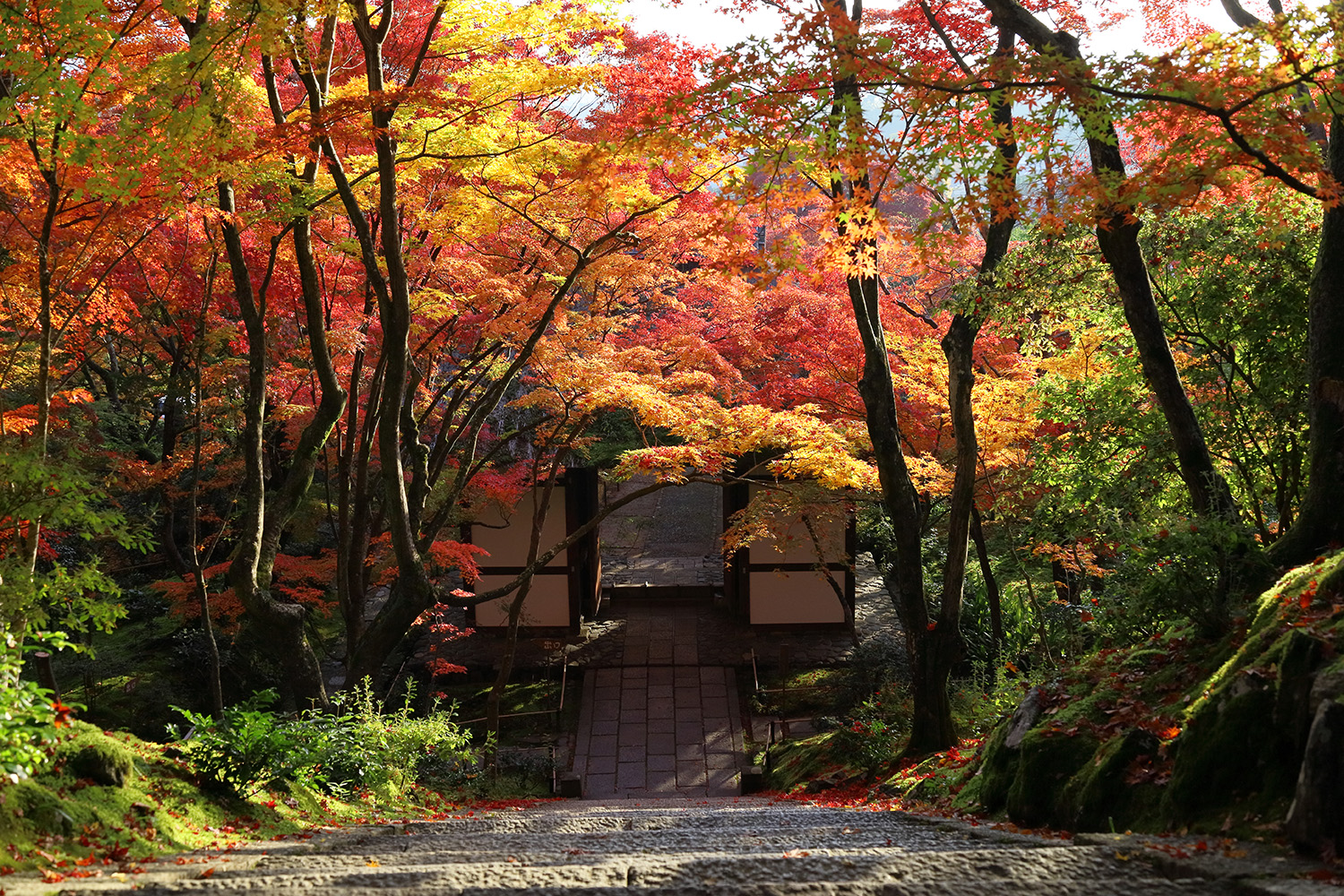
This temple is located halfway up Mt. Ogura, which has been called a famous autumn foliage viewing spot in numerous poems since the Heian period (794-1185). The Nioimon gate, with the statue of Nio by Unkei, the master of the temple, is the oldest structure on the temple grounds. The thatched roof is unusual for a Niomon gate, and the collaboration of the wabi-sabi atmosphere of the building and the autumn leaves is well known as a magnificent sight.
There are many places to see the autumn leaves, including the bell tower, the staircase in front of the main hall, and the garden with over 200 maple trees. The 12-meter-high Daboto (Important Cultural Property) pagoda standing behind the main hall, blending in with the colorful Ogura Mountain, has been introduced in many media. The observatory at the far end of the temple grounds is one of the best places to view the cityscape of Kyoto in the autumn.
Every year, from mid to late November, when the autumn leaves are at their best, a special viewing of the main hall is held. Visitors can also enter the Shoin, which is usually closed to the public, and view the garden, which has remained unchanged since the Edo period.
The beginning of the changing of colors] Usually early November
[Best time to view] Usually mid-November to late November
[Kind of autumn leaves] Iroha-momiji, oomomiji, etc.
▼Hondo Special Viewing
Date: Tuesday, November 18 - Sunday, November 30, 2025
Fee: 500 yen for the special viewing of the main hall
Location: Main hall and Shoin of Jojakkoji Temple
Local Guide
Supporters
If you visit during the special viewing period of the main hall, you will be given a special omu-fuda, a talisman with a copy of Shakyamuni Buddha's image on it.
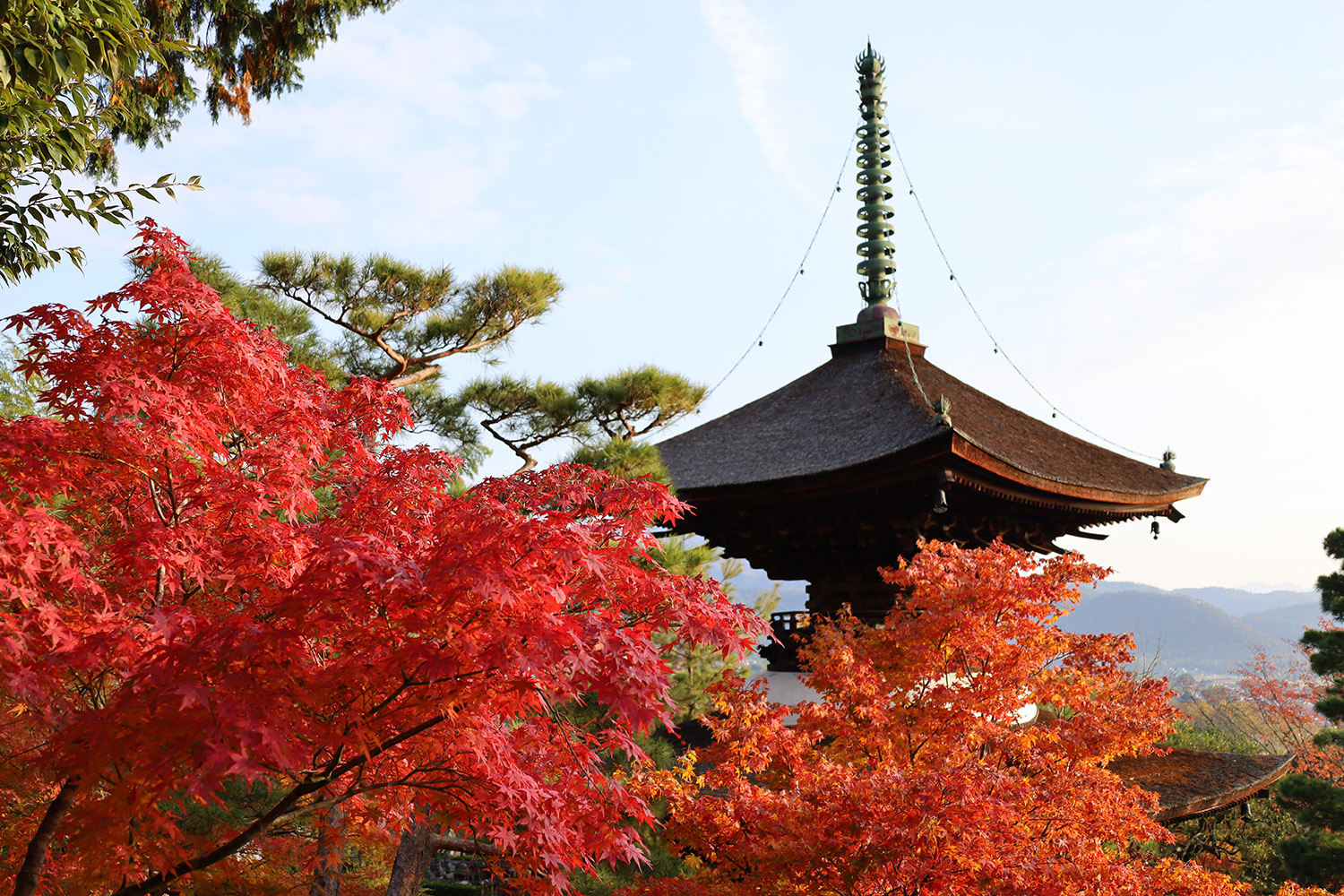
- Jojakkoji Temple
-
- 3 Ogura-cho, Saga-Ogurayama, Ukyo-ku, Kyoto City, Kyoto MAP
- 17 min. walk from Keifuku Electric Railway Arashiyama Station
18 min. walk from JR Saga-Arashiyama Stn. - 9:00 - 17:00 (reception closes at 16:30)
 Entrance fee 500 yen
3Togetsu Bridge
One of the best places in Kyoto for viewing the autumn leaves, which have been pleasing to the eye since the Heian period (794-1192).
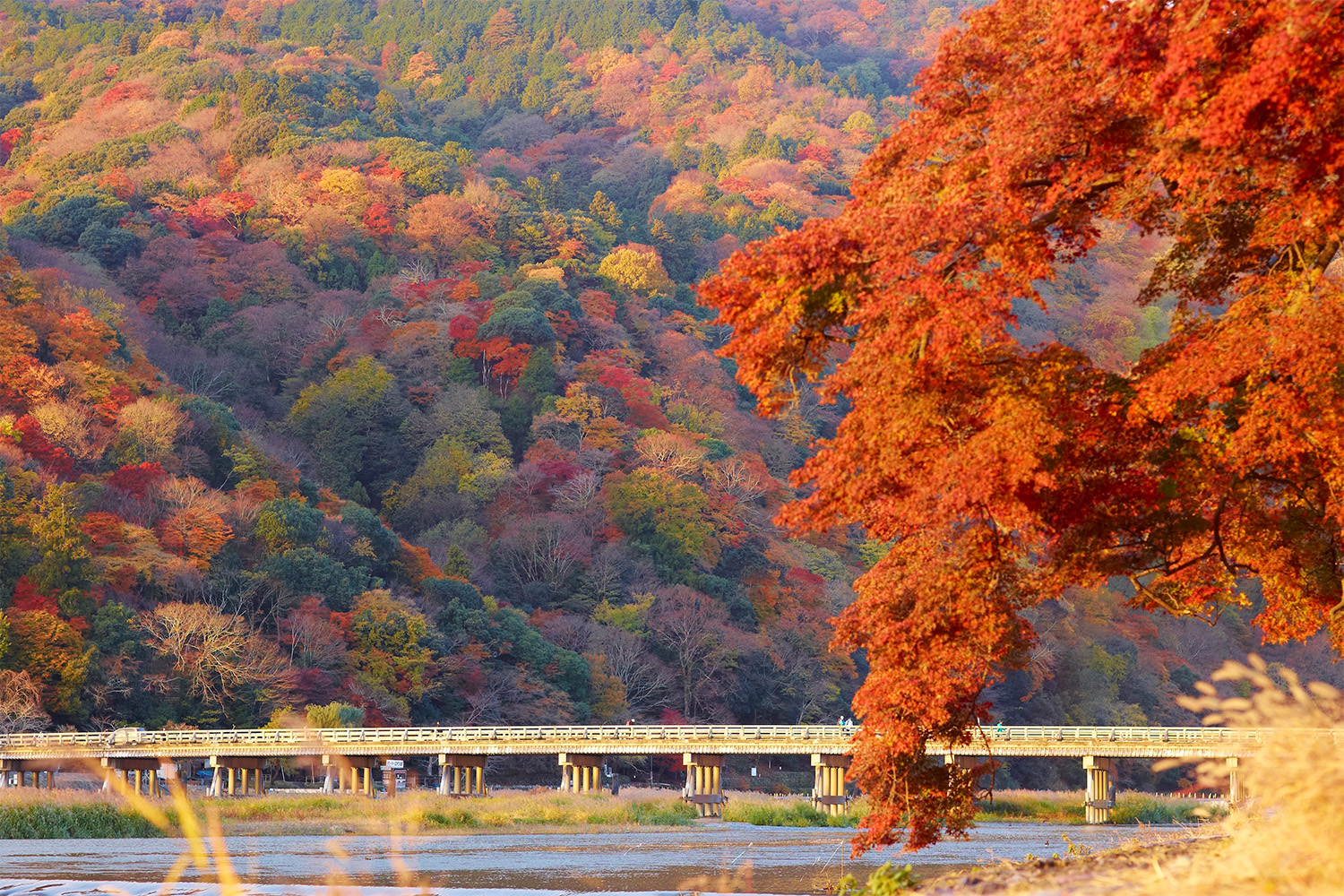
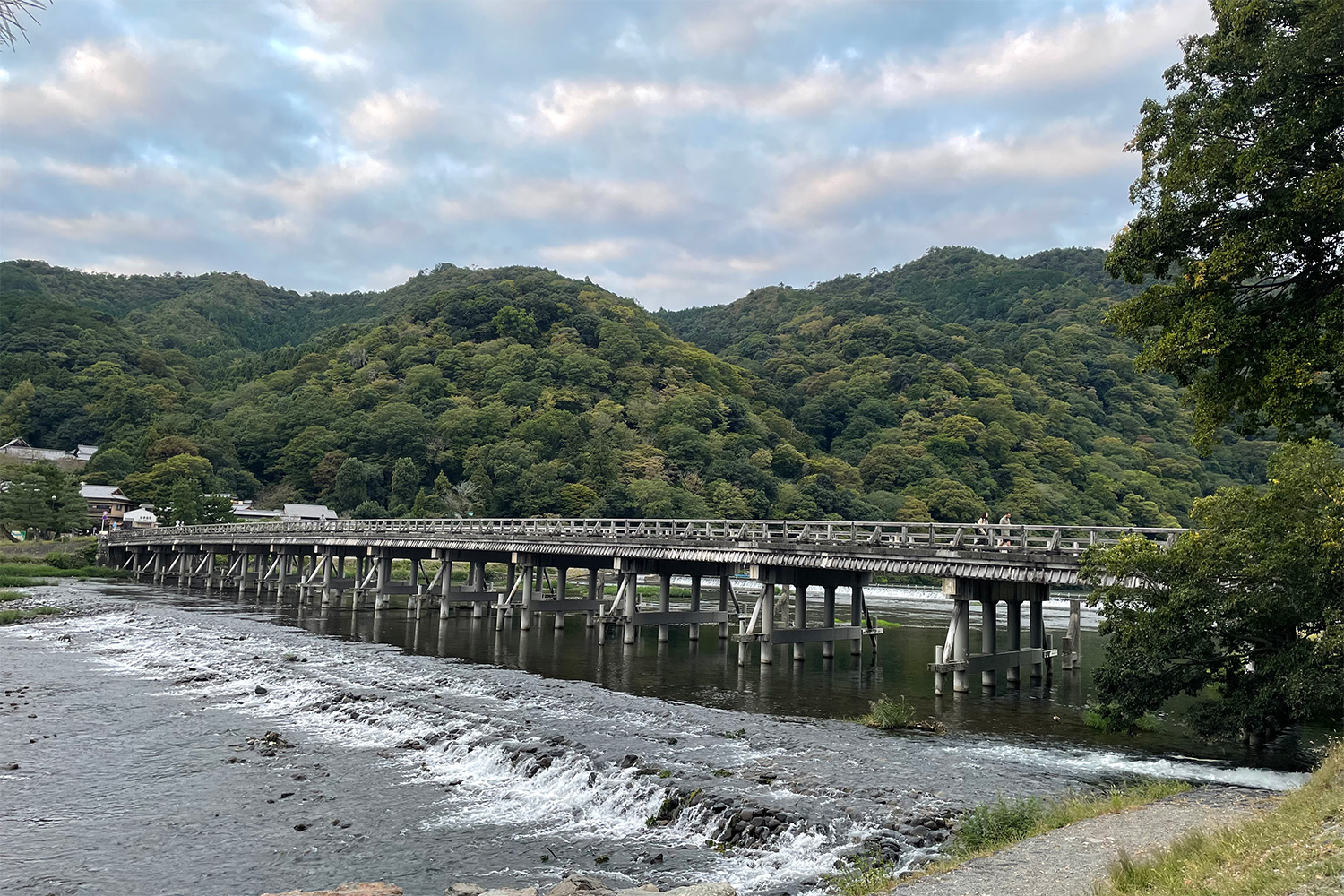
The 150-meter-long bridge spans the Oigawa River (Katsura River) that flows between Sagano and Arashiyama. With Arashiyama in the background, the bridge is one of Kyoto's most famous landscapes.
In the early Heian period (794-1185), the bridge was built about 200 meters upstream from its current location. The bridge was named after Emperor Kameyama, who, while gazing at the changing moon over the bridge, remarked, "It is like the crossing of the moon without a trace.
If you want to enjoy the view while avoiding the crowds during the fall foliage season, the best place to go is a little east of the northern end of the bridge. From "Arashiyama Park, Rinkawa-ji Area," which stretches along the Oigawa River between the Wataritsukibashi intersection and the Kiyotaki-michi Sanjo intersection on Prefectural Route 29, you can see Wataritsukibashi Bridge with the brocade-colored Arashiyama in the background.
Arashiyama Maple Festival" is held on the second Sunday of November every year. Elegant boats such as "Imasama-bune" and "Heian-kangen-bune" dock along the banks of the Oigawa River from near the Togetsu Bridge, and entertainers associated with the Arashiyama area perform.
The first changing of the colors] Usually in mid-November
[Best time to visit] Usually from late November to early December
The festival is held at the Arashiyama Castle in the morning and at the end of the day.
▼ Arashiyama Maple Festival
Period: Sunday, November 9, 2025
Time: Around 10:00-15:00 (cancelled in case of rain)
Location: Oigawa River (near Togetsu Bridge)
URL: https://ja.kyoto.travel/event/single.php?event_id=4066
Local Guide
Supporters
At the "Arashiyama Park Nakanoshima area" (commonly known as Nakanoshima Park), located in the middle of the river, you can enjoy the autumn foliage while eating and drinking at food stalls during the foliage viewing season.
- Togetsu Bridge
-
- Saga Nakanoshima-cho, Ukyo-ku, Kyoto City, Kyoto MAP
- Approx. 2 min. walk from Keifuku Electric Railway Arashiyama Stn.
4Sagano Trolley Train
Enjoy the reddish-yellow color of the valley while riding on a trolley
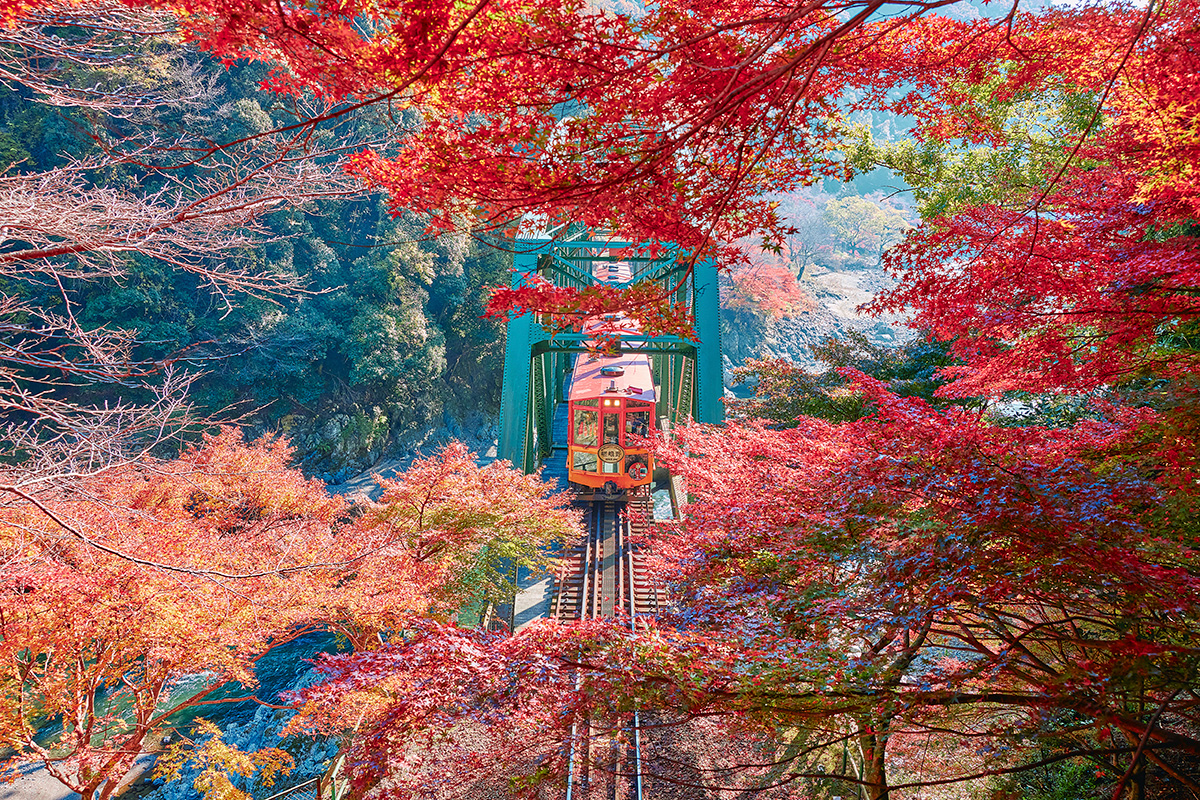
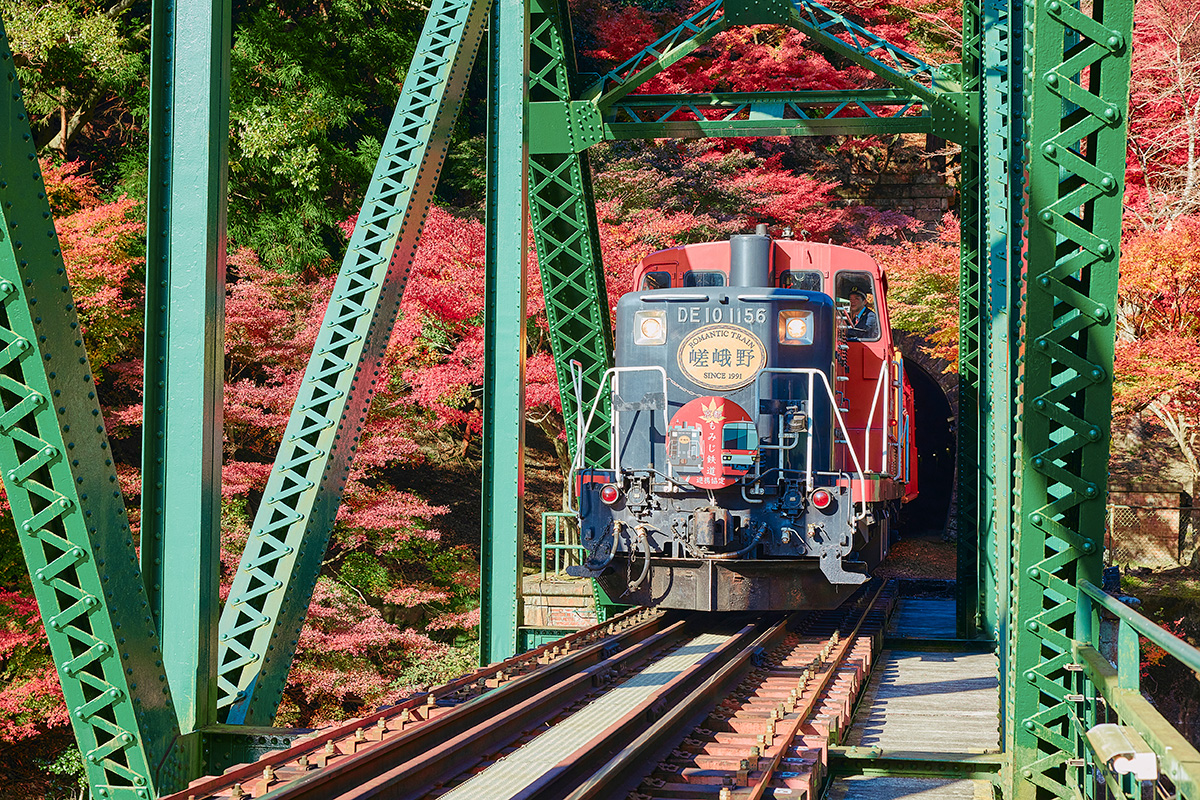
The upper reaches of the Hozu River, which runs alongside Arashiyama, are famous for their autumn foliage, known as Hozukyo. To fully enjoy the Hozukyo Gorge in autumn, we recommend taking the Sagano Trolley Train, a sightseeing train that runs along the gorge. It takes about 25 minutes from the Trolley Saga Station, the first station on the Kyoto City side, to the Trolley Kameoka Station on the Kameoka City side, a distance of about 7 km one way, to enjoy the beauty of the valley.
About 1,000 maple trees, including Japanese maples, mountain maples, and maple trees, are planted along the train line, and when autumn deepens, the leaves of these trees turn red and yellow and brightly illuminate the windows of the train.
All seats on the five-car train are reserved seats, and tickets can be purchased at any station except Trolley Hozukyo Station (same-day tickets only) or by reservation on the Internet.
The beginning of the changing of colors] Usually early November
Types of Autumn Foliage】Iroha-momiji, Yamamomiji, Maple, etc.
Local Guide
Supporters
During the fall and winter, the "Illuminated Fantasy Train" runs from 4:30 p.m. until the last train. The illumination of the autumn foliage and the mountains on the other side of the river is very fantastic.
- Sagano Trolley Train
-
- Operating days: March 1 - December 29
Travel time: 25 min. from Trolley Saga to Trolley Kameoka  All trolley services may be suspended on Wednesdays.
- Adults (over 12 years old): 880 yen, children (under 12 years old): 440 yen
 075-861-7444 (Sagano Kanko Railway Telephone Service)
 Tickets are sold at the ticket windows of all stations except Trolley Hozukyo Station on a first-come, first-served basis. Or reservations can be made through the website.
5Seiryo-ji Temple
A hidden old temple in Sagano where you can enjoy the picturesque autumn leaves
An ancient temple located about 1 km north of the Togetsu Bridge. The Niomon Gate standing at the entrance of the temple is an eclectic mix of Japanese and Zen styles, and its two-storied, two-layered gate standing straight up is called the "face of Saga.
The temple is also called "Saga Shakado" because it enshrines the national treasure "Shaka Nyorai" statue. There are many attractions within the temple grounds, including a pagoda and an Amida Hall.
The temple grounds are dotted with spots for viewing the autumn foliage, including a garden said to have been created by Enshu Kobori. Near Benten-do Hall, located behind the main hall, visitors can enjoy the vivid contrast between the red of the maple trees surrounding the hall and the green of the trees.
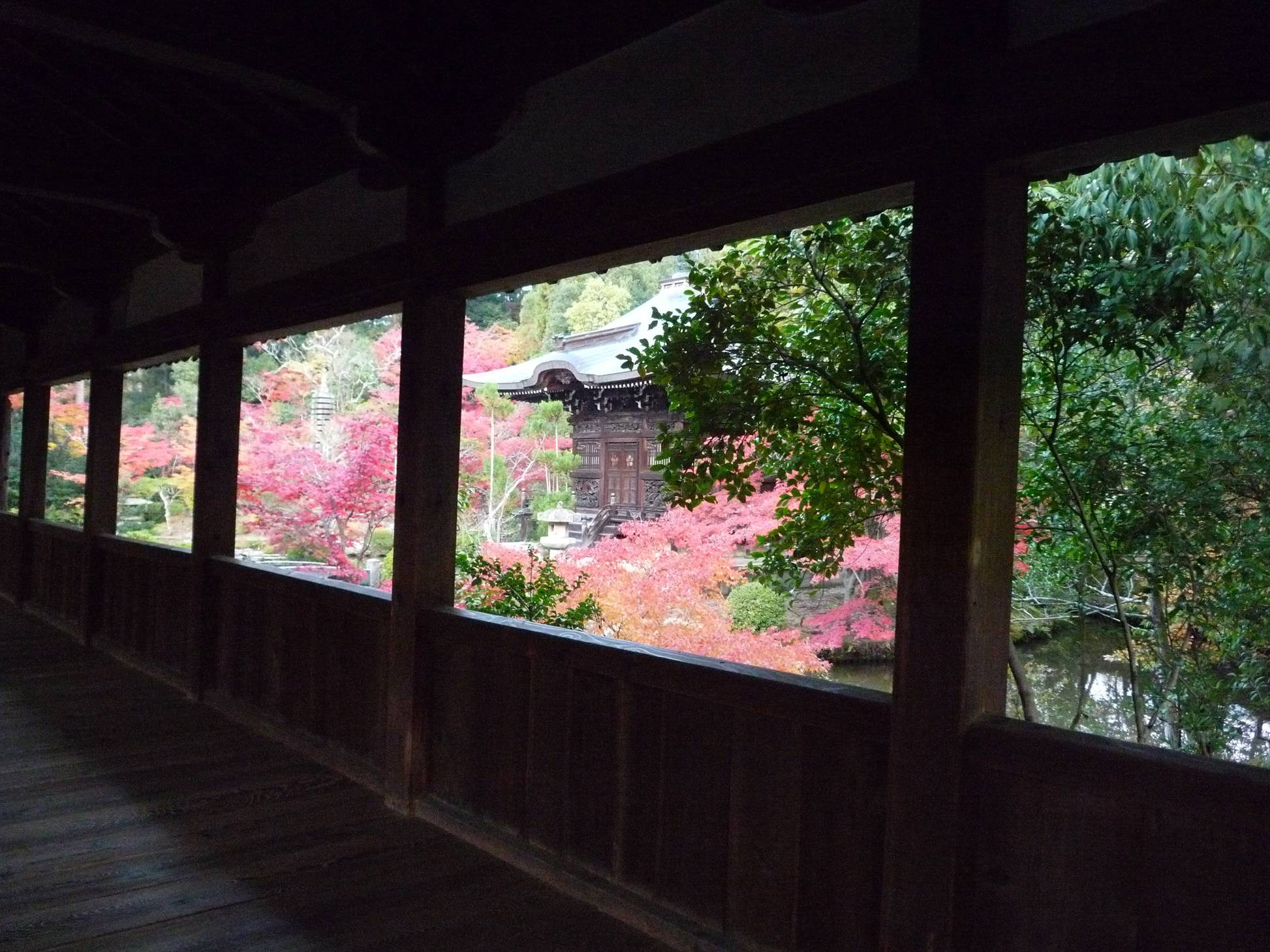
If you want to capture beautiful autumn foliage scenes with your camera, the corridor to the north of the main hall is recommended. The windows between the windows can be used as picture frames, allowing you to capture the Benten-do Hall dressed with autumn leaves as if it were a painting.
The first color change] Usually end of October
[Best viewing time] Usually early November to late November
[Kind of autumn leaves] Iroha-momiji, etc.
Local Guide
Supporters
Along the earthen walls on the south side of Shotoku Taishi-den Hall and the colored leaves of Kawanakajima on the west side of Benten-do Hall are also recommended.
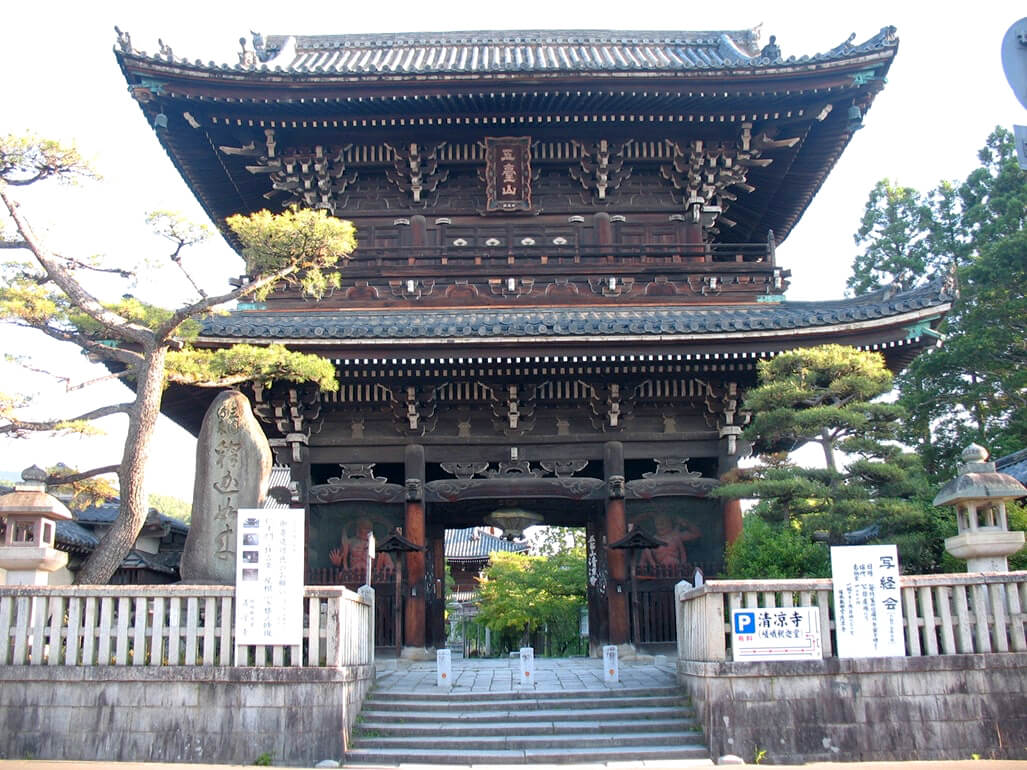
- Seiryo-ji Temple
-
- 46 Fujinoki-cho, Saga-Shakado, Ukyo-ku, Kyoto MAP
- Approx. 12 min. walk from JR Saga-Arashiyama Stn.
From JR Kyoto Station, take the Kyoto Bus or City Bus, get off at Saga Shakado-mae bus stop, and walk about 1 minute. - 9:00-16:00
- Not available (may be closed during Buddhist memorial services and other events)
- Adults 500 yen, junior high and high school students 400 yen, elementary school students 300 yen
- 075-861-0343
 Yes (800 yen/day for a standard car)
6Daikakuji Temple
Enjoy the autumn colors at the national scenic beauty spot associated with Emperor Saga

The temple was built as a detached palace for Emperor Saga in the early Heian period (794-1185) and is now the head temple of the Daikakuji School of the Shingon Sect of Buddhism. It is a historic temple where Kobo Daishi Kukai offered blessings and prayers.
The vast temple area is divided into the "hall area" and the "Osawa Pond area." In the hall area, visitors can see the Shinden (Imperial Hall), an important cultural property, and Godaido, the main hall.
Osawa Pond is said to have been built by Emperor Saga and is designated as a national place of scenic beauty as the oldest man-made garden pond in Japan that retains the vestiges of the early Heian period. The pond is surrounded by alternating maple and cherry trees, which are reflected on the surface of the water during the fall foliage season, adding to the beauty of the pond.
Visitors can enjoy viewing the autumn leaves at various locations around Osawa Pond, but the most popular spot is the "Maple Road" that runs from the plaza in front of the Shinkei Hoto Pagoda to the remains of the Nakoso Waterfall. The leaves of the Iroha maple trees turn bright red overhead, and visitors walking along the path will feel as if they are surrounded by the autumn leaves.
The beginning of the changing of colors] Usually early November
Types of autumn leaves: Irohamomiji, Someiyoshino, Yamazakura, Ginkgo, etc.
Local Guide
Supporters
The Saga Chrysanthemum Exhibition is usually held during the month of November in autumn. Please enjoy the unique wild chrysanthemums of Sagano that grew wild during the reign of Emperor Saga.
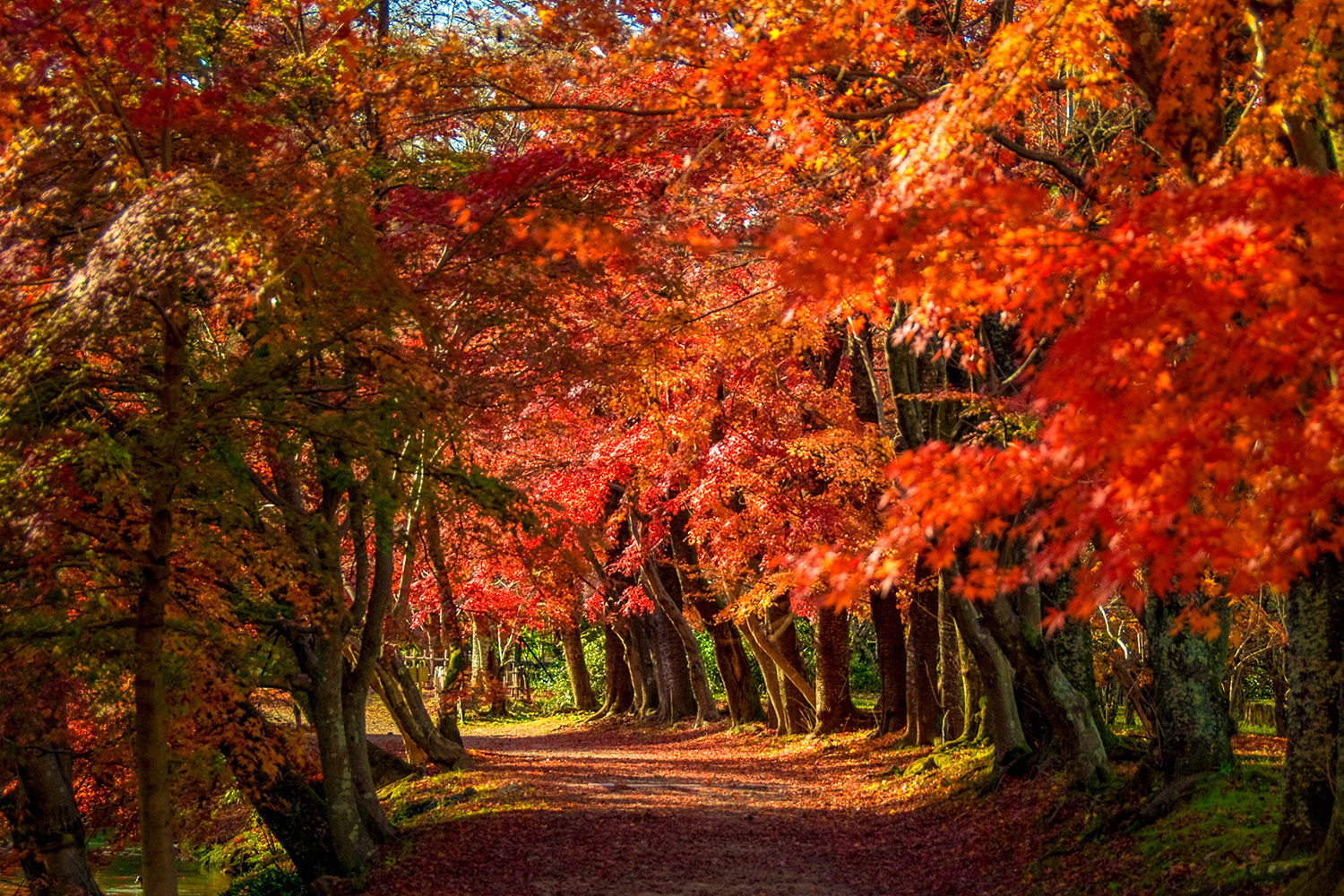
- Daikakuji Temple
-
- 4 Saga-Osawa-cho, Ukyo-ku, Kyoto City, Kyoto MAP
- 20 minutes walk from JR Saga-Arashiyama Station
From JR Kyoto Station, take a Kyoto bus or city bus, get off at "Daikakuji" bus stop, and walk about 1 minute. - 9:00 - 17:00 (reception closes at 16:30)
- Odo area: Adults 500 yen, Junior high and high school students 300 yen
Osawaike area: Adults 300 yen, elementary, junior high and high school students 100 yen - 075-871-0071
- Charged
- Fee revised as of April 1, 2026.
Odo area: Adults 800 yen, elementary, junior high and high school students 400 yen
Osawa Pond area: Adults 500 yen, children and high school students 100 yen (no change)
7Nison-in Temple
The autumn leaves along the approach to the temple, called "Baba of Autumn Leaves," are breathtaking.
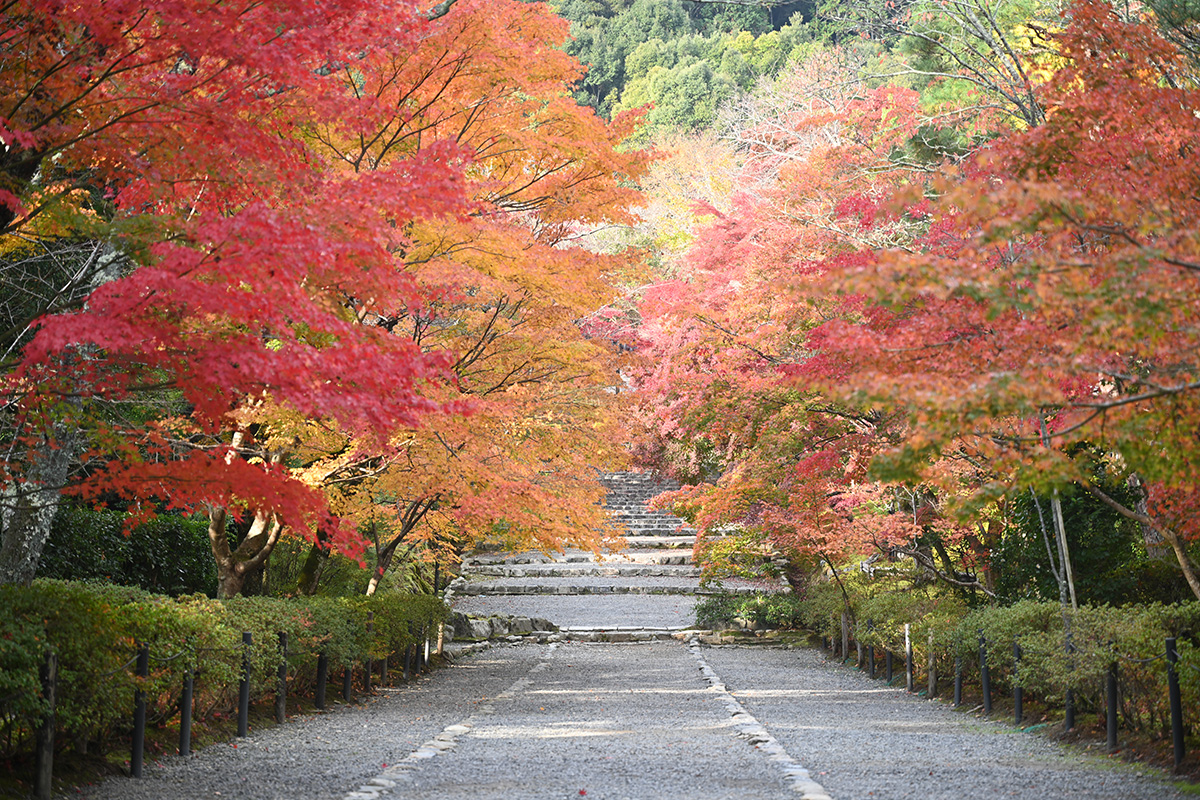
The temple is located at the foot of Mt. Ogura and was built by Jikaku Daishi Ennin in the early Heian period (794-1185). The tiled main gate at the entrance was moved from the Yakuimon gate at Fushimi Castle in 1613, showing the temple's long history.
The wide approach past the main gate is planted with alternating Japanese maples and cherry trees, and in the cool autumn weather, the leaves of the maple trees protrude from both sides of the approach and cover the path. In the cool fall weather, the leaves of the maple trees protrude from both sides of the path, creating a tunnel of colorful red and yellow foliage. It has been called "Baba of Autumn Leaves" by the people of Tokyo since ancient times, and is one of the best places to view the autumn leaves in the Arashiyama area.
The maple trees around the main hall and near the Teshimon Gate are also reputed to be beautiful. The autumn scenery can be enjoyed throughout the vast grounds of the temple.
The beginning of the changing of colors] Usually early November
Types of autumnal foliage: Mountain maples, giant maples, yellow maples, etc.
Local Guide
Supporters
The trick to taking beautiful pictures is to use the tiled main gate as a picture frame and capture the approach leading to the back of the temple.
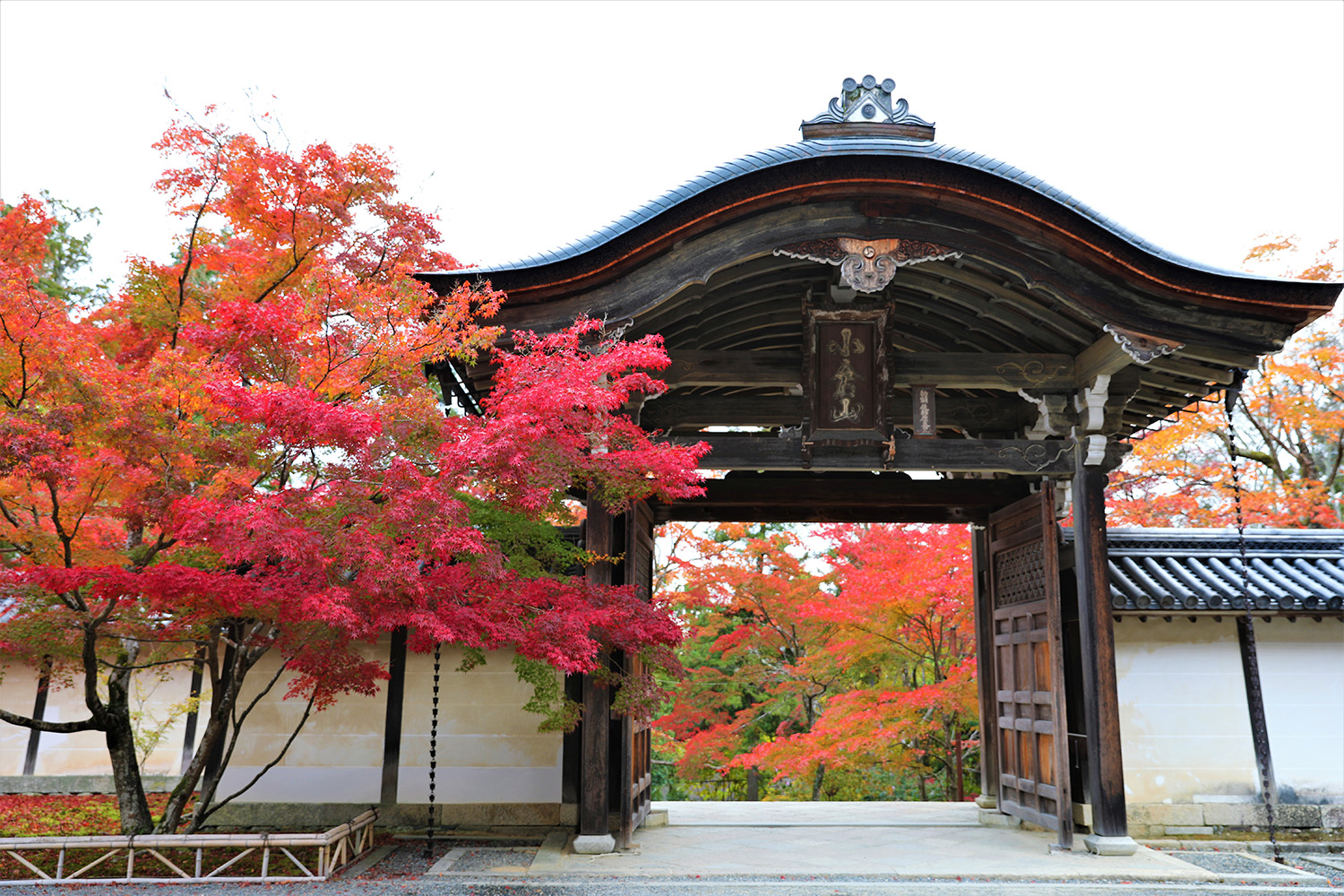
- Nison-in Temple
-
- 27 Chogami-cho, Saga Nison-in Monzen, Ukyo-ku, Kyoto MAP
- Approx. 15 min. walk from Arashiyama Station on the Keifuku Electric Railway Line.
From JR Kyoto Station, take the Kyoto Bus or City Bus, get off at Saga Shakado-mae bus stop, and walk about 10 minutes. - 9:00-16:30 (last admission)
- Adults (junior high school students and older): 600 yen, elementary school students and younger: free
- 075-861-0687
8Arashiyama Park Kameyama area Observation platform (Kameyama Park)
The observatory overlooking the Hozukyo gorge in autumn is a spectacular view spot.

The Kameyama area of Ranzan Park stretches to the southeast of Mt. It is located on the northwestern hillside as seen from the Wataratsuki Bridge, and is popularly known as "Kameyama Park" by the citizens.
The main tree is a red pine tree, with cherry trees and maple trees, and many flowers and grasses grow in clusters under the trees, including mountain azaleas. A promenade leads visitors around the park, where they can enjoy the scenery of the trees as they change hues at the plaza and rest areas.
It is recommended that visitors enter the park from the boat landing area along the Hozu River. The observatory at the top of the mountain, about 15 minutes up the trail, offers a panoramic view of the Hozukyo gorge, which has been selected as one of the 100 best places for viewing the changing leaves of autumn in Japan.
The first changing of the colors] Usually in mid-November
[Best time to visit] Usually from late November to early December
Maple trees, cherry trees, etc.
Local Guide
Supporters
The good thing about Kameyama Park is that you can take a walk at any time of the day. Early morning is recommended as it is sparsely populated. You can climb up to the observatory in the clear air.
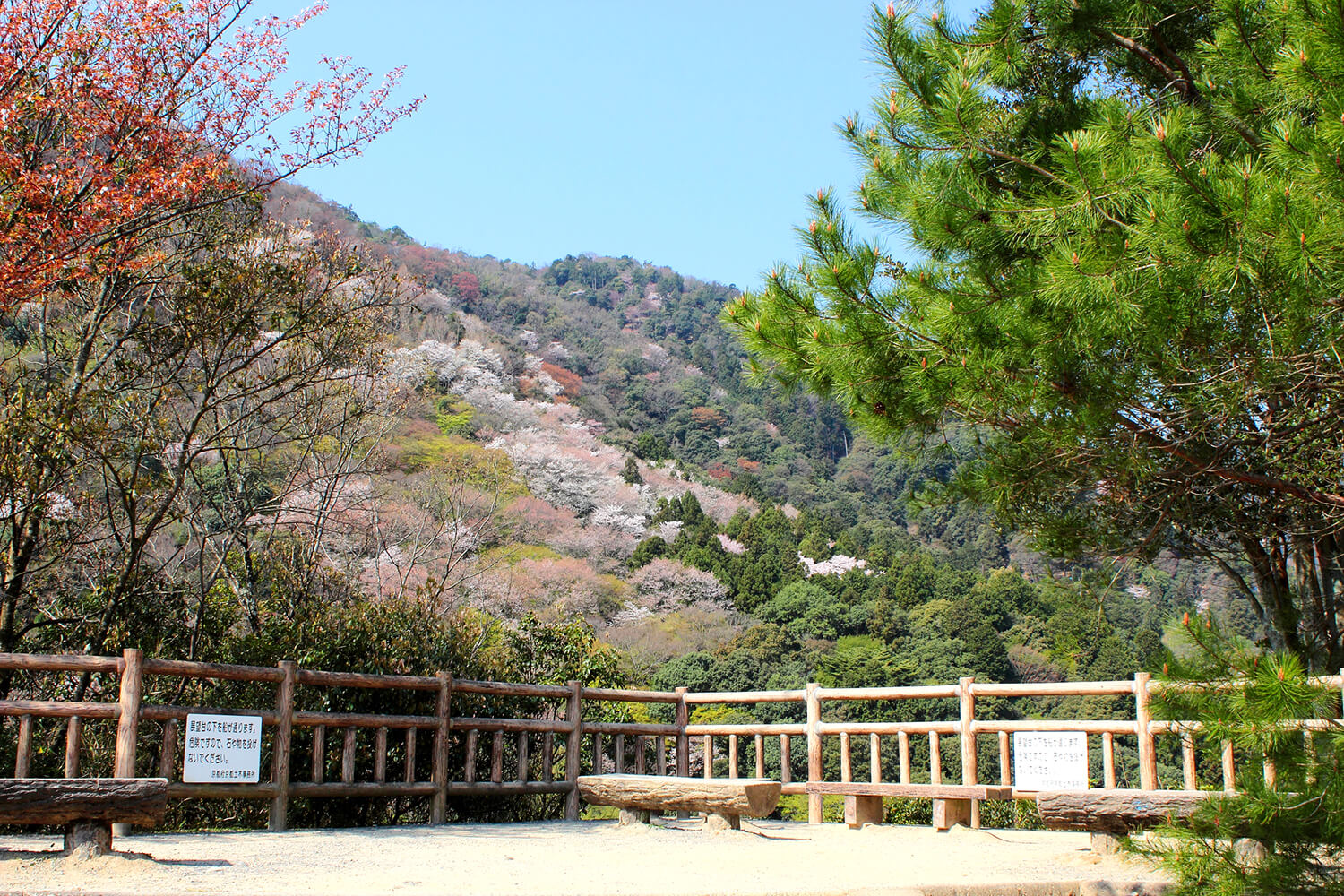
- Arashiyama Park, Kameyama area Viewing platform (Kameyama Park)
-
- Saga, Ukyo-ku, Kyoto City, Kyoto MAP
- 10 min. walk from Arashiyama Station on the Keifuku Electric Railway Line (to the park entrance along the Hozugawa River on the Arashiyama side)
9Rokuoin Temple
Don't miss the approach to the temple where you can enjoy the contrast of green moss and crimson autumn leaves.
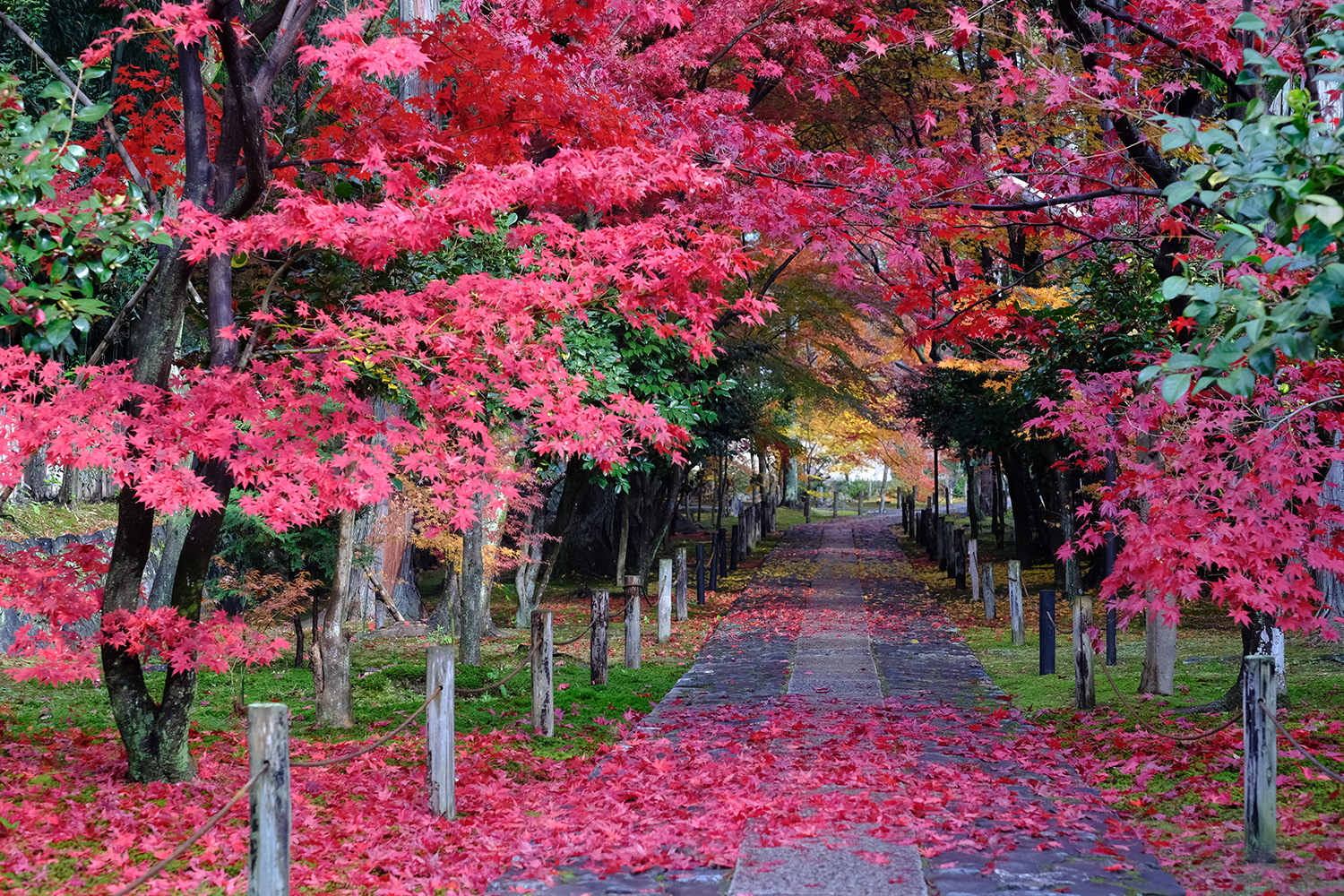
This temple was built as the founding pagoda of Hodanji Temple, which was built by Ashikaga Yoshimitsu, the third shogun of the Muromachi Shogunate. Visitors can see valuable cultural assets such as a guest hall with a plaque by Ashikaga Yoshimitsu and the Buddha's Tooth Hall, where Buddha's teeth are enshrined.
The stone-paved approach leading from the temple gate to the central gate is especially beautiful during the fall foliage season. The path is thickly covered with green moss, and visitors can enjoy the contrast between the green color of the moss and the fiery autumn leaves during the deep autumn season.
The Rikao-in Garden, located on the temple grounds, is said to be Japan's first flat garden with a karesansui (dry landscape garden) style, and has been designated a place of scenic beauty by the city of Kyoto. Visitors can enjoy viewing the autumn foliage throughout the garden with Arashiyama in the background, which turns reddish yellow in the late fall.
Every year, during the autumn foliage season, the approach to the temple and the garden are illuminated for special nighttime viewing. The approach to the temple and the garden are lit up at night during the autumn foliage viewing season. The temple's approach to the shrine and garden are illuminated at night.
The first changing of the colors] Usually in mid-November
[Best time to visit] Usually from late November to early December
Types of foliage: Iroha maple, mountain maple, etc.
▼ Shikaoin Night Special Viewing 2025
Period: November 21 (Fri.) - December 14 (Sun.), 2025
Time: 17:00 - 19:30 (last admission 19:00 *advance reservation required, 150 groups per day)
Night viewing fee: 3,500 yen (with tea and sweets)
Location: Shikaoin approach to the temple and Garden
Note: Tickets are available at the official Rikao-in website
URL: https://mzt3p.hp.peraichi.com/
Local Guide
Supporters
The lighting that illuminates the temple grounds during special nighttime viewing is said to represent "a path of light leading from reality to the world of Buddha.
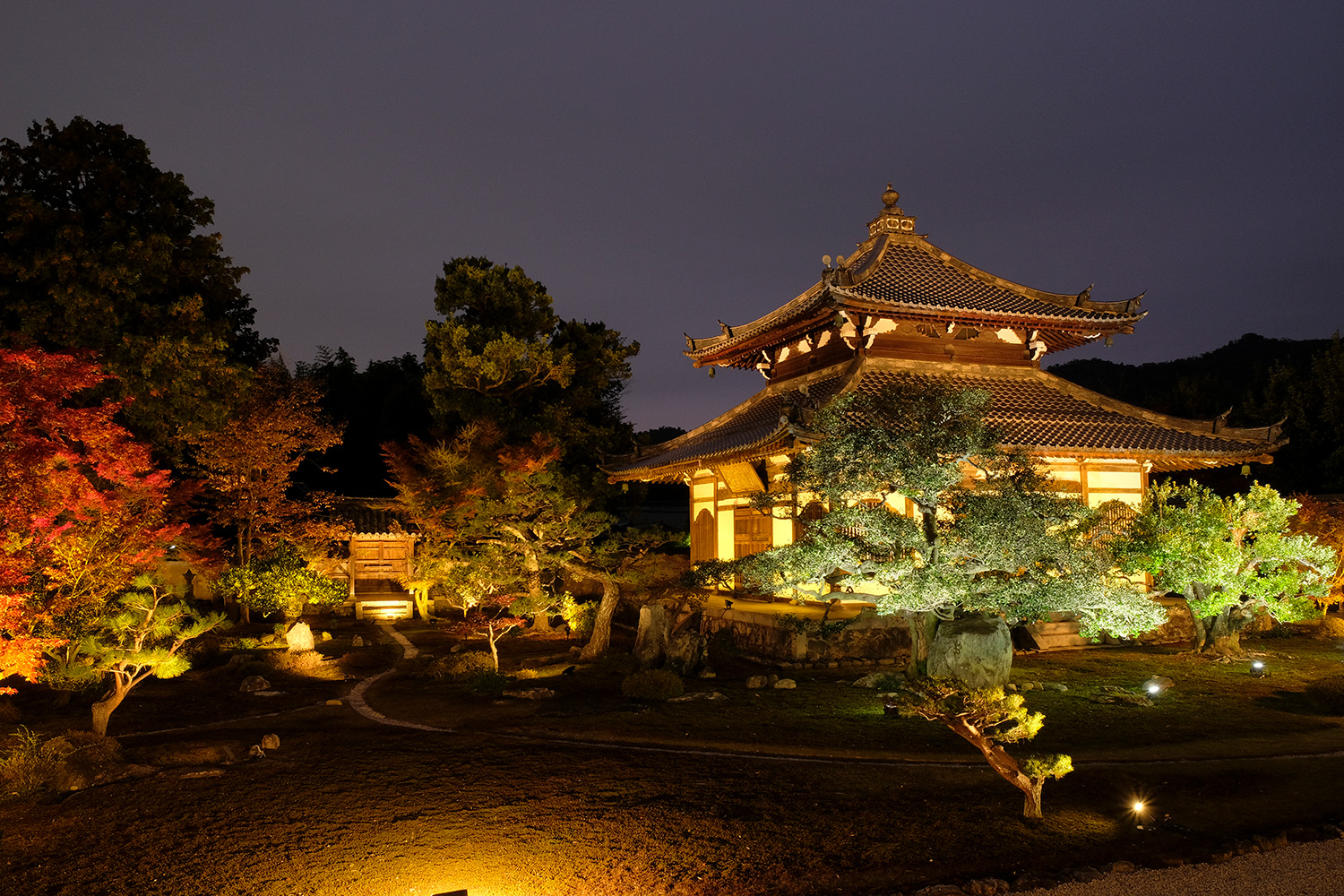
- Rikao-in Temple
-
- 24 Saga Kitabori-cho, Ukyo-ku, Kyoto MAP
- 3 min. walk from Keifuku Electric Railway Shikaoin Station
Approx. 6 min. walk from JR Saga-Arashiyama Stn. - 9:00-17:00
- Adults 600 yen, elementary/junior high school students 300 yen
- 075-861-1645
10Hogonin Temple
The beauty of the garden, dyed in autumn colors, which can only be seen during special visits to the temple.
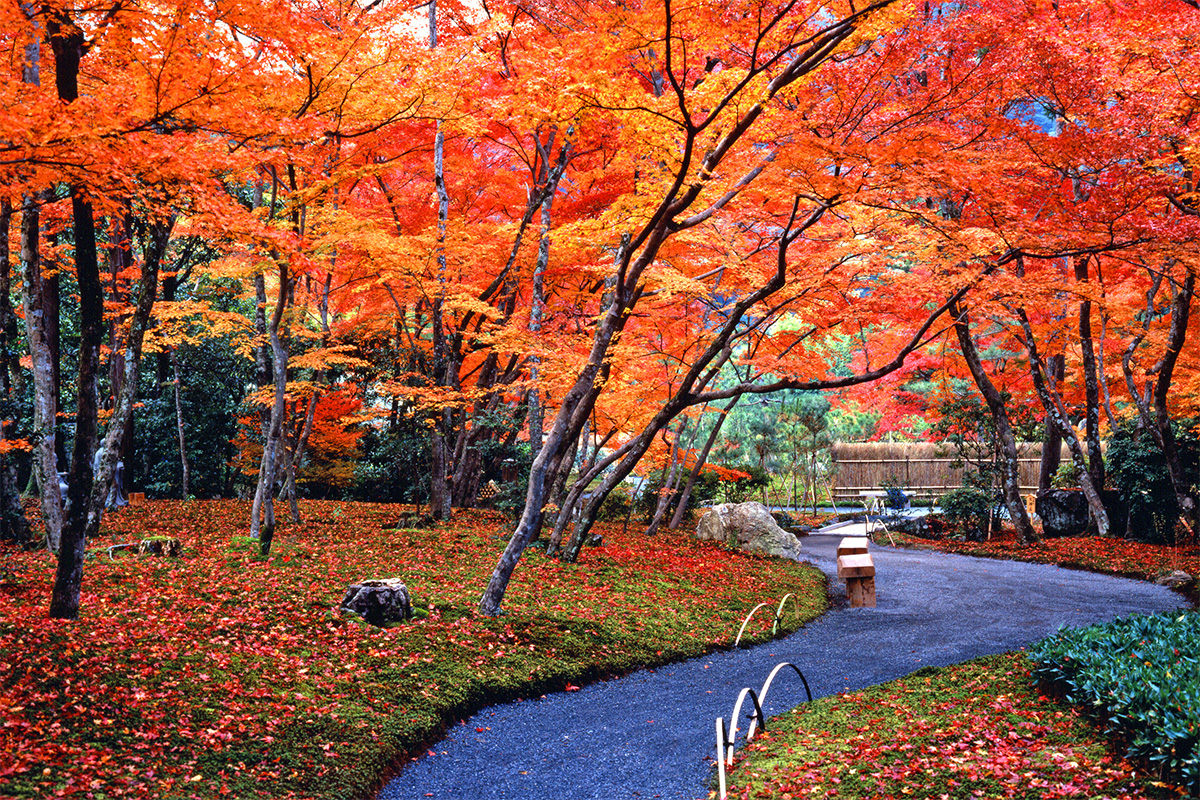
Tenryu-ji Temple is the pagoda temple of Tenryu-ji Temple, which boasts the first rank among the five temples of Kyoto. It is home to the "Shishiko-no-niwa" garden, created by Zen master Sakuen Shuryo, who traveled to China twice during the Muromachi period (1336-1573).
The Shishiko-no-niwa is a circular landscape garden with Arashiyama in the background, and is full of attractions such as the Homarugaki fence, which is characterized by a series of peaks, and Lion Rock, a huge rock in the shape of a lion. In autumn, the Iroha-momiji maple trees that cover the garden all come into full color and are especially beautiful.
Visitors are allowed to enter Hogonin only during the special viewing that is held several times a year. During the special autumn viewing, visitors can look around the Shishi-karaku garden, and also enjoy a peaceful view of the colored garden in the Mui'an tea ceremony room.
From mid-November to early December, when the autumn foliage is at its peak, the temple is open for special nighttime viewing. Visitors can enjoy the quiet and elegant beauty of the leaves, which is different from the vivid autumn colors during the daytime.
The first changing of the colors] Usually in mid-November
Types of foliage】Iroha-momiji, Omomiji, Dodan-tsutsuji, Ginkgo, etc.
▼ 2025 Autumn Special Viewing
Period: Saturday, October 4, 2025 - Sunday, December 14, 2025
Time: 9:00 - 17:00 (registration closes at 16:45)
Fee for admission (garden): Adults 700 yen, Elementary and junior high school students 300 yen (*A separate fee is required for the Hogonin Main Hall Special Viewing)
Location: Hogonin Garden
URL: https:// hogonin.jp/event/
▼ 2025 Autumn Night Special Viewing
Period: November 14 (Fri.) - December 7 (Sun.), 2025
Time: 17:30 - 20:30 (registration closes at 20:00)
Fee: ¥1,000 for adults, ¥300 for elementary and junior high school students (day/night switching system: daytime tickets cannot be used for admission or re-admission to nighttime viewing)
Location: Hogonin Garden
URL: https:// hogonin.jp/event/
Local Guide
Supporters
The illumination of the autumn leaves in the Shishikharō garden is aptly described as "blazing. You will feel as if you have wandered into another world.
秋_室内_1.jpg)
- Hogonin Temple
-
- 36 Tenryuji Sagano-baba-cho, Ukyo-ku, Kyoto City, Kyoto MAP
- 3 min. walk from Arashiyama Station on Keifuku Electric Railway Line
- Varies according to the time of special viewings.
- Except when special viewings are held
- Varies according to the time of special viewings.
- 075-861-0091
- Parking is available at Tenryuji Temple.

Local Guide who was in charge of this article
HOSHINOYA Kyoto
Arashiyama, Kyoto
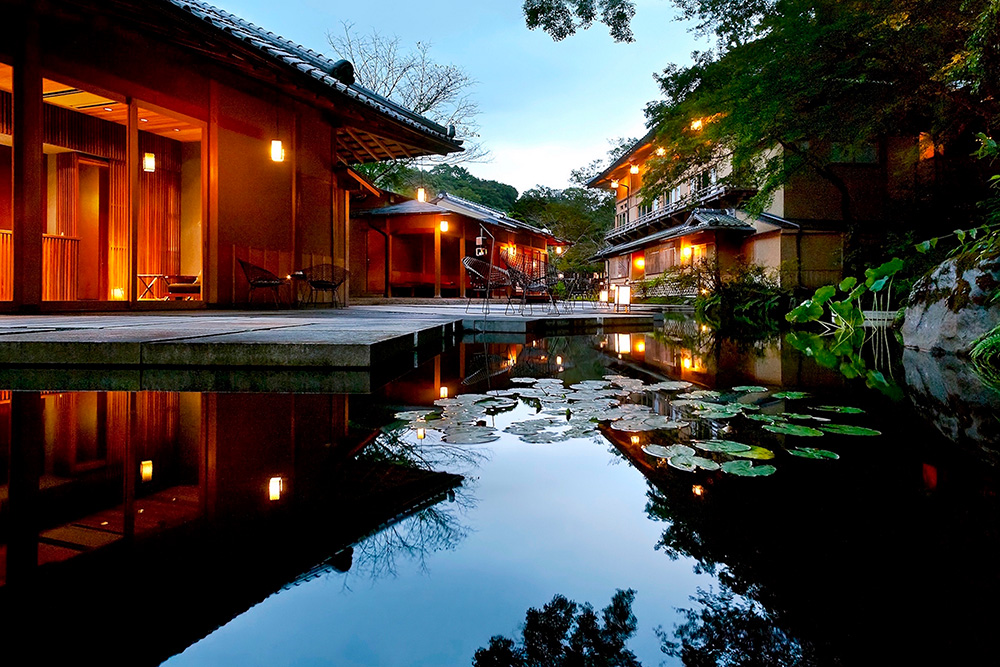
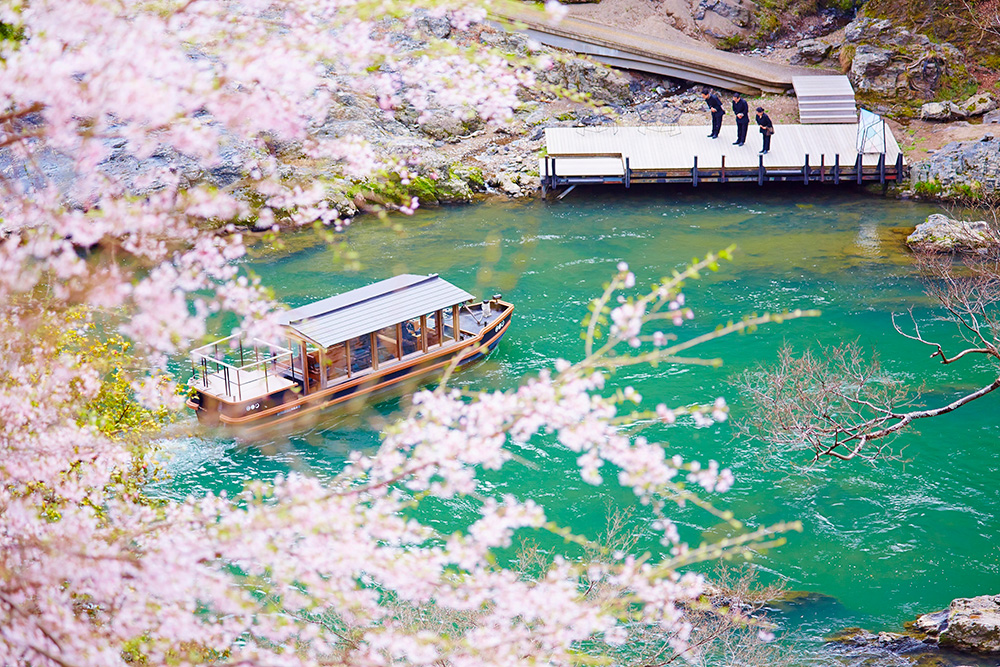
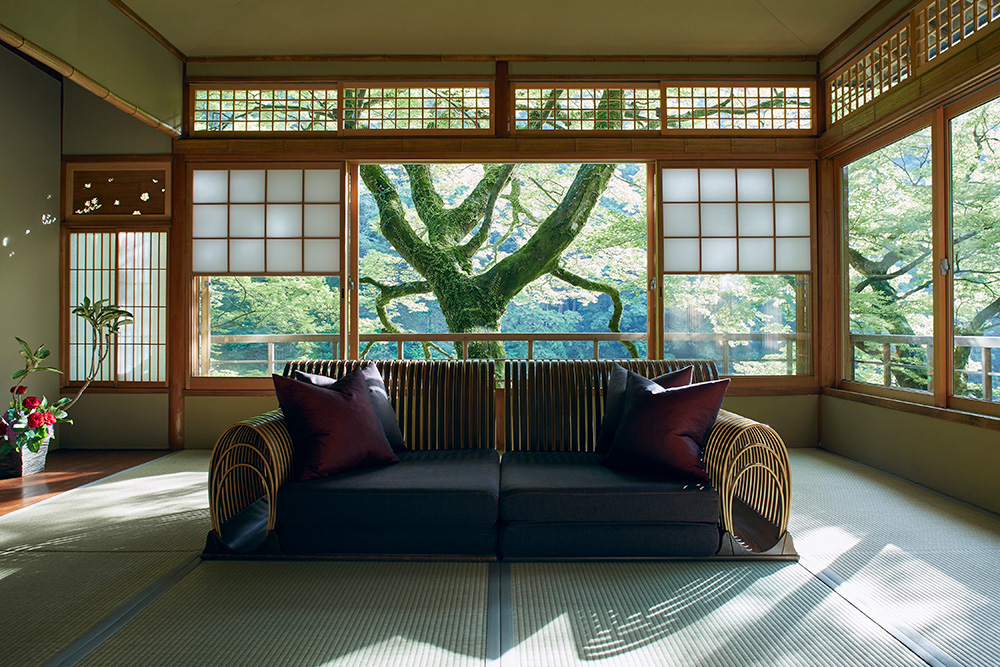
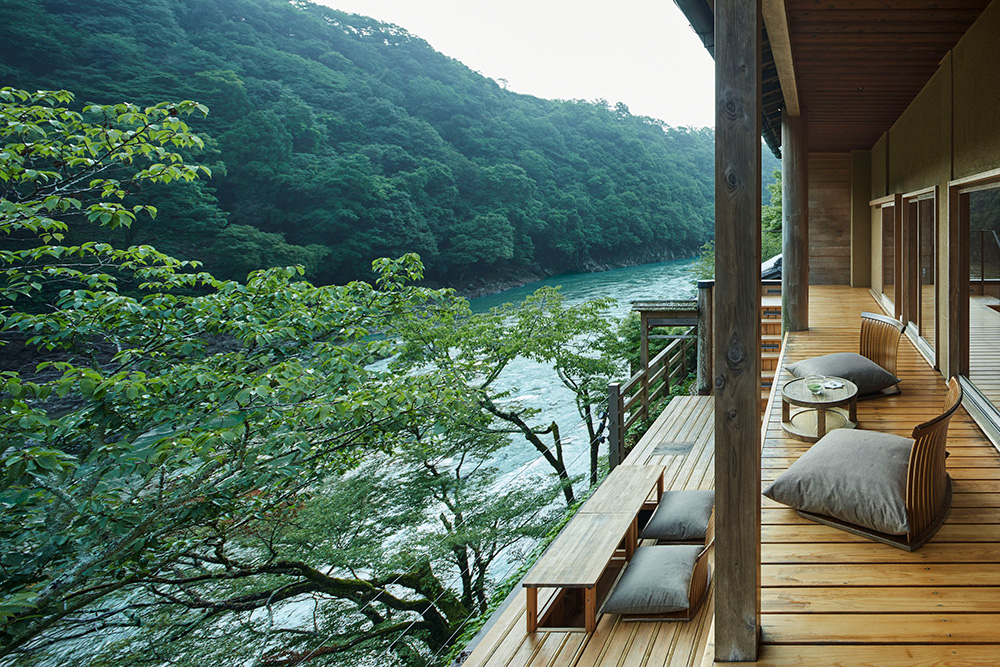
All rooms at this ryokan in Arashiyama have a river view. You can enjoy the beautiful scenery of the four seasons and an extraordinary world of tranquility.
Access by bus Approx. 30 min. by cab from JR Kyoto Station
- Example of Accommodation Rates
- 1 person per night 33,330 yen