





Nagasaki Kunchi, Nagasaki's Autumn Festival, Highlights & Things to Do in Nagasaki, Japan


Nagasaki Kunchi" is held for three days from October 7 to 9 every year. As the festival boasts the longest history and largest scale in Nagasaki, the passion that the local people put into this festival is extraordinary. During the festival period, the city is filled with the sounds of musical instruments called "shagiri" and the lively shouts of "shagiri," and the city is colored with the festival colors from morning to night.
This section introduces each venue, the schedule of the dancers and their dances, tips on how to enjoy the festival, and tips on how to enjoy the festival around the garden in the city.
What kind of festival is Nagasaki Kunchi, a large festival that has continued since the Edo period?

Nagasaki Kunchi is an autumn festival held at Suwa Shrine, the chief deity of Nagasaki, and is known locally as "Okunchi" since 1634, when two prostitutes dedicated a song and dance performance called "Komeie" before the Suwa Shrine deity. The festival is held from October 7 to 9, but there is a popular theory that the festival was once held on September 9 of the lunar calendar, and the name "Kunchi" was derived from the 9th day of the lunar calendar.
The dedication dance, which is designated as an Important Intangible Folk Cultural Asset of Japan, gradually developed into an extravagant and gorgeous performance with the assistance of Nagasaki magistrates and the influence of exotic tastes transmitted through Dejima. Currently, the 58 towns in the city are divided into seven groups, which rotate their responsibilities each year. The town in charge is called "Odori-cho (dance town)," and each town performs its own unique dedication dance that it has inherited. Their spirited, full-bodied performances attract many spectators from all over the country.
A variety of exotic and dynamic performances
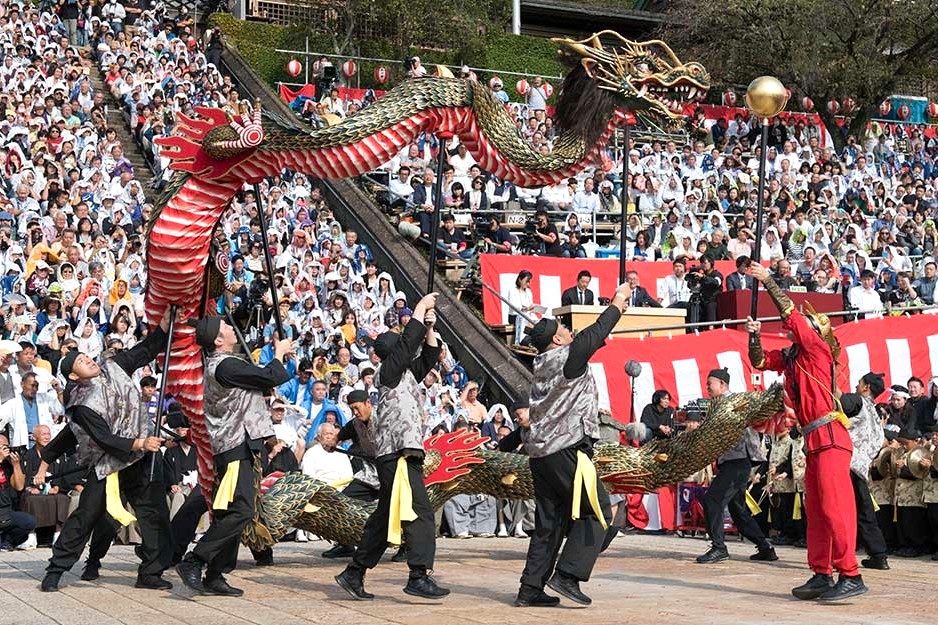
The dedication dance is composed of a giant umboko, which stands at the front as the town's mark, and a performance. Performances are the dances and floats performed at the festival. The traditional and elaborate performances of each Odomachi are the highlight of the festival.
As Nagasaki once prospered based on Dejima, the only overseas trading port in Japan, the design of this area has an exotic flavor of Portugal, Holland, and China.
The designs also reflect the lifestyles, manners and customs of the townspeople and can be divided into three main types: odori (dance), ekimono (float), nagimono (carrier), and doriimono (street). Among the most popular are "Ryuodori (dragon dance)," which is a dance directly handed down from the Chinese who lived in the Tangin Yashiki, "Whale Squirting," in which a whale's tow is blown up to a height of over 5 meters, and "Kokkodesho," in which an oar weighing approximately 1 ton is thrown in the air while moving around.
Main Performances
*Performances change every year, so check the official website.
Dancing
There is a wide variety of dances, including Japanese dance called "hon-odori," poetry dances accompanied by recitation of poetry, Aranda manzai associated with the Hanayagi school, Karako-shishi odori (lion dance), shishi odori (lion dance), yagura-daiko (Japanese drums in an oar), sword dances, and others.

●Bearing
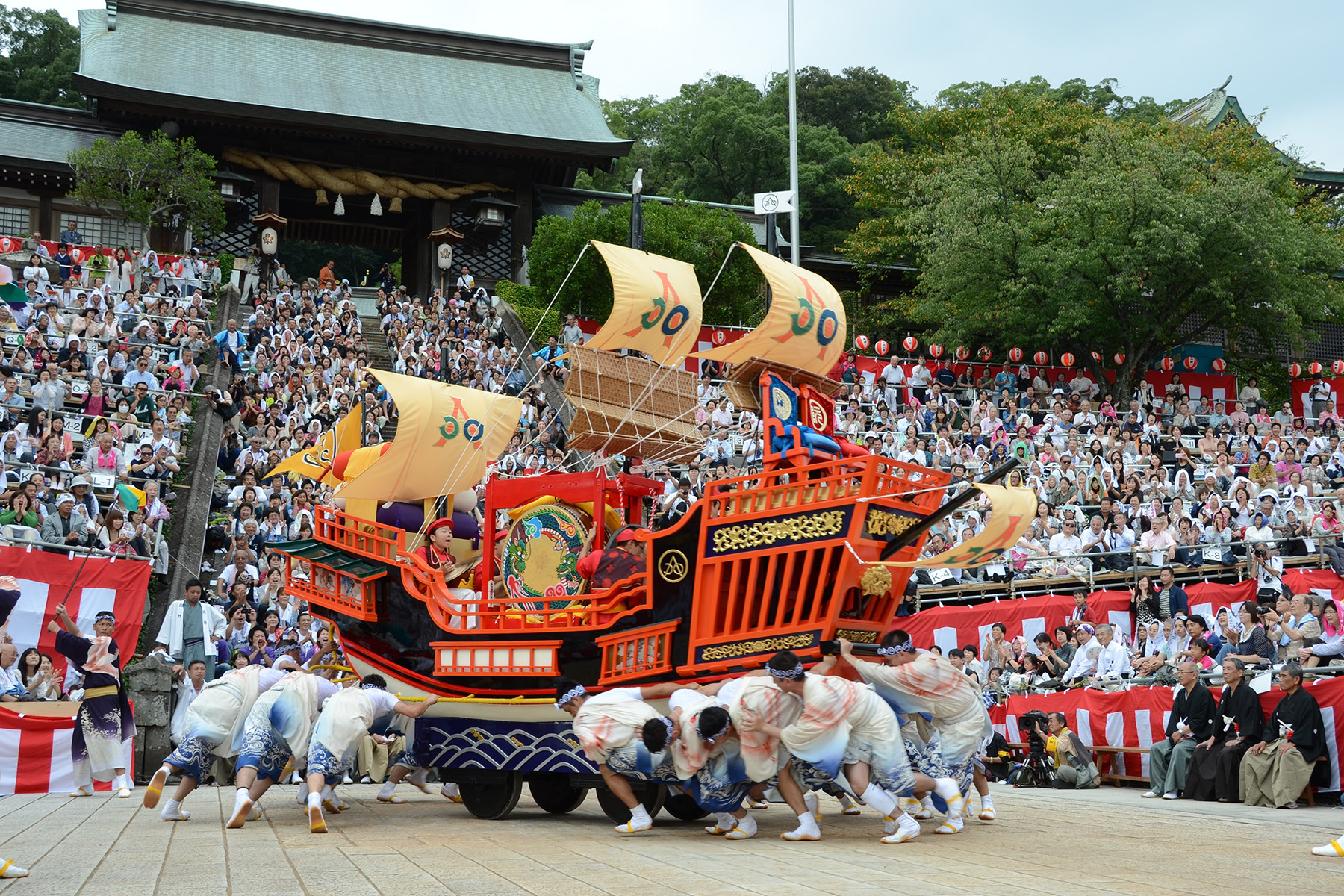
The speed and power with which the floats are pulled around are breathtaking. In addition, there are whale squirting and Hikidanjiri.
Carry
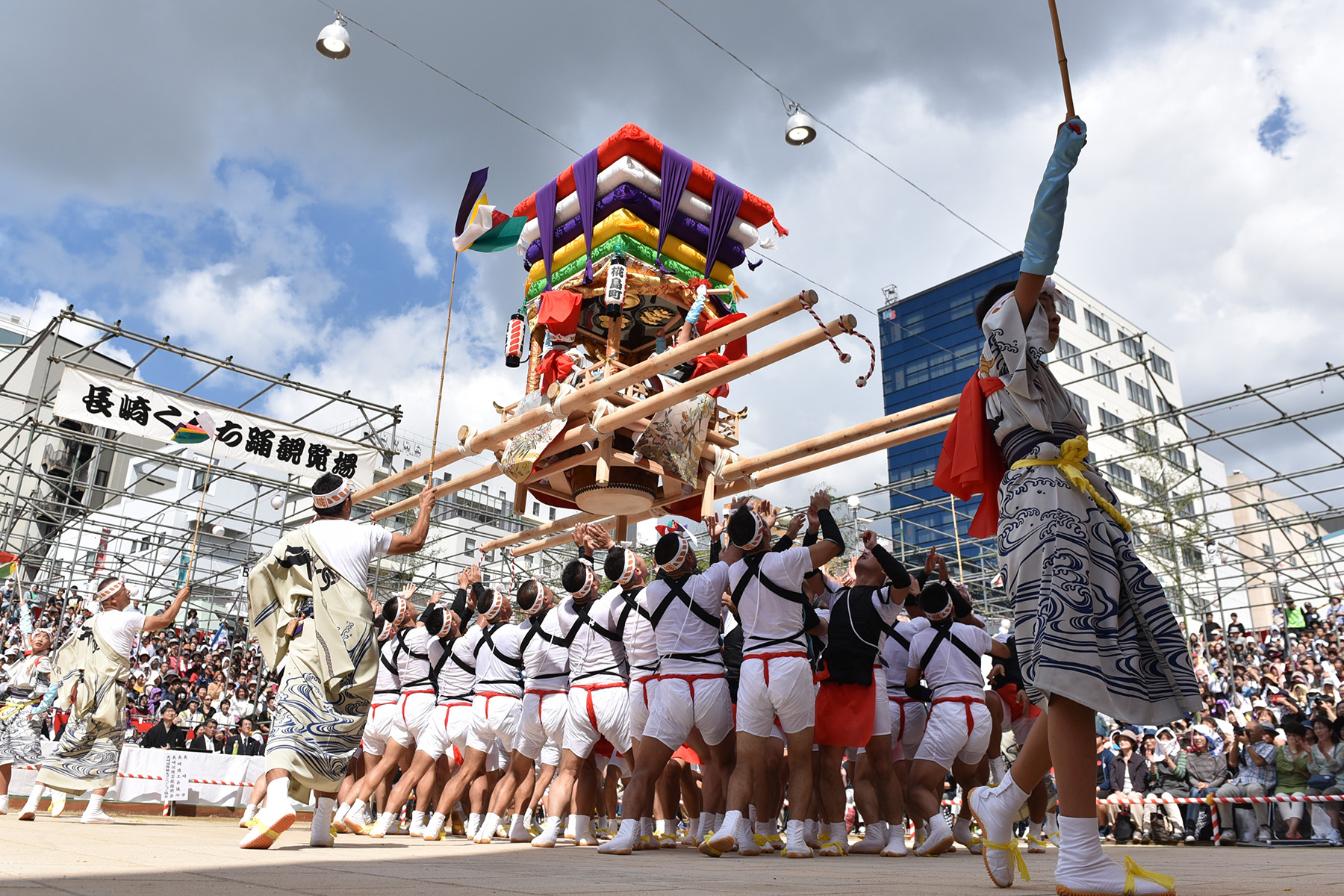
The taiko (drum) float, which is a large pile of cushions that is thrown high into the air as it moves, is one of the symbolic performances of Nagasaki Kunchi, as well as the dragon dance. There is also the Shachi-Daiko (or or ornate or ornate drum), in which floats decorated with ornate or ornate ornamentation are thrown overhead.
●Streets
The street parade is characterized by its beautiful style. The performances are performed in conjunction with the main floats and other floats, and include Anio-san from Motoshikkui-cho, known for its red seal boats; Yamabushi Michu from Hachiman-cho, which performs a dedication by a bow and arrow Hachiman celebration boat; and Oyaji-bune, Hasa-bune, and Mossoubune led by Manya-cho, which performs a whale squirting performance. The large fleet of boats includes the Oyajibune, Hasasibune, and Mossoubune, all led by Manyacho.
Odorimachi and performances in 2025
Shinbashi Town: Hon Odori Oranda Manzai
Suwa-machi: Ryuodori (dragon dance)
Shindaiko-cho: Shibu Hikidanjiri
Enokizu Town: Kawafune (river boat)
Nishi-Furukawa Town: Yagura-daiko, Hon-odori
Nishi-Furukawa Town: Yaguradiko and Hon-odori (dance)
Click here for details
What are the features of each of the four viewing venues?
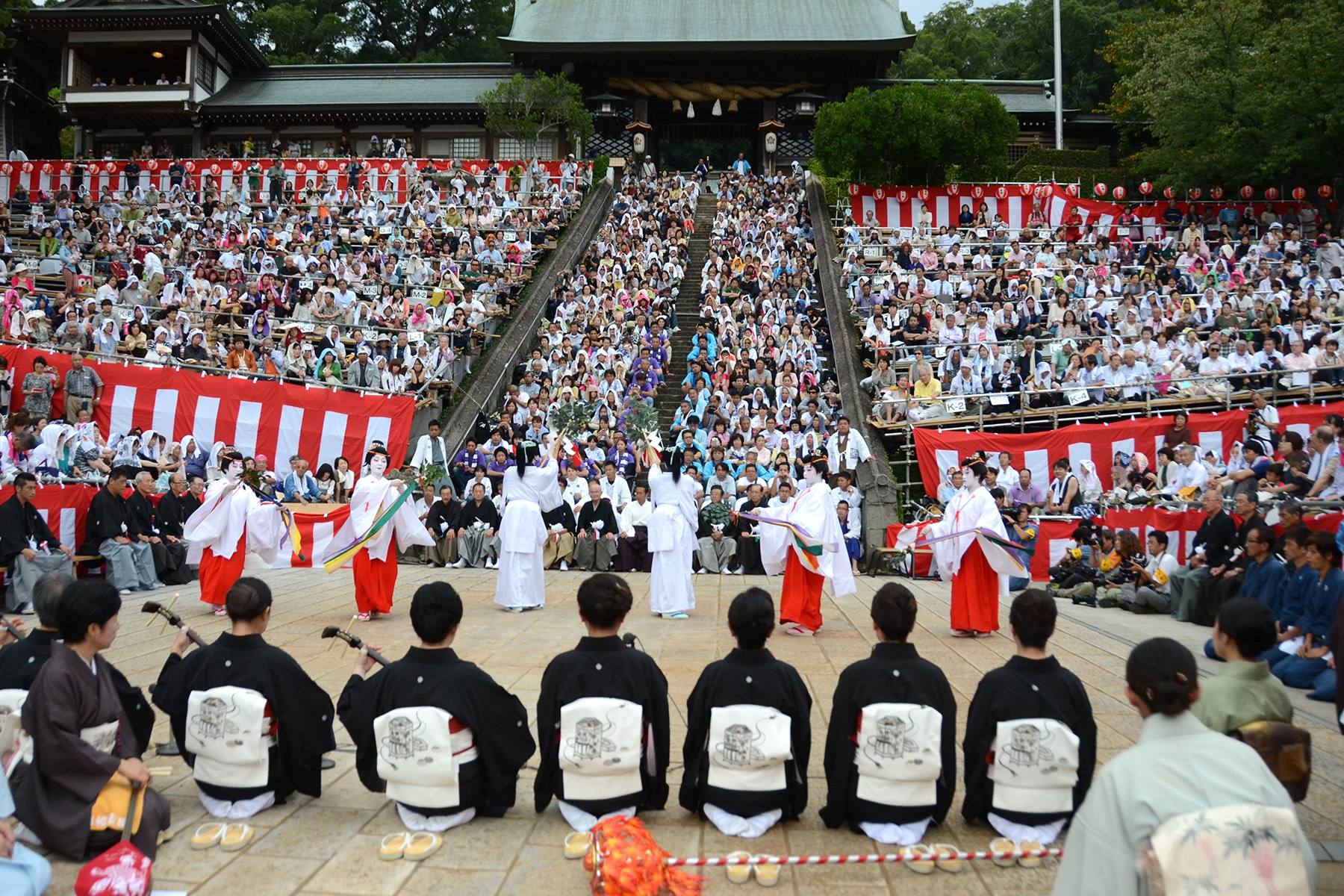
If you want to take the time to enjoy the dedication dance, we recommend that you go to one of the four viewing sites in Nagasaki City, which charge a fee. Of these, "Suwa Shrine," the sacred site of the festival, is the most popular. While most of the seats are reserved in advance, day-of-performance tickets are also available for standing-room-only seats.
There are also free seats on the "Nagasaka," a 73-step stone staircase leading up to the shrine building, which are popular as special seats that look directly down on the dedication dance hall. However, the seats are selected by lottery, and the number of applicants is considerably high every year. In addition, the "Tabisho" where the portable shrines that come from Suwa Shrine stay is full of festive atmosphere with many stalls lined up around the area.
There is also "Yasaka Shrine," where the dance hall and bleachers are close together so you can feel the power of the performance, and "Central Park Kunchi Bleachers," where there are sand-covered seats, so each venue has its own unique flavor.
<Nagasaki Kunchi 2025 Tickets
Tickets are sold and operated by each dance hall, so please check their official websites or contact them by phone for details.
https://nagasaki-kunchi.com/kanranken/
Tickets must be purchased in advance and will be sold out as soon as they are sold out.
Suwa Shrine
Schedule: Tuesday, October 7, 7:00-10:00 a.m., the same evening 16:00-19:00,
October 9 (Thu.) 8:20-11:20 a.m.
Price: 1 square 4-seat S seats 36,000 yen, A seats 30,000 yen, B seats 24,000 yen, C seats 18,000 yen
Bulk seats B seats 6,000 yen, C seats 4,500 yen *Subject to sharing seats
Standing seats 1,500 yen (only available on the day)
Free Nagasaka numbered tickets (to be selected by lottery based on postcard applications in July)
TEL: Kunchi Odori Baba Sajiki Steering Committee 095-821-8596 (in Suwa Shrine, weekdays 9:30-15:00)
Otabisho
Schedule: Tuesday, October 7, 9:10 a.m. to 12:10 p.m.
Thursday, October 9, 7:00 a.m. to 10:00 a.m.
Fee: 4 seats per square (all seats with cushions): S seats 24,000 yen, A seats 22,000 yen, B seats 20,000 yen
TEL: Otabisho Majiri Operating Committee 095-823-9073 (office opens mid-July, after the date of sale is Monday, Wednesday, Friday 13:00-16:00, closed on national holidays and during Bon vacation)
● Yasaka Shrine
Schedule: October 8 (Wed) 7:00-10:00
Price: 30,000 yen per square 4-seat S seat, 28,000 yen per square A seat, 26,000 yen per square B seat
TEL: 095-822-6750 (Yasaka Shrine Sajiki Steering Committee, weekdays 9:00-16:00, office opens in early June)
Kunchi Bleachers at Chuo Park
Schedule: Tuesday, October 7, evening 17:10-20:10
October 8 (Wed.) morning 8:00-11:00
Fee: Sand-covered chair seats 7,000 yen
Stand (sitting bench seats) S seats 6,500 yen, A seats 4,500 yen, wheelchair seats (pair seats for two people including a carer) 14,000 yen
TEL: Nagasaki Traditional Performing Arts Promotion Association 095-822-0111 (Nagasaki Chamber of Commerce and Industry Business Department)
We also recommend the free "garden tour" for a great value for money!
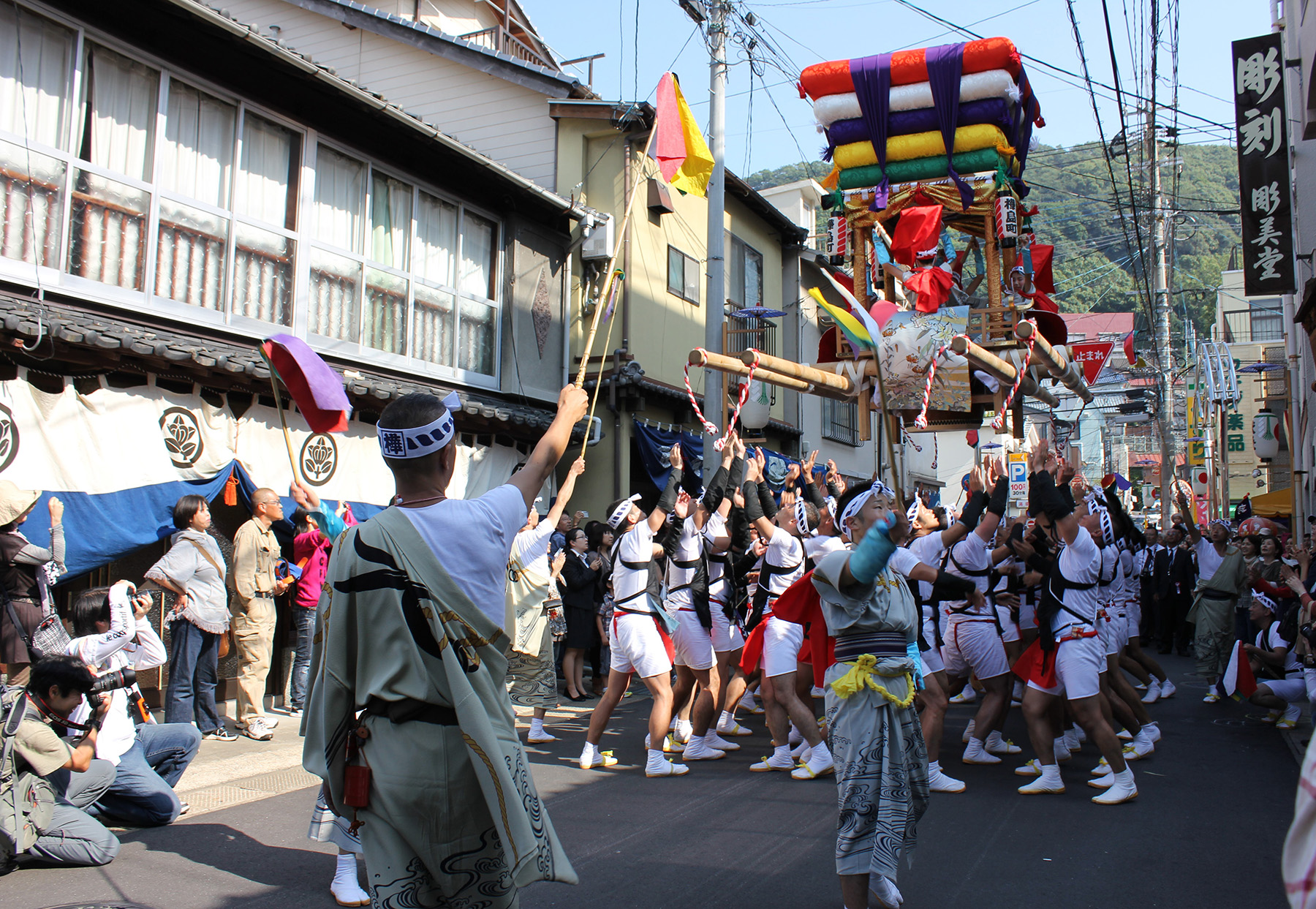
If you want to experience Okunchi more casually outside of the venue, we recommend the "Niwazaki-wari", which anyone can freely watch the festival. In this event, each dance town pays homage to local businesses, stores, and private homes, and performs a performance that brings good fortune at their storefronts or in front of their gates. The performances are short and arranged so that they can be performed even on narrow streets.
After finishing the dedication dance at the venue, the Odorimachi perform a garden tour around the city from 9:00 to 20:00 every day. You can enjoy the performance so up close that you can hear the performers' breathing, the violent movements of the floats and floats cutting through the air, and the lively sounds of the shagiri (musical accompaniment) are so powerful that they almost seem to be approaching you. The crowd cheers for the floats, giving the festival a live atmosphere.
The schedule of the " Nigiwari Tour" is available on the official website from late September every year, and can also be found on the "Nigiwari Tour MAP " distributed at tourist information centers in JR Nagasaki Station and at the Nagasaki Airport.
Check the schedule of Odorimachi using convenient items and enjoy the festival in a smart way!
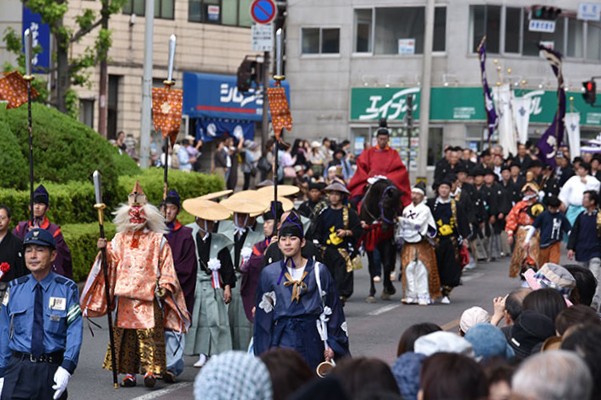
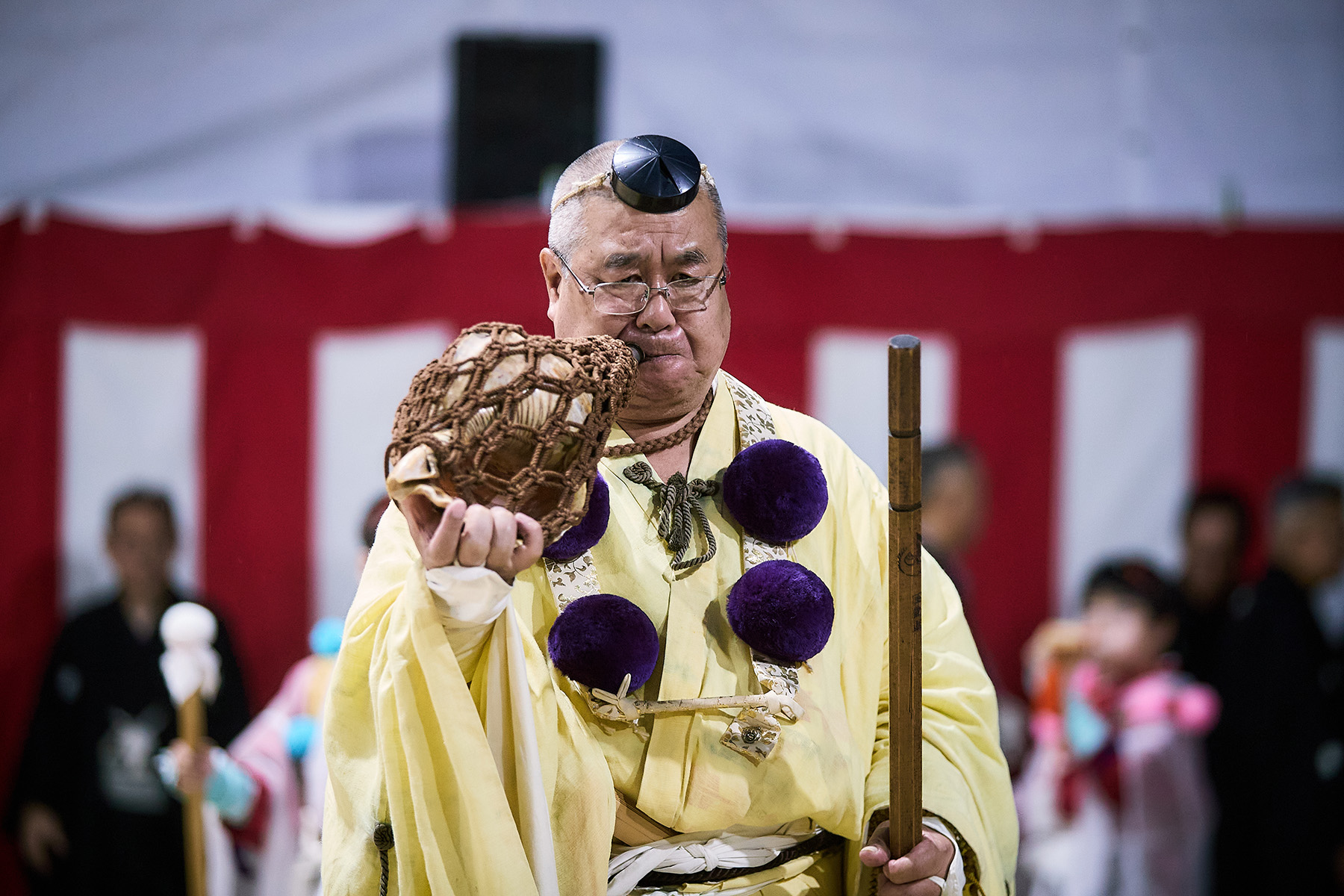
On the 7th, the portable shrine carrying the spirits of Suwa, Sumiyoshi, and Morisaki enshrined at Suwa Shrine crosses the street to Otabisho, and on the 9th, the portable shrine returns to Suwa Shrine for the "O-agari" procession. Morikomi," in which the portable shrine bearers sprint along the approach to the shrine, is a showcase of the festival filled with spirit. In addition, the procession of several hundred people, including priests and children in traditional costumes, and the parade of the umboko floats from each Odomachi are not to be missed.
To efficiently tour these famous scenes and the parade, we recommend using the "Nagasaki Kunchi Navi " application from NBC Nagasaki Broadcasting, which allows you to search for the location of Odorimachi and Mikoshi in real time.
Schedule for Nagasaki Kunchi Odorimachi in 2025
*In case of rain or stormy weather, the schedule and time may be changed, or the event may be suspended or canceled. For details, please call the respective contact numbers or check the official website.
<Day before> October 7 (Tue) morning
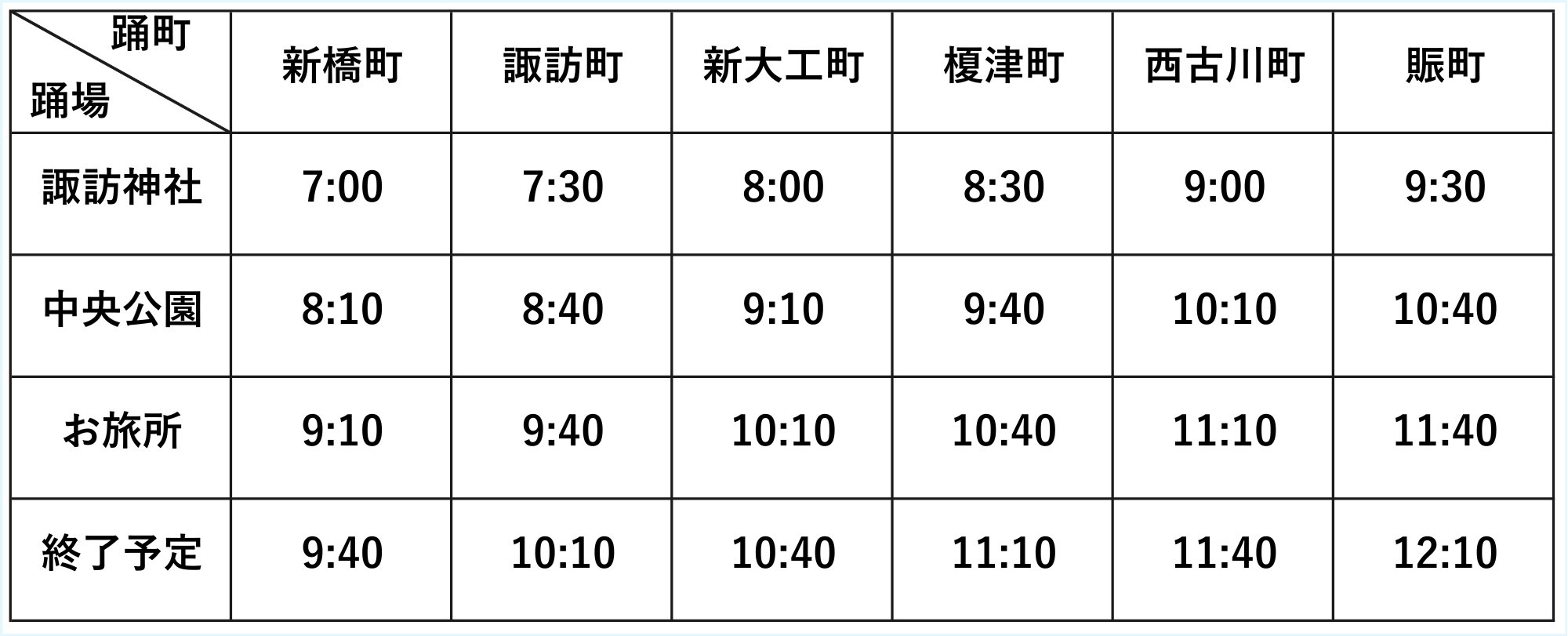
After the dedication dance is over, the participants will go around the garden in order.
11:30 Yabusame horseback archery ritual (Suwa Shrine)
13:00 Onward (Suwa Shrine→Otabisho)
Around 13:30 (after the procession): Kasa-Hoko Parade (Nagasaki Municipal Sakura-machi Elementary School on Route 34 → former Nagasaki Prefectural Government Office. (There will be a float parade in front of the Nagasaki City Fire Department, the TBM Nagasaki Building, and the former Nagasaki Prefectural Police Headquarters.)
<Mon. before> October 7 (Tue) Evening
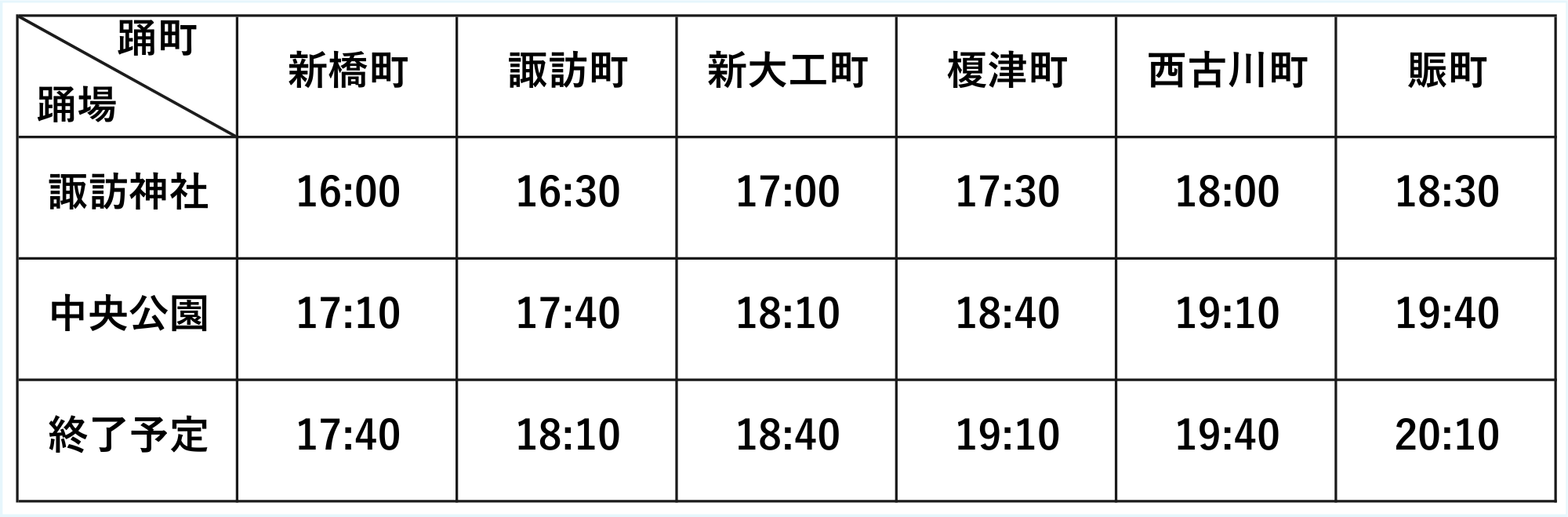
After the dedication dance is over, the dancers will go around to the gardens in order.
<Middle of the day> October 8 (Wed) Morning
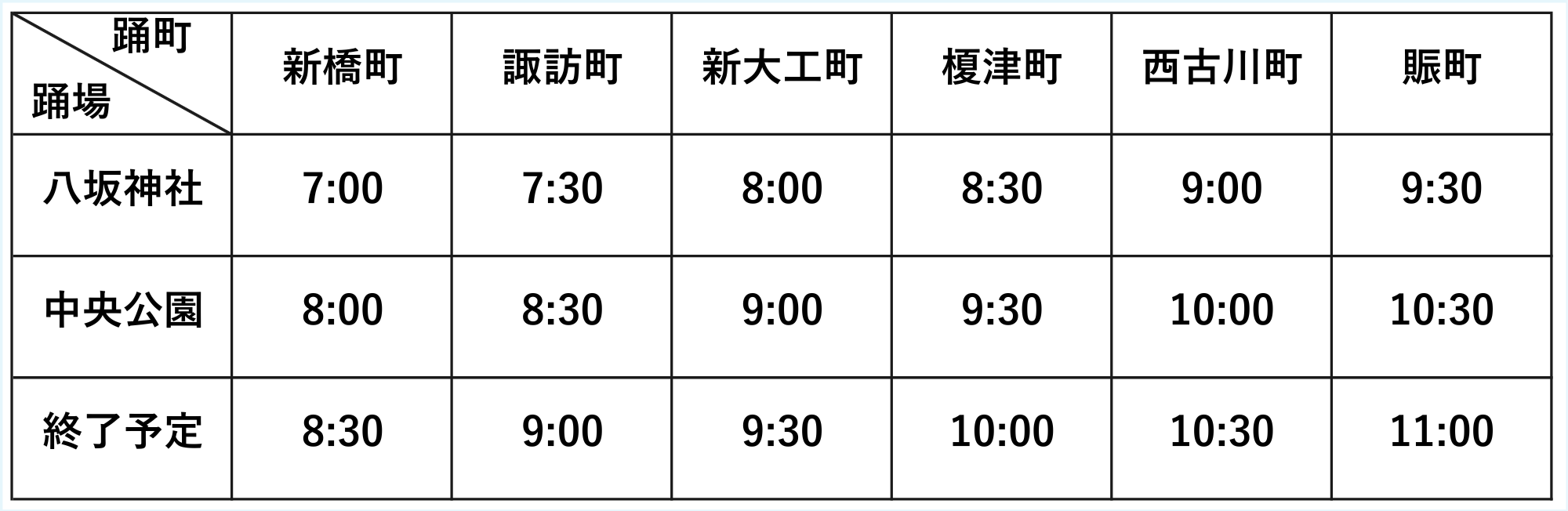
After the dedication dance is over, the dancers will go around to the gardens in order.
October 9 (Thu) in the morning
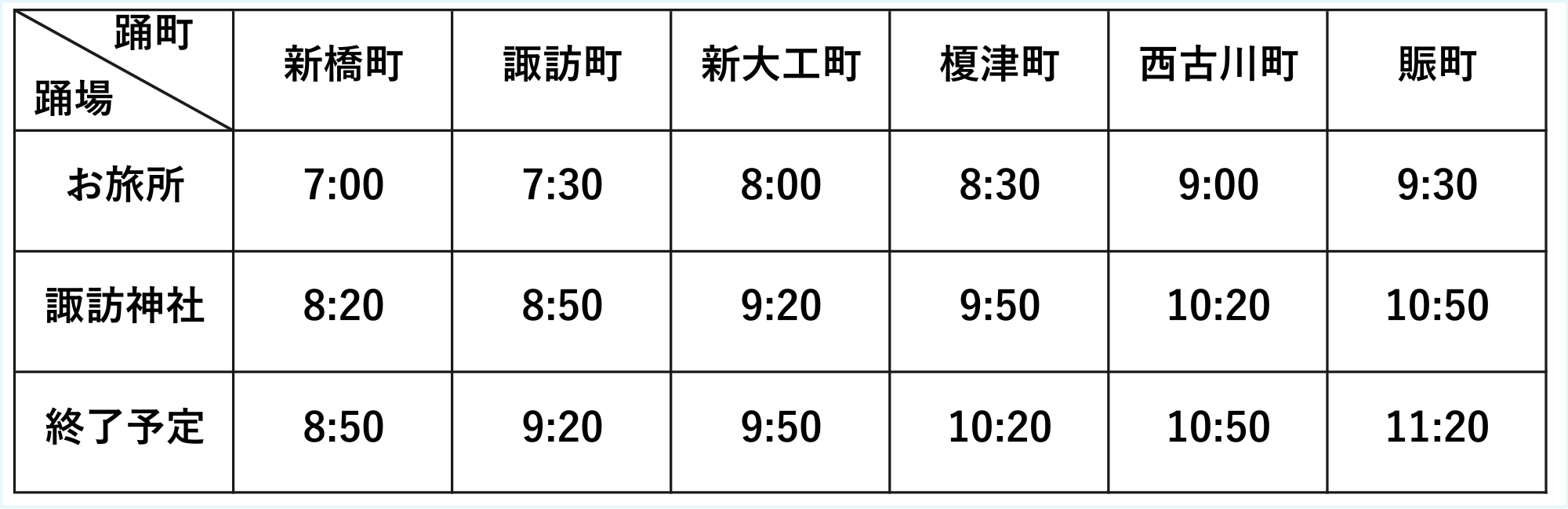
After the dedication dance is over, the participants will go around the garden in order.
13:00 Onward (Otabisho→Suwa Shrine)
Master the unique calls and shouts, and cheer on the performers to get the crowd going!
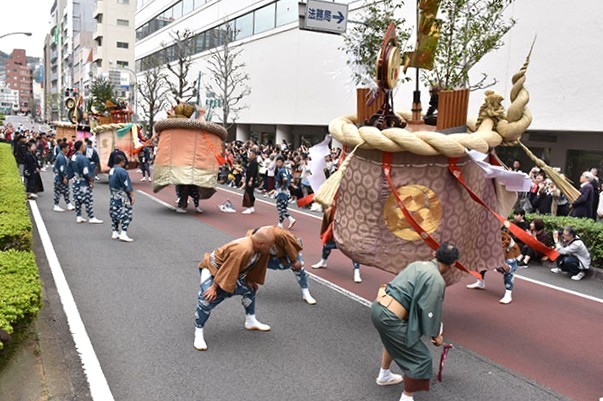
The fun of Okunchi sightseeing will be enhanced if you learn some of the unique call-outs. For example, "motte koi" means "encore" or "come out quickly. It is mainly used for Hikimono and Haigimono, and when you want to see the main dance again, you can call out "Shomoyare (I want you to do one more)". On the other hand, "Yoiyaa" is common to all performances. When the kasaboko is turned with great energy, or when a technique in a performance is successfully executed, the call is made to express the feeling of "Well done! when the floats are turned vigorously or when a technique in a performance is successfully executed.
In addition, there is a group called "Shiro-toppo" in white happi coats on the Nagasaka slope of Suwa Shrine, who instruct the audience on how to call out to the performers and enliven the event. Please join us in cheering on the performers and enjoy the real thrill of Okunchi.
Enjoy other events and goodies besides the dedication dance!

In addition to watching the festival, there are other things to look forward to.
One is "Makimono. Originally, this is a gift given in return for a gift of congratulatory gifts, but at Okunchi, it is customary for the performers to scatter these gifts to visitors to the festival. Most of them are Japanese tenugui (hand towels) with patterns related to the town's seal or the performance, and each dance town prepares an original design for each performance. They are considered a good-luck charm, and when they are thrown into the bleachers, the spectators start fighting for them, standing in unison. Some of them are strong enough to collect several kinds in a single day.
In the "Niwa-mise," held in the evening of the third day prior to the festival, each Odobicho town displays its own kasaboko floats, floats, musical instruments, costumes, and other festival paraphernalia, as well as festive items, in stores and private homes in the town for all to see. Visitors can take their time to appreciate the glittering goods.
- Nagasaki Kunchi
-
 Four pay venues in Nagasaki City (Suwa Shrine, Otabisho, Yasaka Shrine, Central Park Kunchi Bleachers), and various locations in central Nagasaki City for the Niwamiji and Niwasaki Tour
 Dates and times: Main site (dedication dance) and Niwa-en-rotation: October 7 (Tue) to 9 (Thu), 2025, 9:00 to 20:00 each day (varies depending on the venue and Odorimachi)
Niwa-mise October 3 (Fri) 17:00 - 22:00 (varies according to Odorimachi)
*Schedules and times may be changed, suspended or cancelled in case of stormy weather, etc. Nagasaki Traditional Performing Arts Promotion Association 095-822-0111 (in the Business Department of Nagasaki Chamber of Commerce and Industry)
 Traffic regulations apply during the festival. Details will be posted on the official website and the Nagasaki Prefectural Police Department's website around the beginning of October.
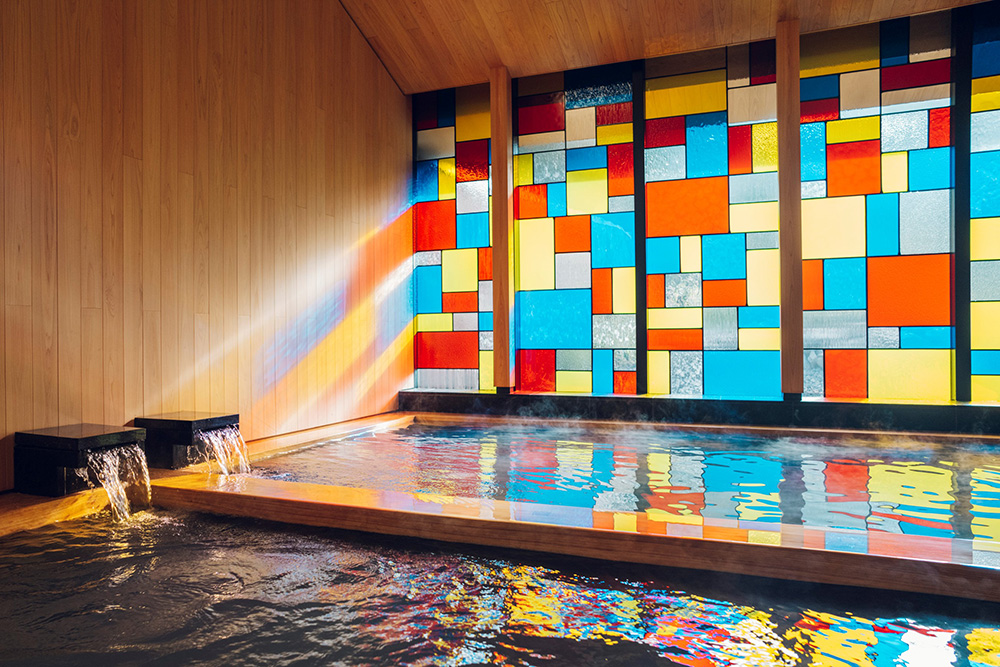
Soak in the lingering memories of Nagasaki Kunchi at the exotic "Hoshino Resorts KAI Unzen

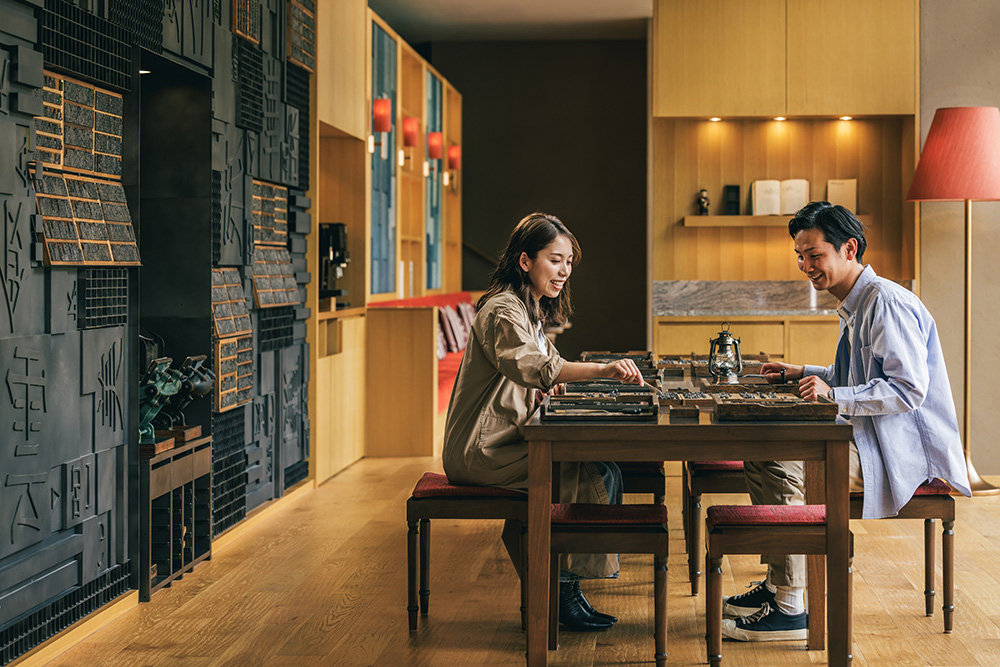
After enjoying the excitement and bustle of Nagasaki Kunchi, you will head to "Hoshino Resorts KAI Unzen" located in Unzen hot spring, about an hour's drive away. The hotel's interior is filled with an exotic atmosphere that echoes the glamorous atmosphere of Nagasaki Kunchi.
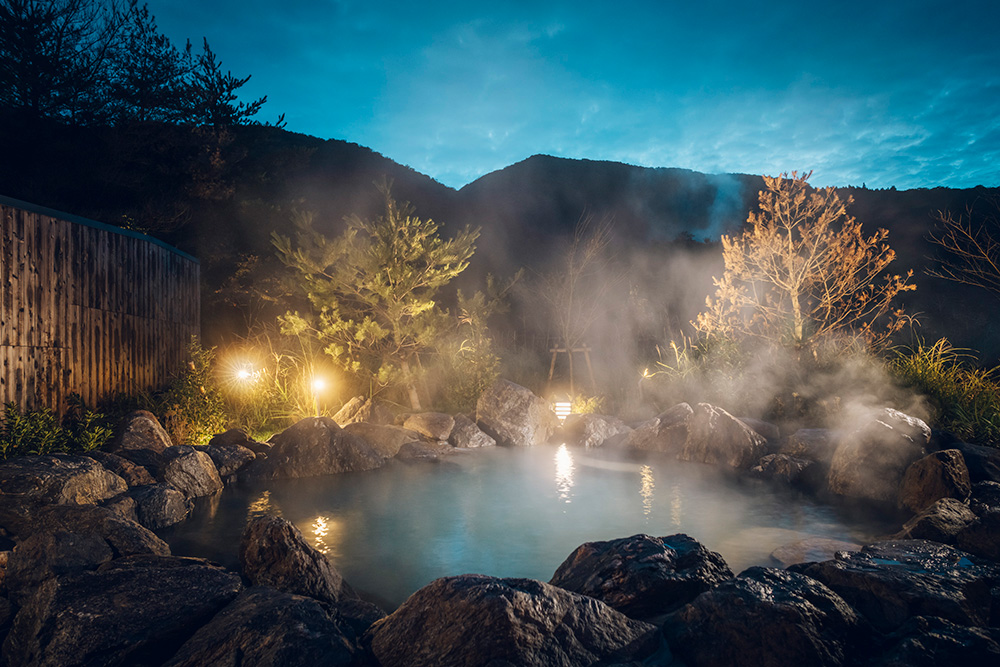
Enjoy the luxury of soaking in the lingering memories of Nagasaki's culture and festivals while being healed by the famous hot spring water from Unzen Hell.

Local Guide who was in charge of this article
Hoshino Resorts KAI Unzen
Unzen hot spring, Nagasaki
The interior of the inn, designed with Nagasaki's culture, is a space with an exotic atmosphere. You can spend your time in a hot spring hell and an inn that is connected to the ground, where you will be healed and energized at the same time.
-2.jpg)
Access by bus Approximately 75 minutes from JR Nagasaki Station by shuttle bus, 50 minutes from JR Isahaya Station by shuttle bus
- Example of Accommodation Rates
- 1 person per night From 17,000 yen